
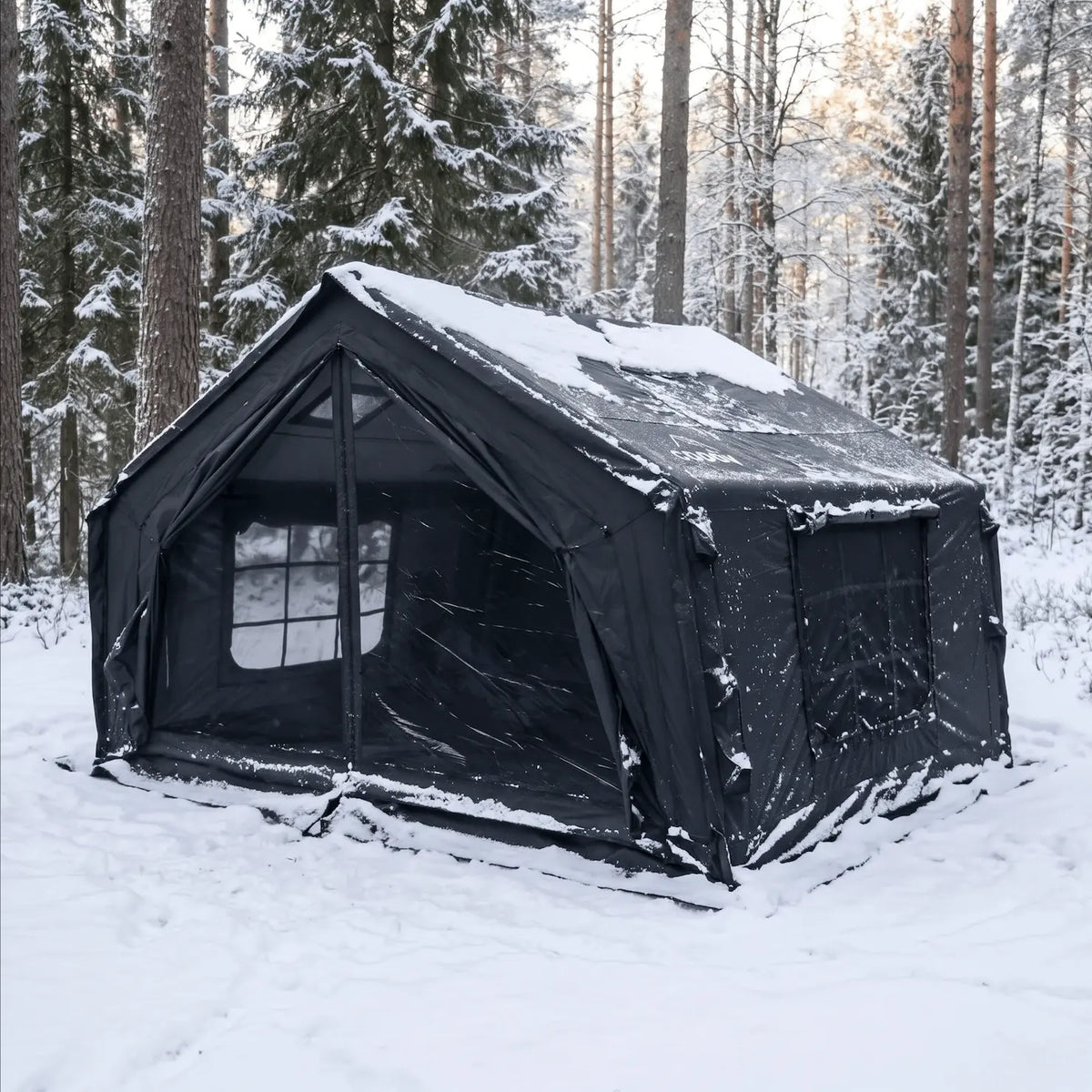
The Coody 10.0 inflatable canvas tent is a drive-in camping shelter with room to stand, change clothes, and arrange beds and gear. The standard model has a listed floor area of 107.64 sq ft (10 m²), two roof windows, and a removable Oxford floor. It weighs 70.55 lb (32 kg) before you add furniture or a stove.
The listed setup time is about six minutes. Allow extra time to choose a site, anchor the tent, and fit the rainfly. For cold-weather trips, plan around the model’s approved operating range of 14°F to 104°F (−10°C to +40°C).
Technical Specifications & Unboxing Breakdown
| Feature | Specification |
|---|---|
| Exterior dimensions | 141.73 × 110.24 × 86.61 in (3.6 × 2.8 × 2.2 m), width × length × height |
| Interior dimensions | 133.86 × 106.30 in (3.4 × 2.7 m). Interior peak 80.31 in (2.04 m), side walls 53.15 in (1.35 m). |
| Listed floor area | 107.64 sq ft (10 m²) |
| Net and gross weight | 70.55 lb (32 kg) net and 74.96 lb (34 kg) gross |
| Packed dimensions | 32.28 × 21.65 × 17.72 in (82 × 55 × 45 cm) |
| Tent body | 210 gsm TC canvas, 65% polyester and 35% cotton, rated PU2000+ |
| Rainfly | Included 420D Oxford rainfly, rated PU3000+ |
| Air beams | PVC, 6.30 in (16 cm) diameter. Recommended pressure is 6–8 psi. |
| Floor | Removable 300D Oxford polyester |
| Doors and windows | Two doors and four windows, including two roof windows |
| Stove jack | 10 cm opening in the tent body |
| Sleeping capacity | Up to four people in sleeping bags. Allow extra space for beds, furniture, and a stove. |
Coody lists a 72-hour factory air-frame leak check. The manufacturer reports wind testing up to 45 mph (72 km/h). At camp, choose anchoring for the site and check the guy lines when conditions change.
What Comes in the Storage Bags
The standard package includes the tent with integrated air beams and removable floor, a rainfly, a hand pump with a pressure gauge, clear TPU window panels, TPU/canvas and mesh/canvas end panels, guy lines, pegs, and two storage bags. Check the exact bundle listing for any added equipment.
Step-by-Step: Setup Guide
- Choose level, well-drained ground. Remove sharp debris and keep an optional Coody 10.0 PVC ground sheet within the tent footprint.
- Unfold the tent fully, orient the doors, and follow the supplied instructions for securing the base.
- Connect the included hand pump with a secure fitting. A Coody 133P electric pump is an optional alternative.
- Inflate to 6–8 psi. Watch the gauge and stay at or below 8 psi. Close the valves securely after inflation.
- Secure the pegs and guy lines. Fit the rainfly for rain, snow, or prolonged strong sun, and recheck the anchoring as conditions change.
Interior Space & Standing Headroom
Headroom reaches 80.31 in (2.04 m) at the peak. The 53.15 in (1.35 m) side walls give you space for beds and storage along the edges. If you plan to use cots, chairs, or a stove, lay out those items before using the four-person sleeping-bag capacity to plan your group.


Removable Oxford Floor System
The 300D Oxford floor zips into the tent and can be removed for a floorless setup. An optional PVC ground sheet goes under the tent for ground protection. A Coody 10.0 carpet adds comfort underfoot inside.
Modular Wall System & Stargazing Skylights
The roof windows bring in daylight. You can use the interior covers for privacy and shade, and adjust the side windows, mesh, and removable end panels for airflow. The view through the roof depends on how the rainfly is fitted.
A standard Coody AirTarp 3.6 can add covered space outside the entrance. To connect a standard Coody 10.0 to a standard Familia 13.6, Familia 17.2, or Hub, use a 3.6 + 3.6 connector. A standard Coody 8.0 pairs with the 10.0 using a 3.2 + 3.6 connector. Check both model names before ordering, especially if either tent is a Pro version.
Climate Control: Winter Hot-Tenting & Summer Utility Ports
Integrated Wood Stove Jack
The standard Coody 10.0 has a factory stove jack in the tent body. Its included rainfly comes without a factory-installed stove jack. If you need to use a stove with the rainfly fitted, confirm the complete chimney route with the manufacturer before lighting the stove.
Use a compatible stove and follow both manuals. Install the specified spark arrestor and heat-resistant stove mat, maintain the required clearances around the stove and chimney, and keep exits clear. Keep a supply of fresh air flowing, use working smoke and carbon monoxide alarms, and never leave a burning stove unattended or running while everyone is asleep.
Read our guide to setting up and heating a hot tent safely before your first trip. The standalone tent comes without a stove. When buying a bundle, check the exact stove, chimney sections, and accessories on its listing.
Utility Sleeve & Protective Rainfly
The utility sleeves provide routes for suitable cables or hoses. Follow the appliance instructions when using powered equipment. Keep the included rainfly properly tensioned in prolonged rain or snow, clear accumulating snow from the roof, and dry the tent when conditions allow.
Canvas Care & Winter Maintenance Rules
Operating Temperature Range
The approved range is 14°F to 104°F (−10°C to +40°C) for the tent. Plan your sleeping setup for the overnight forecast. An insulated pad and an appropriately rated sleeping bag matter even if you heat the tent while awake. See our winter tent insulation guide for help putting that setup together.
Sub-Zero Care & Drying
Cold PVC stiffens. Let the air-frame components warm before folding them. After use below 32°F (0°C), dry the entire tent in a warm, dry, well-ventilated indoor space. Pack it only after the fabric, floor, and air-frame components are completely dry.
Air Valve Maintenance
As the air cools, frame pressure can fall. Check the gauge and adjust within 6–8 psi. Keep the valve fittings clean and close them securely. If pressure keeps dropping at a stable temperature, inspect the frame for a leak or contact support.
Conclusion: Coody 10.0 as a Cold-Weather Basecamp
The Coody 10.0 suits drive-in trips where standing room, roof windows, and a removable floor matter. Before choosing it for winter, check your vehicle’s storage space, the overnight forecast, and how much usable room you need once the beds and gear are inside.
Shop standard Coody 10.0 tents
Compare the Coody 10.0 Pro for taller side walls or the Coody Familia 17.2 Pro if your group needs more floor space.
Frequently Asked Questions
Can I use the Coody 10.0 for winter camping with a stove?
Yes, within the approved 14°F to 104°F (−10°C to +40°C) range. Use a compatible stove and the factory stove jack in the tent body. The standard rainfly has no factory stove jack. Follow both manuals, maintain continuous ventilation, and use a sleeping system suited to the forecast.
Is the floor material made of PVC?
The included floor is removable 300D Oxford polyester. The optional PVC ground sheet is a separate layer that goes underneath the tent.
How many bags is the Coody 10.0 packed into?
The standard tent comes with two storage bags. A bundle may have additional separately packed components.
How does the inflatable air-beam frame handle high winds?
Coody reports wind testing up to 45 mph (72 km/h) under test conditions. Use the required pegs and guy lines, check the anchoring as conditions change, and move to safer shelter if conditions become unsafe.
Does the Coody 10.0 come with a wood stove?
The standalone tent includes the stove jack. For a stove, select a bundle that explicitly lists one and check which chimney components it includes.
What should I do after camping in sub-zero winter weather?
Let cold PVC warm before folding. After use below 32°F (0°C), dry the tent completely in a warm, dry, ventilated indoor space before storing it.
0 commentaire