
Tiendas de campaña para casa
Carpa familiar inflable de aire
Los campistas que disfrutan de la tranquilidad de los grandes exteriores, pero se han aburrido de instalar refugios con varillas enredadas, descubrirán que las carpas inflables son la solución perfecta para sus necesidades de camping. Con el propósito de brindarles a los campistas la recreación más cómoda y conveniente posible, estos modelos incorporan la innovación de camping más reciente y avanzada, que no se ofrece en ningún otro tipo de refugio para camping. Estos modelos, también conocidos como carpas con vigas inflables, casas inflables o refugios inflables, definitivamente merecen una consideración más detenida.
Si te interesa este tipo de refugio, te invitamos a explorar nuestro blog, donde analizaremos en detalle estas maravillosas casas para exteriores. Hablaremos sobre cómo montar estos refugios, cuáles son sus beneficios, si tienen alguna desventaja y qué aspectos clave debes buscar al comprarlos, para que puedas tomar una decisión informada al elegir uno para tu próxima aventura.


¿Cuáles son las ventajas de usar refugios inflables?
La principal característica distintiva de este refugio probablemente sea su mayor ventaja. Hablamos de una instalación sencilla. A diferencia de los modelos convencionales con varillas, que inexplicablemente siempre parecen engancharse con algo, los modelos inflables solo necesitan aire para tomar forma.
Elige un lugar plano y nivelado, sin rocas, ramas ni otros objetos que puedan dañar la estructura. Retira los residuos antes de instalarla. Saca todo lo que necesitas al suelo y prepara el refugio. Sigue las instrucciones del fabricante para inflar cada cámara de manera uniforme. Tómate tu tiempo y no lo infles demasiado, ya que podrías dañar las costuras. Después de inflarlo, fija el refugio con estacas o vientos. Esto estabilizará la estructura y la protegerá de los vientos fuertes. Solo sacude ligeramente tu carpa de camping para asegurarte de que permanezca firmemente sobre el suelo, ¡y tu casa para exteriores estará lista para usarse!
El tamaño de tu refugio inflable determinará cuánto tarda este proceso, pero en la mayoría de los casos solo toma unos minutos. Puedes usar una bomba eléctrica especial para simplificar aún más el proceso. La bomba eléctrica te permite realizar varias tareas a la vez, ya que puedes concentrarte en cargar otro equipo mientras hace su trabajo. Solo ten cuidado de no inflar demasiado el refugio.
Estos refugios son superiores en cuanto al área utilizable y superan a los refugios convencionales como espacio para relajarse y dormir. Estos modelos son una excelente alternativa si no te gusta moverte en espacios reducidos o en carpas de techo. Por lo general, su diseño permite que los adultos estén de pie. Además, el amplio espacio utilizable de esta carpa de camping te permite llevar una cantidad considerable de equipo durante tu viaje.
Estos refugios pueden resistir vientos fuertes sin problemas. Se dice que una casa inflable es muy sólida. Una vez que hayas terminado de asegurar la estructura con estacas y vientos, te sorprenderá lo estables que pueden ser. Otro problema que podrías experimentar cuando hay viento fuerte es el ruido proveniente del refugio. Sin embargo, te sorprenderá lo silenciosas que son estas carpas, incluso con vientos fuertes. Tener que permanecer despierto toda la noche porque tu refugio ondea ruidosamente con el viento no es la mejor manera de relajarse. Sin embargo, con una casa inflable de camping no tendrás que preocuparte por eso.
Otro concepto erróneo común es que son frágiles. En realidad, los fabricantes suelen confeccionar estos refugios con telas resistentes, lo que garantiza una durabilidad excepcional gracias a materiales de alta calidad que soportan las perforaciones. Incluso si sufre una perforación, la mayoría de los fabricantes ofrecen kits de reparación fáciles de instalar y muy resistentes.
Reseñas en video de blogueros
Por qué las carpas inflables no son perfectas
Una de sus principales desventajas es el precio más alto en comparación con los modelos convencionales con varillas. Aunque ofrecen comodidad, espacio y facilidad de instalación, estas ventajas tienen un costo. Estos modelos suelen ser más caros debido a los materiales de alta gama utilizados en su fabricación. Para muchos aficionados al camping, la inversión inicial puede parecer elevada, especialmente si están acostumbrados a modelos tradicionales más económicos. Sin embargo, los beneficios a largo plazo de una casa inflable de camping, como la durabilidad, la facilidad de instalación y la comodidad, pueden compensar el costo para los campistas frecuentes.
Las probabilidades de perforar tu refugio son bajas, pero nunca llegan a cero. Existe la posibilidad de que estos refugios sufran daños accidentales durante el proceso de instalación, desmontaje y traslado, sin importar cuán cuidadoso seas.
Las reparaciones pueden tardar un poco en completarse. El proceso para reparar una fuga en una casa inflable de camping es bastante sencillo; el desafío está en localizar la fuente de la fuga. También puede ser difícil reparar perforaciones grandes, agujeros o rasgaduras, especialmente si estás en los exteriores y no tienes un parche lo suficientemente grande para cubrir el agujero.
Aspectos que debes considerar antes de comprar una carpa inflable
Determina cuántas personas adultas necesitas alojar y elige un tamaño adecuado. Asegúrate de que la carpa tenga suficiente espacio para dormir y vivir cómodamente para cada integrante de tu grupo. Esto depende de tu equipo y del nivel de comodidad que desees, pero se recomienda contar con al menos 20 pies cuadrados por persona.
Considera las condiciones en las que vas a acampar. Si te encanta pasar tiempo en la playa y solo usarás tu casa de camping durante las estaciones cálidas, puedes elegir un refugio de 3 estaciones; así ahorrarás algo de dinero. Por otro lado, si acampas con frecuencia durante todo el año, es mejor elegir un modelo de 4 estaciones.
Si planeas llevarla a pie durante cierta distancia, considera su peso una vez empacada. Si viajas con tus amigos, no tendrás problemas para llevar el refugio hasta el campamento. Pero si estás haciendo un viaje en solitario, puede resultar incómodo transportar el refugio hasta el destino.
Estos refugios deben poder resistir las mismas condiciones externas que los refugios con varillas. Comprueba que tenga vientos y estacas confiables para soportar vientos fuertes. Revisa las especificaciones para conocer el nivel de impermeabilidad. Este se representa en Schmerber o en litros de agua por hora por metro cuadrado. La presión promedio de la lluvia oscila entre 1,000 y 2,000 Schmerber; cuanto mayor sea la cifra, más impermeable será la tela.
Descubre un camping sin esfuerzo con Coody | RBM Koala 5
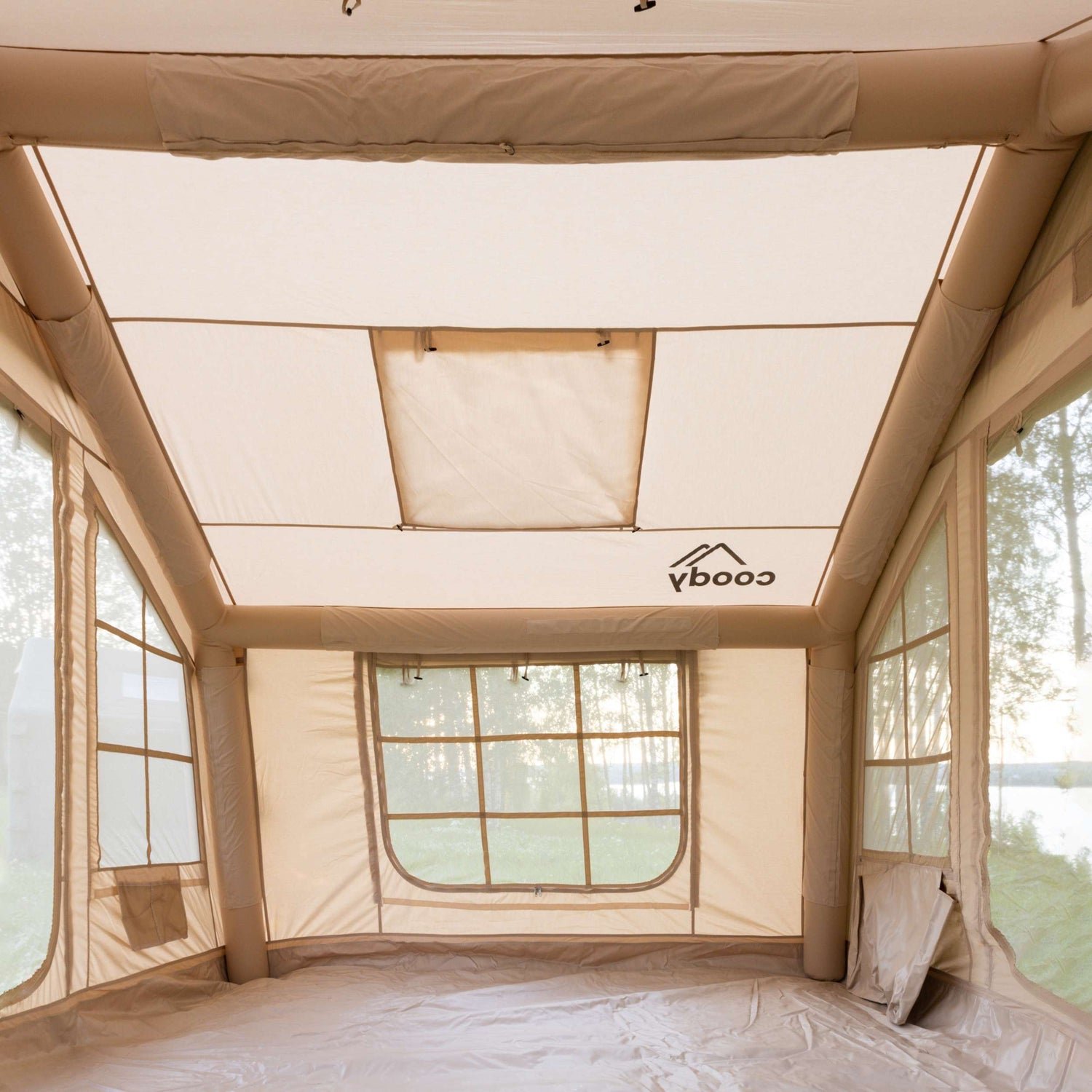
Si buscas refugios inflables, conoce la Coody | RBM Inflatable Tent Koala 5. Este refugio incluye todas las características que debe tener un buen refugio inflable. Está fabricado con tela de algodón de terileno transpirable y de alta calidad, que te mantiene seco al evitar la condensación. Incluso sin las varillas típicas, su estructura es resistente y soporta perforaciones, lo que permite una instalación rápida y sencilla. La carpa cuenta con varios puntos de ventilación para mejorar el flujo de aire. Con un espacio interior utilizable de 13.6 m2 (146.39 pies cuadrados), puede alojar a 6 personas adultas con colchones o a 8 personas adultas con sacos de dormir. La carpa incluye un piso integrado y ventanas con mosquitero, lo que garantiza una noche de descanso cómoda. El empaque incluye cuerdas, una bolsa de almacenamiento, un sobretecho, un kit de reparación y una bomba manual.
Preguntas frecuentes
🏕 ¿Las carpas familiares inflables pueden soportar vientos fuertes?
- Sí, por lo general, las casas inflables de camping soportan bien los vientos fuertes. Sus vigas de aire flexibles se doblan en lugar de romperse bajo presión, lo que las hace más resistentes en condiciones ventosas. Sin embargo, es importante asegurar correctamente la carpa con estacas y vientos para darle mayor estabilidad.
📦 ¿Cómo puedo reparar una carpa familiar inflable perforada?
- Para reparar una casa inflable de camping, primero identifica la perforación o rasgadura en la viga de aire. Limpia el área dañada y aplica un parche del kit de reparación, asegurándote de que quede bien sellado. Déjalo secar durante el tiempo recomendado y luego vuelve a inflar la viga para comprobar que no haya fugas.
💡 ¿Cuánto tiempo toma instalar una carpa familiar inflable?
- Depende mucho del tamaño del refugio, pero la mayoría de las casas inflables de camping pueden montarse por completo en 5-10 minutos, significativamente más rápido que los refugios tradicionales con varillas, que suelen requerir más tiempo y esfuerzo
43 productos
Filtrar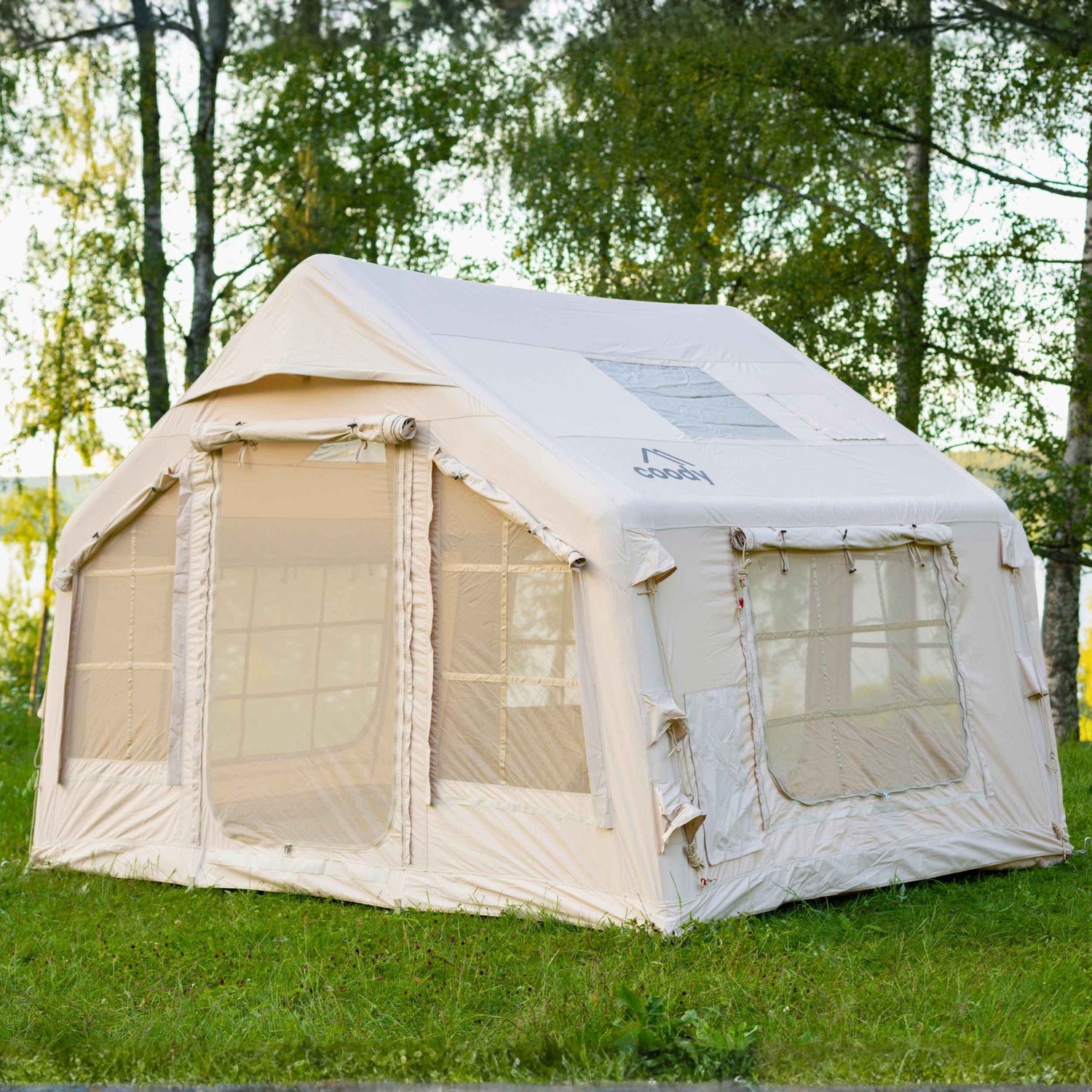
Carpa inflable Coody 8.0 color beige para camping (1-4 personas)
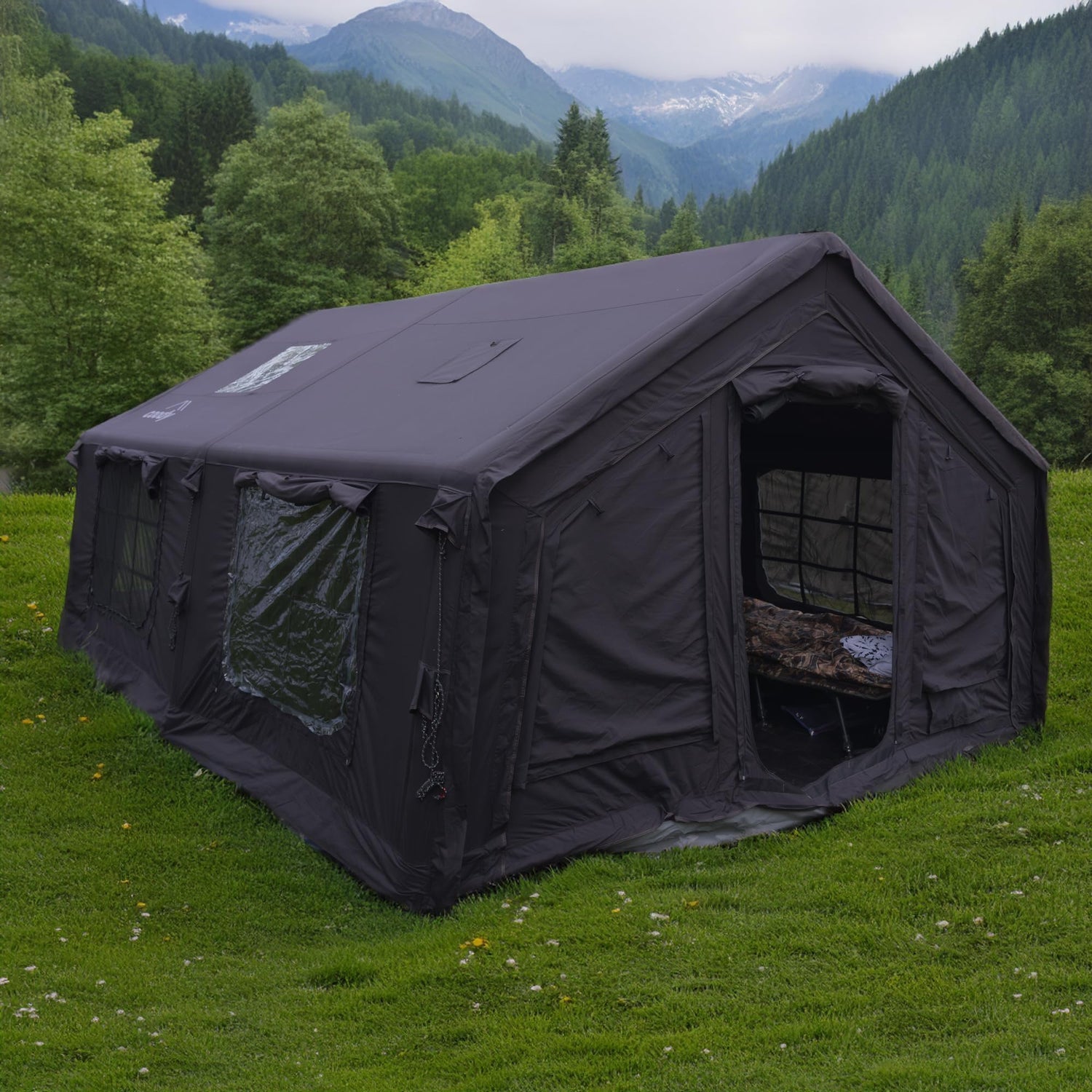
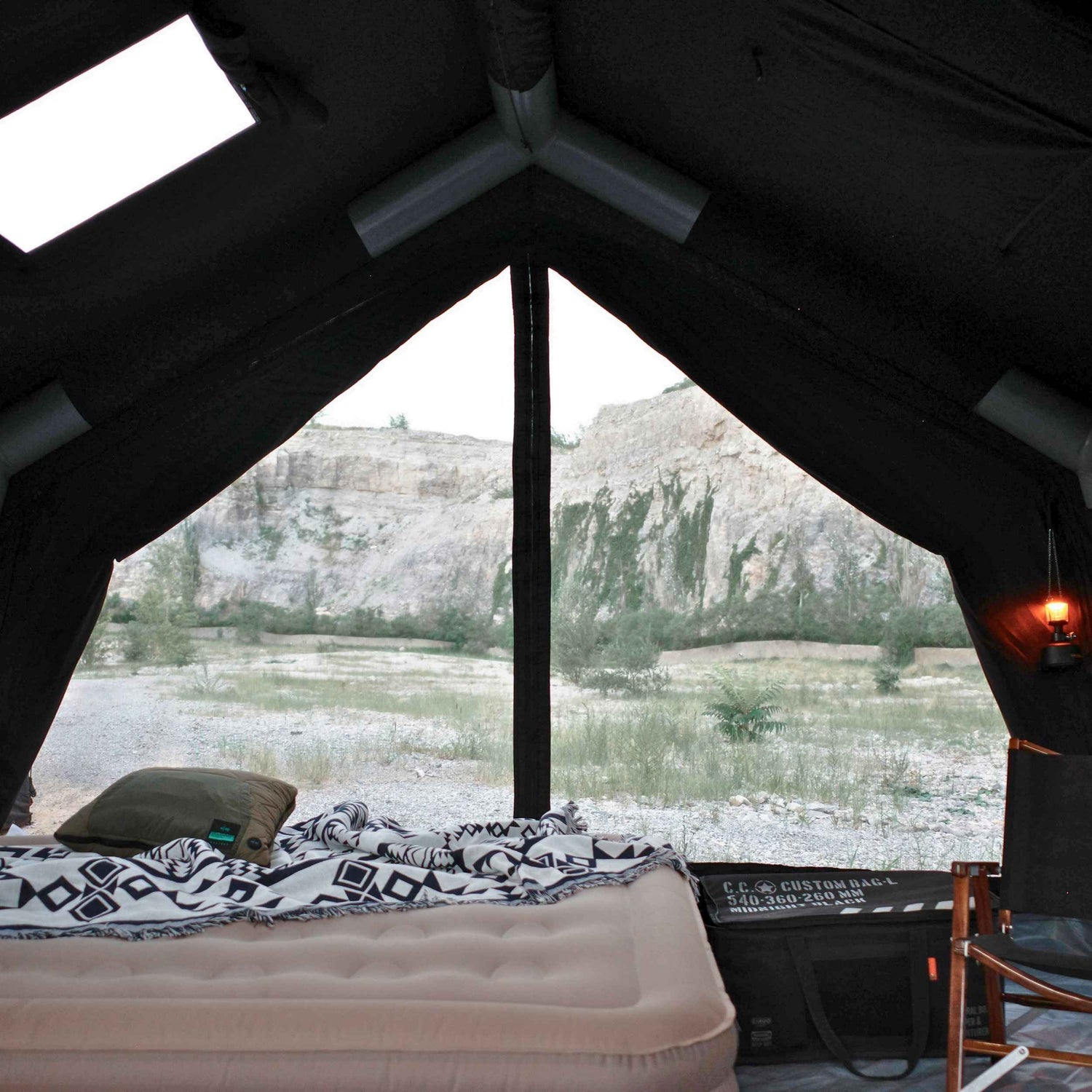
Coody Familia AirTent 13.6 Negra – Tienda inflable de invierno con salida para estufa para acampar, para 2–8 personas


Carpa inflable Coody | RBM Hub Shelter para 2-6 personas (negra)
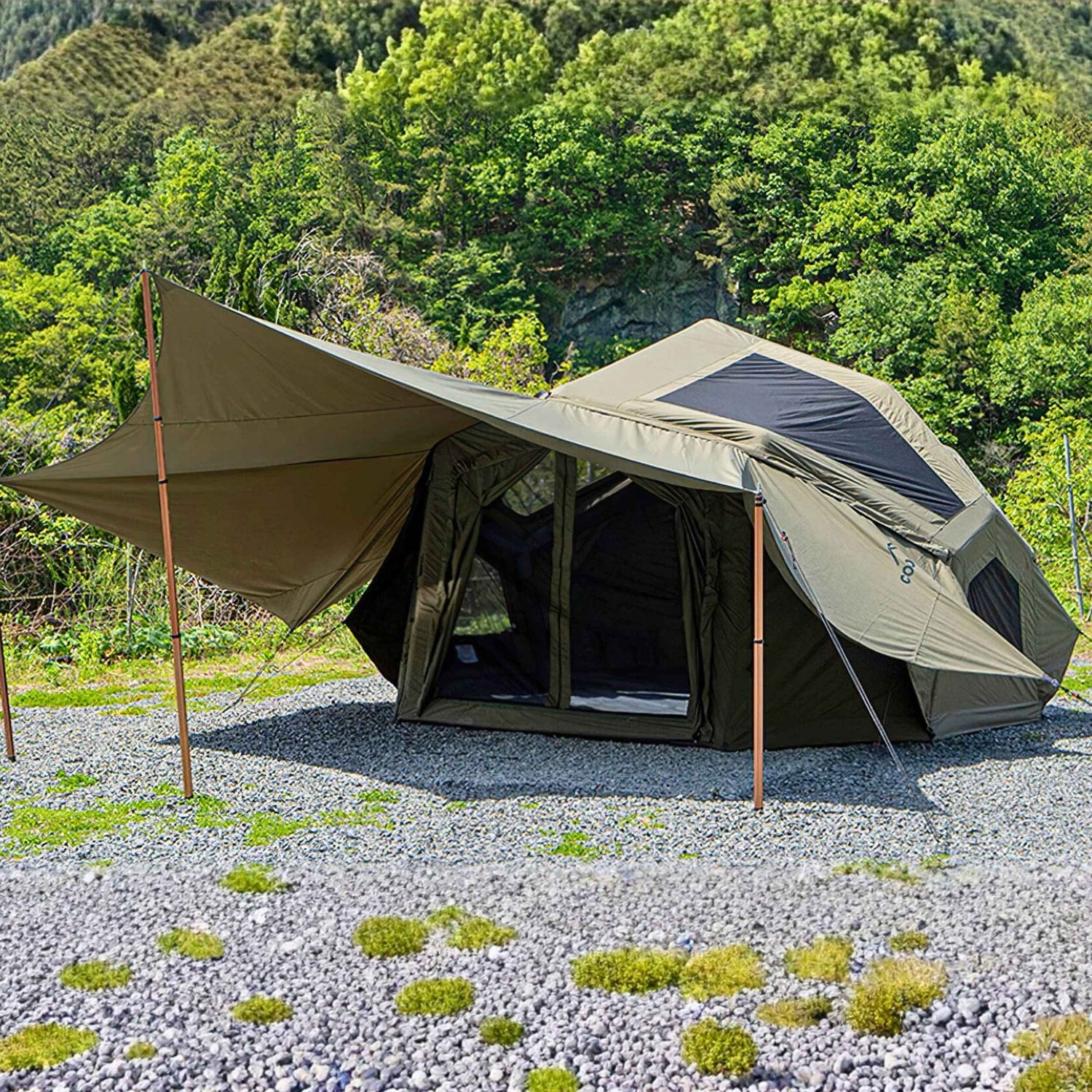
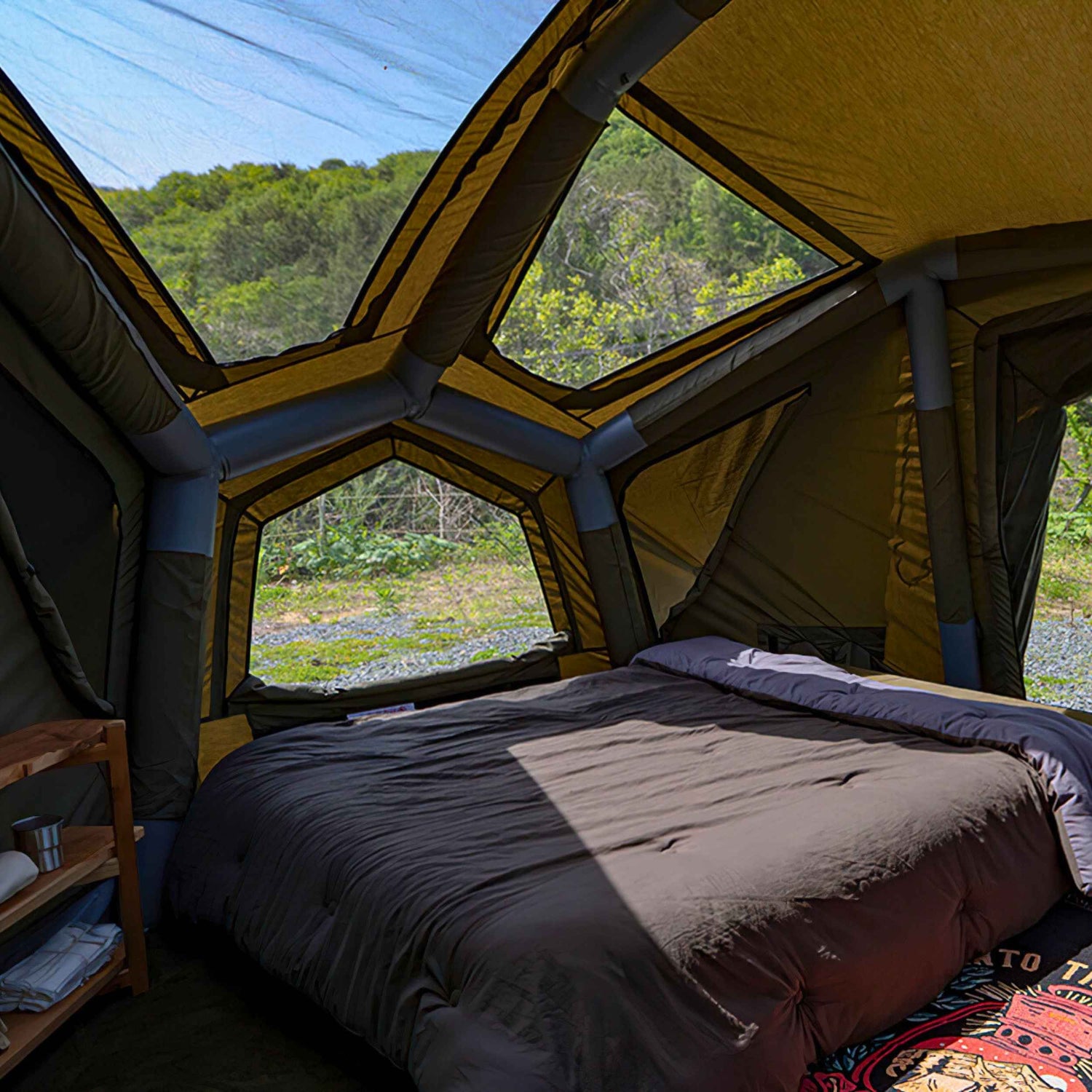
Carpa inflable Coody | RBM Bestona para 2-4 personas (verde bosque)


Familia AirTent 17.2 gris de Coody – Tienda inflable grande para camping con salida para estufa, para 2–10 personas
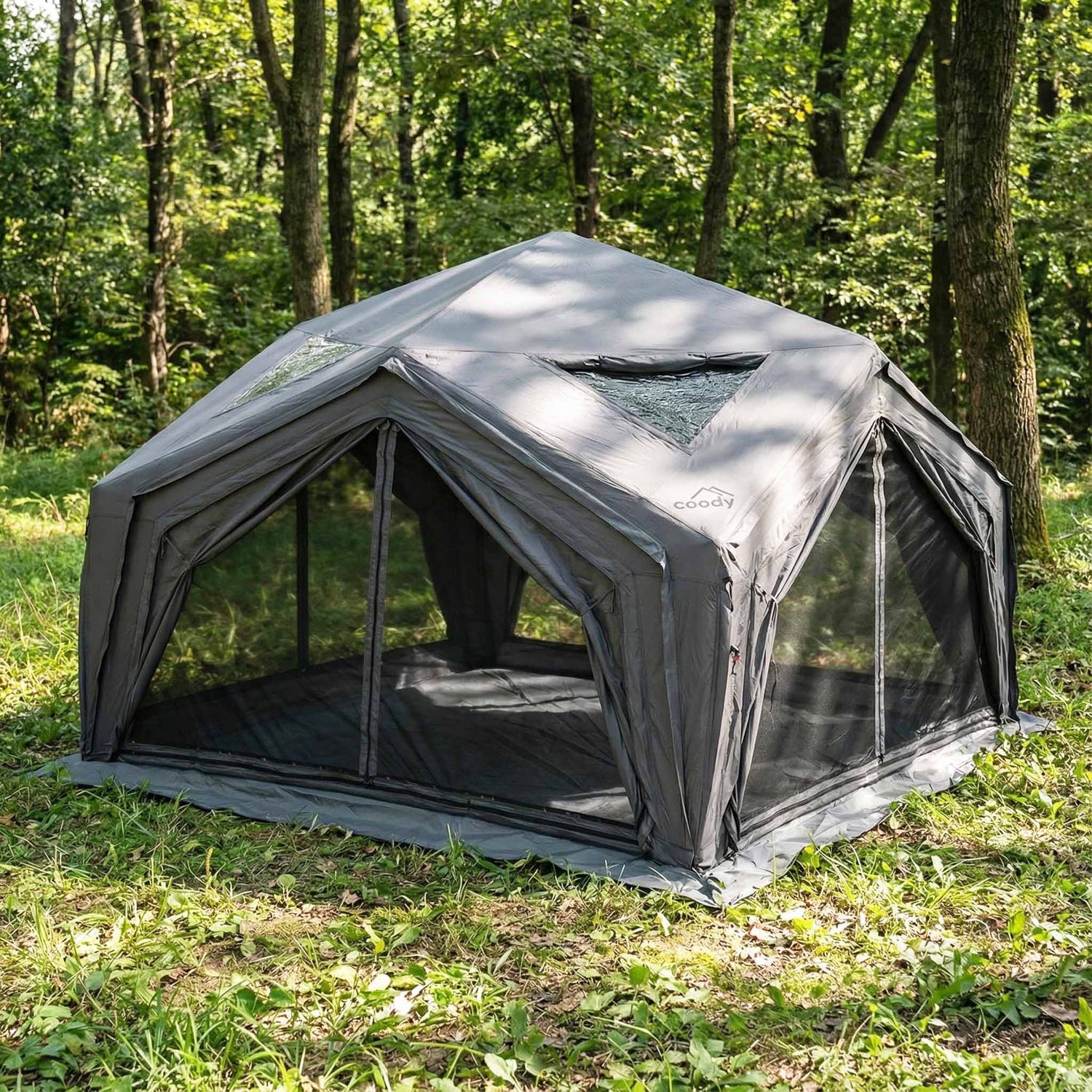
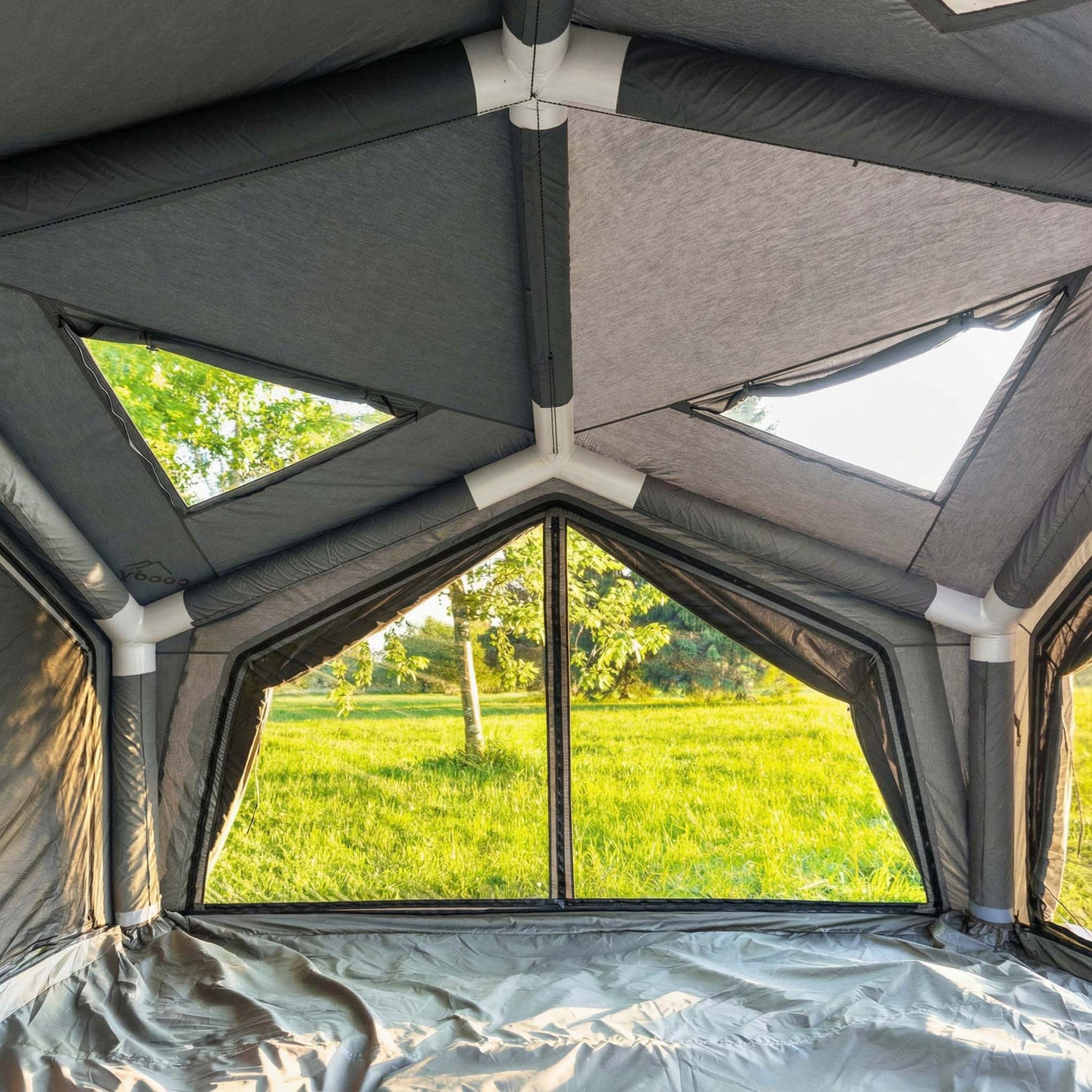
Carpa inflable Coody | RBM Hub Shelter para 2-6 personas (gris)
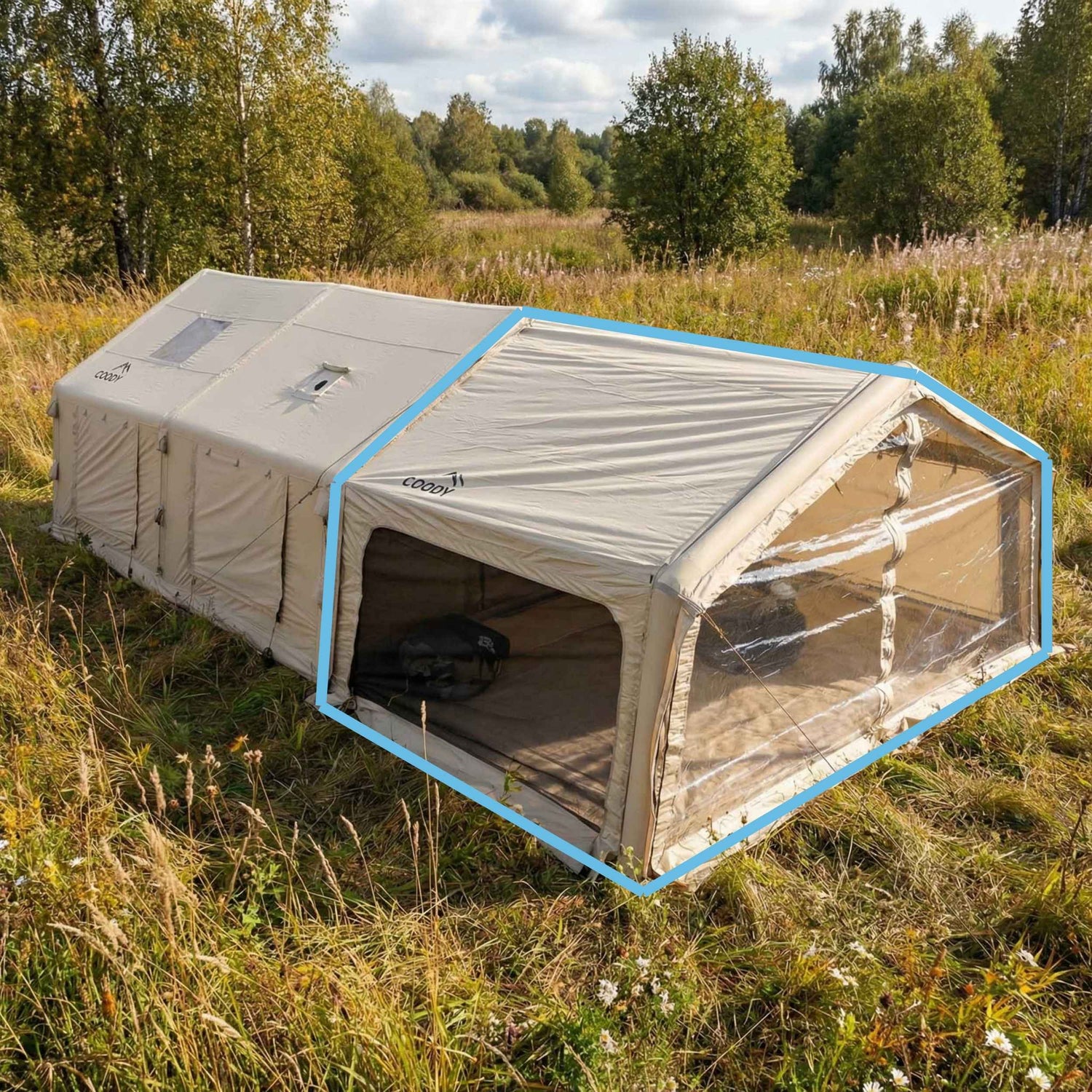
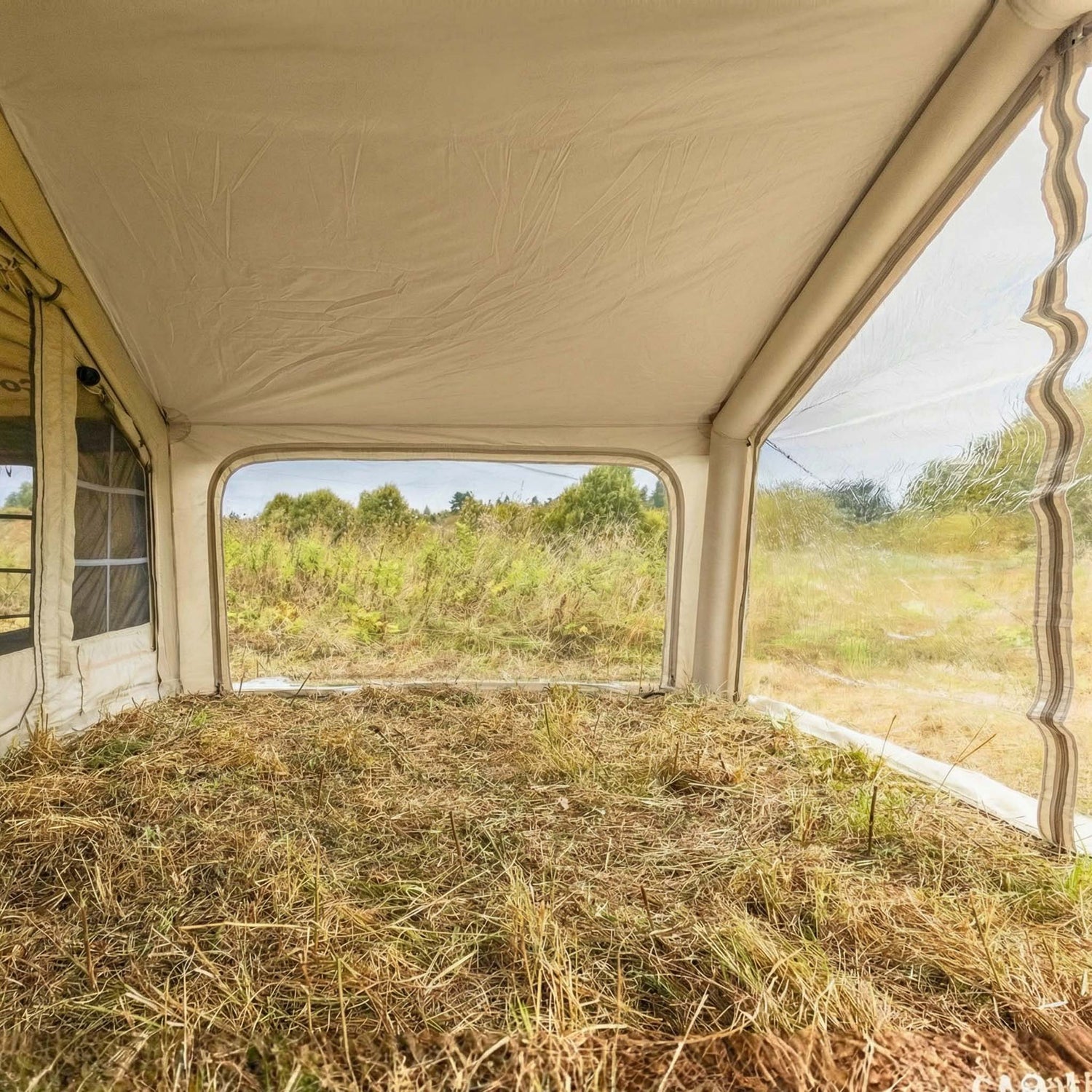
Extensión de toldo inflable Coody AirTarp para 17.2, 13.6, Hub, 10.0 AirTent – beige


Extensión de toldo inflable Coody AirTarp para 17.2, 13.6, Hub, 10.0 AirTent – verde bosque
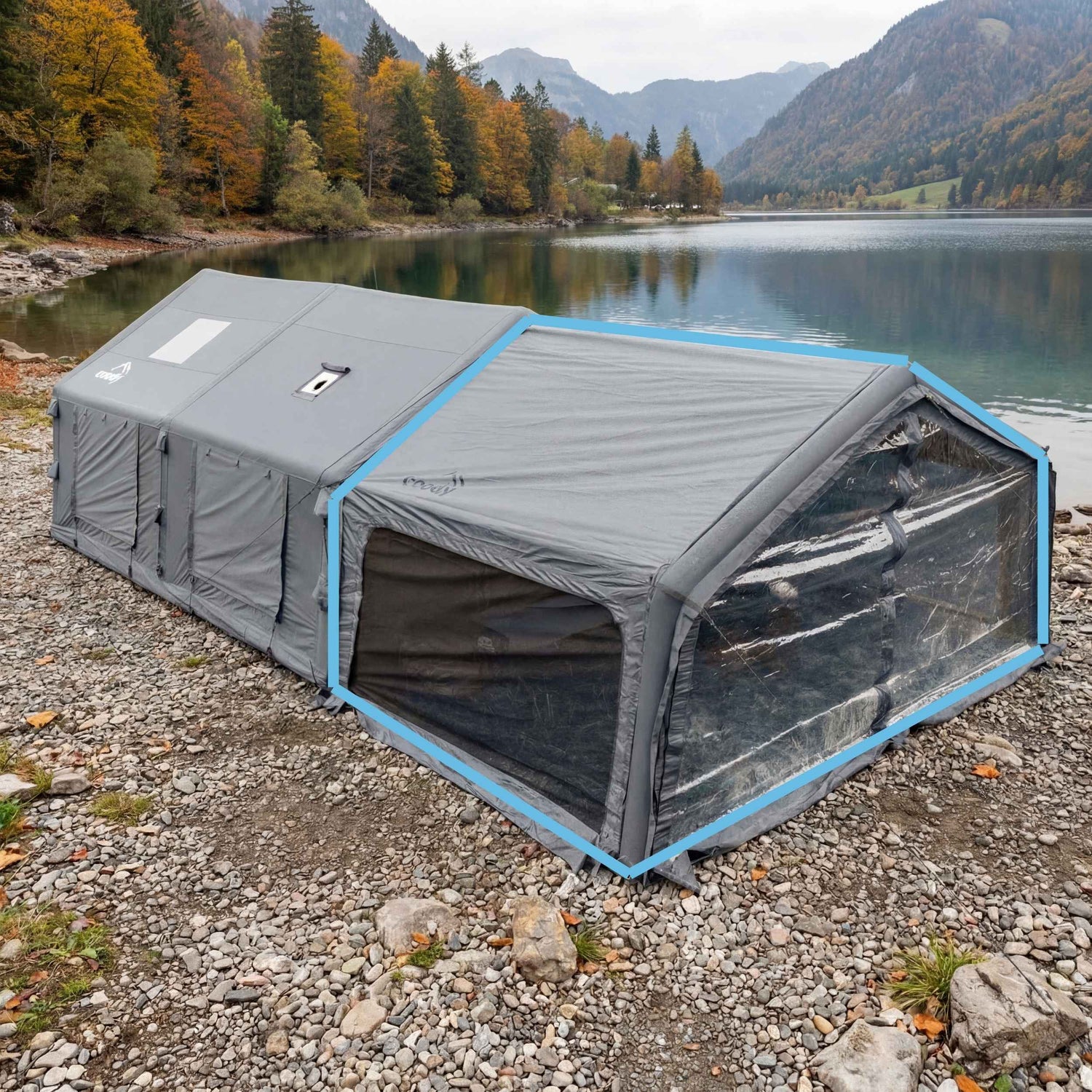
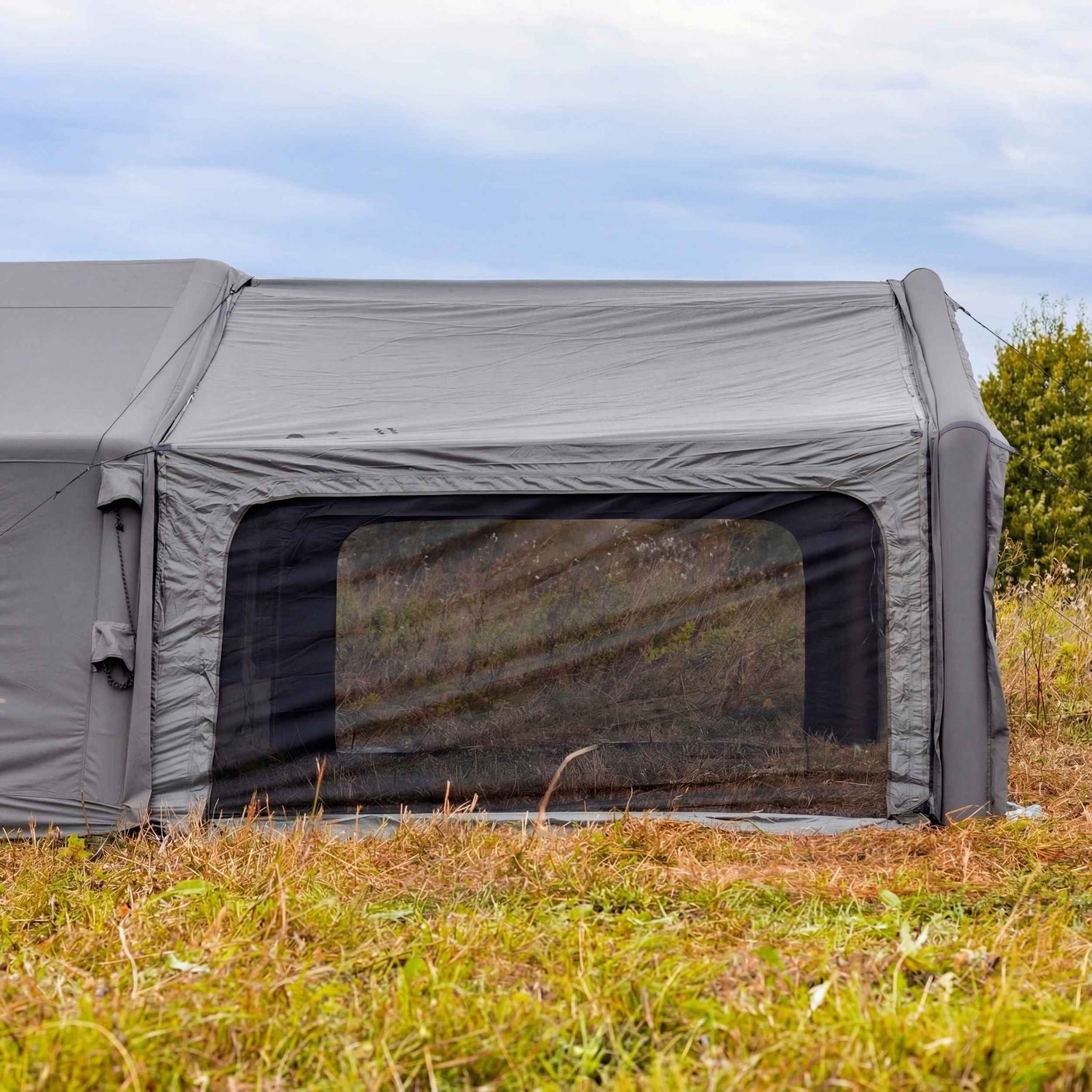
Extensión de toldo inflable Coody AirTarp para 17.2, 13.6, Hub, 10.0 AirTent – gris
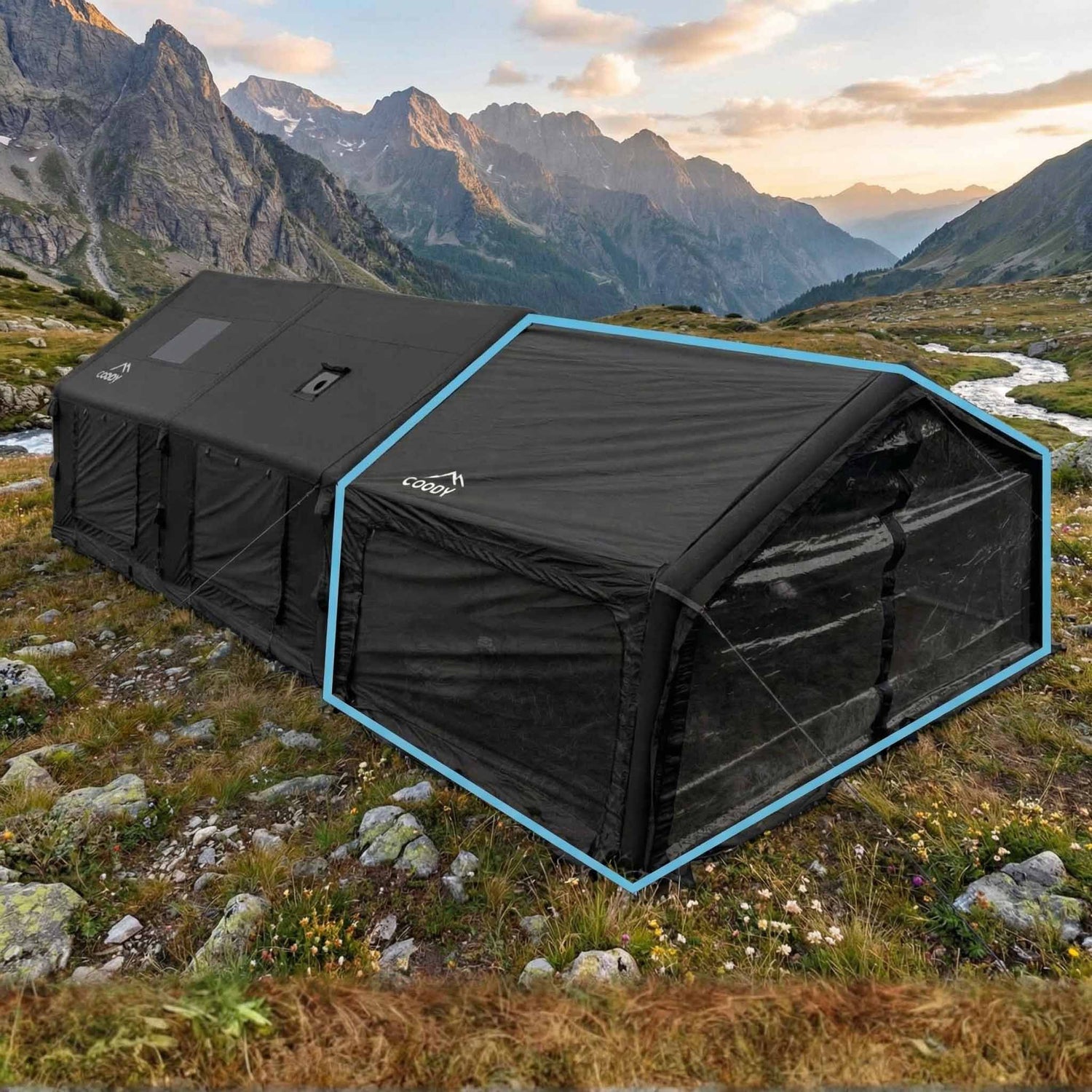
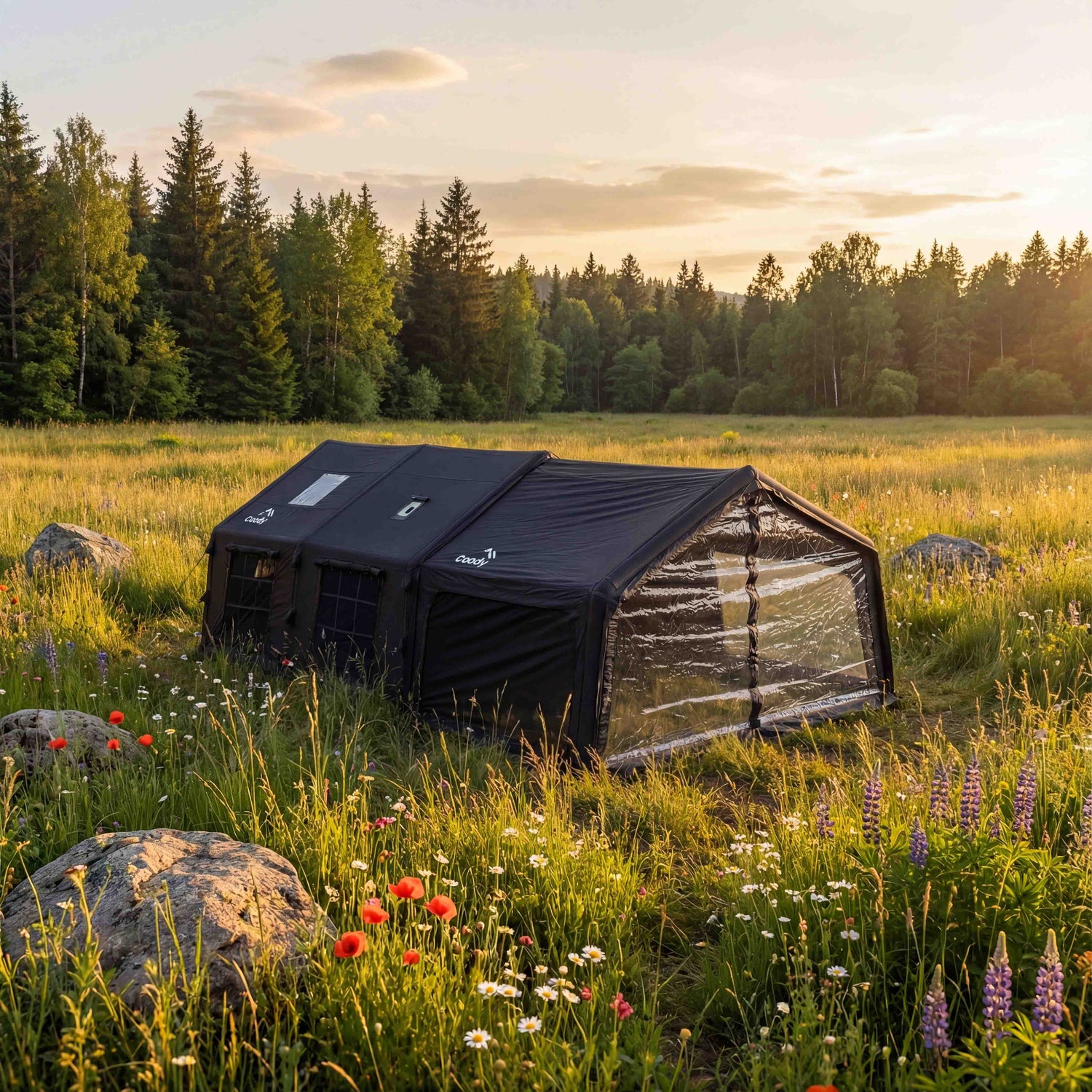
Extensión de toldo inflable Coody AirTarp para 17.2, 13.6, Hub, 10.0 AirTent – negra


Carpa inflable Coody | RBM Bestona para 2-4 personas (negra)

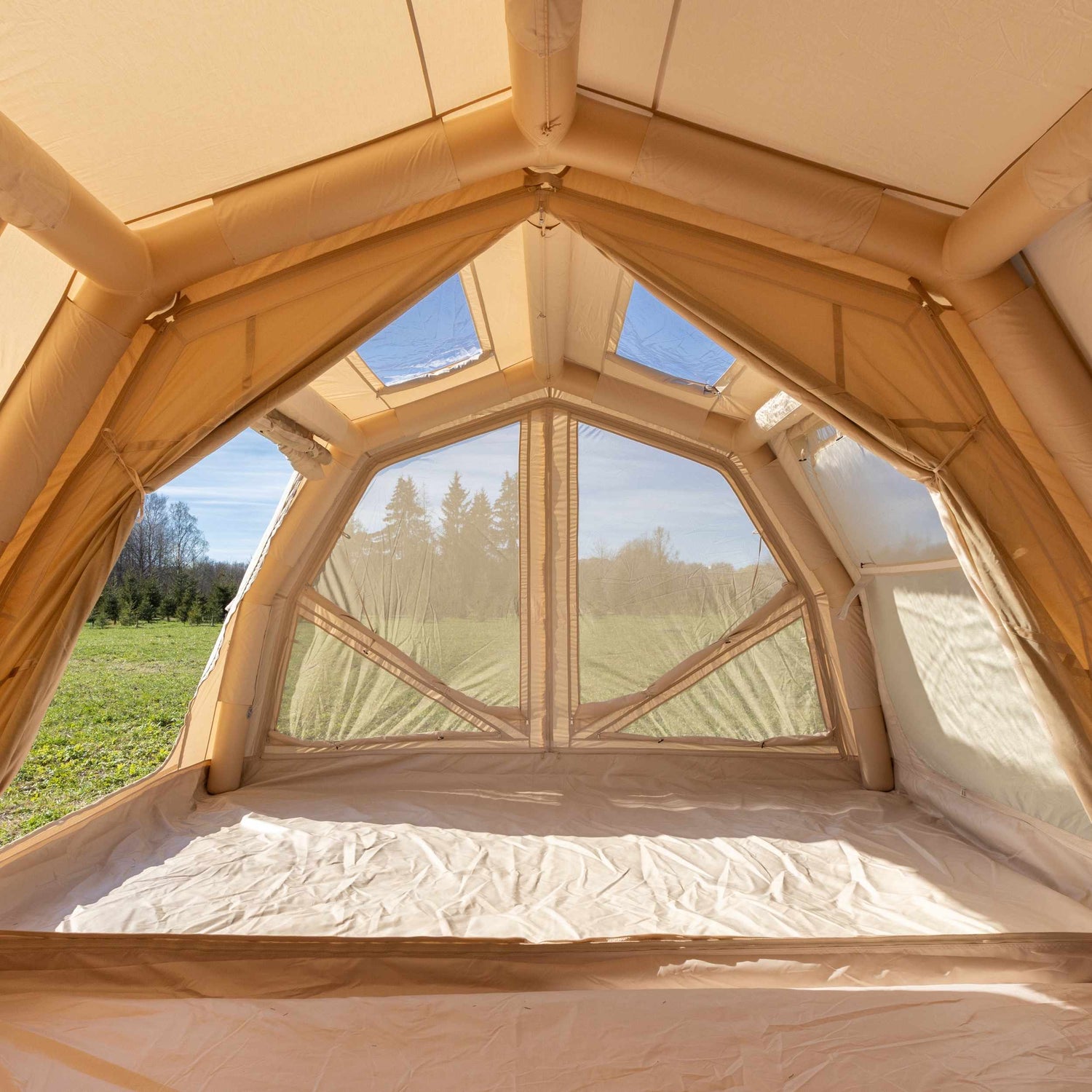
Coody Familia AirTent 17.2 Pro Beige – Tienda inflable para camping con salida para estufa, para 2–10 personas
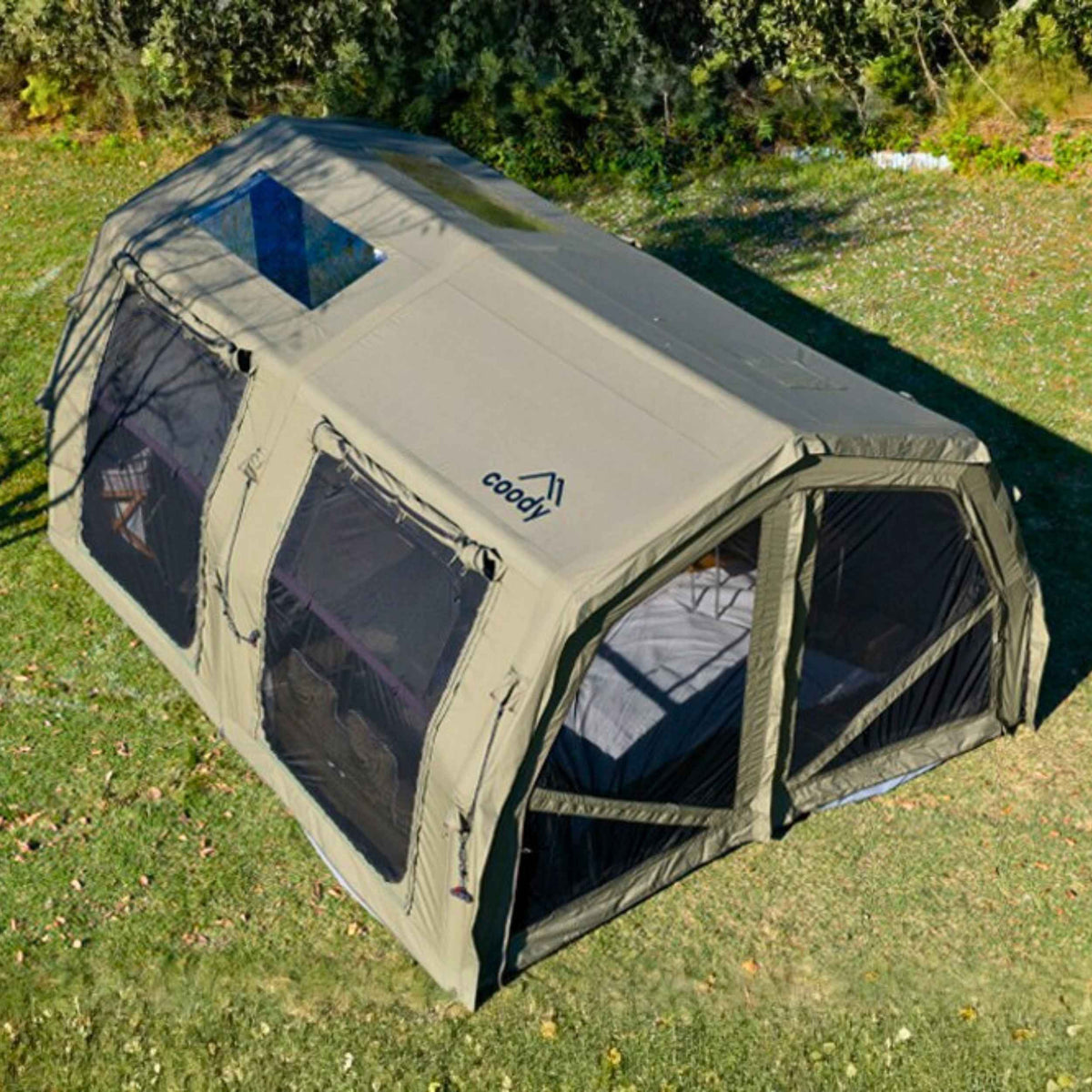

Coody Familia AirTent 17.2 Pro verde: tienda inflable para camping con orificio para estufa, para 2–10 personas


Coody Familia AirTent 17.2 Pro Negra – Tienda inflable para camping con salida para estufa, para 2–10 personas
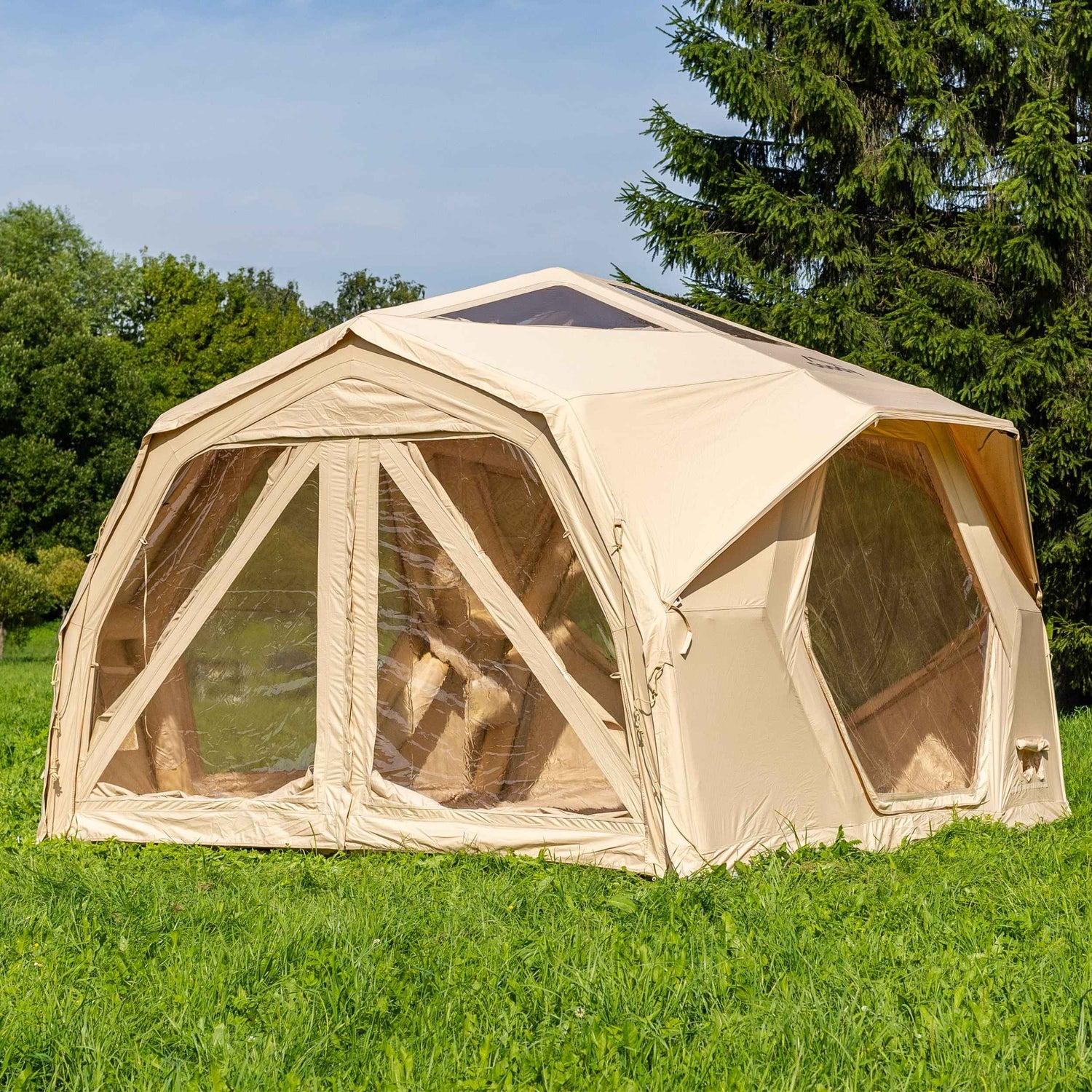
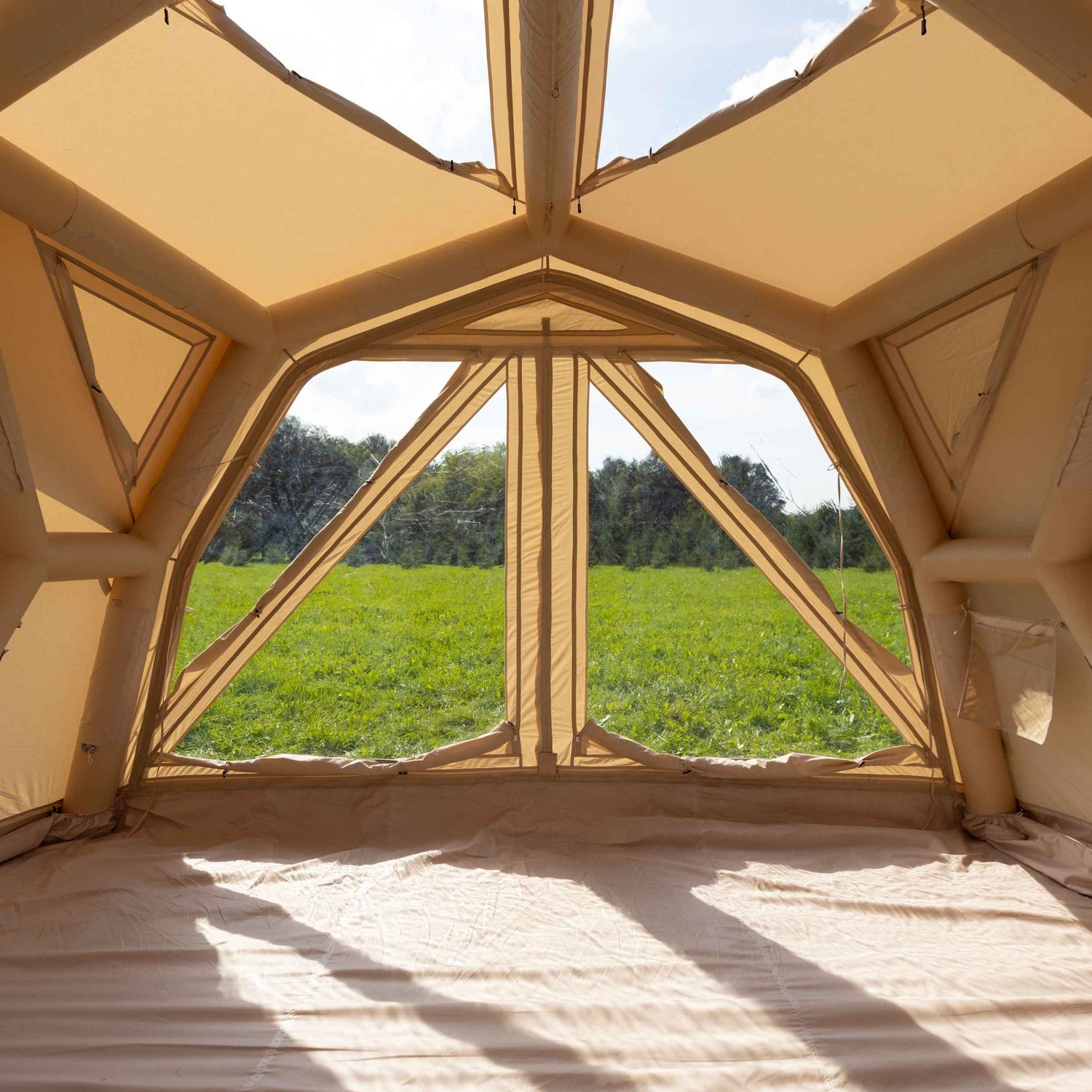
Coody Hub Pro Beige - Tienda inflable para acampar (2-6 personas)


Coody Hub Pro Verde bosque - Tienda inflable para acampar (2-6 personas)
Inflatable blow tent house
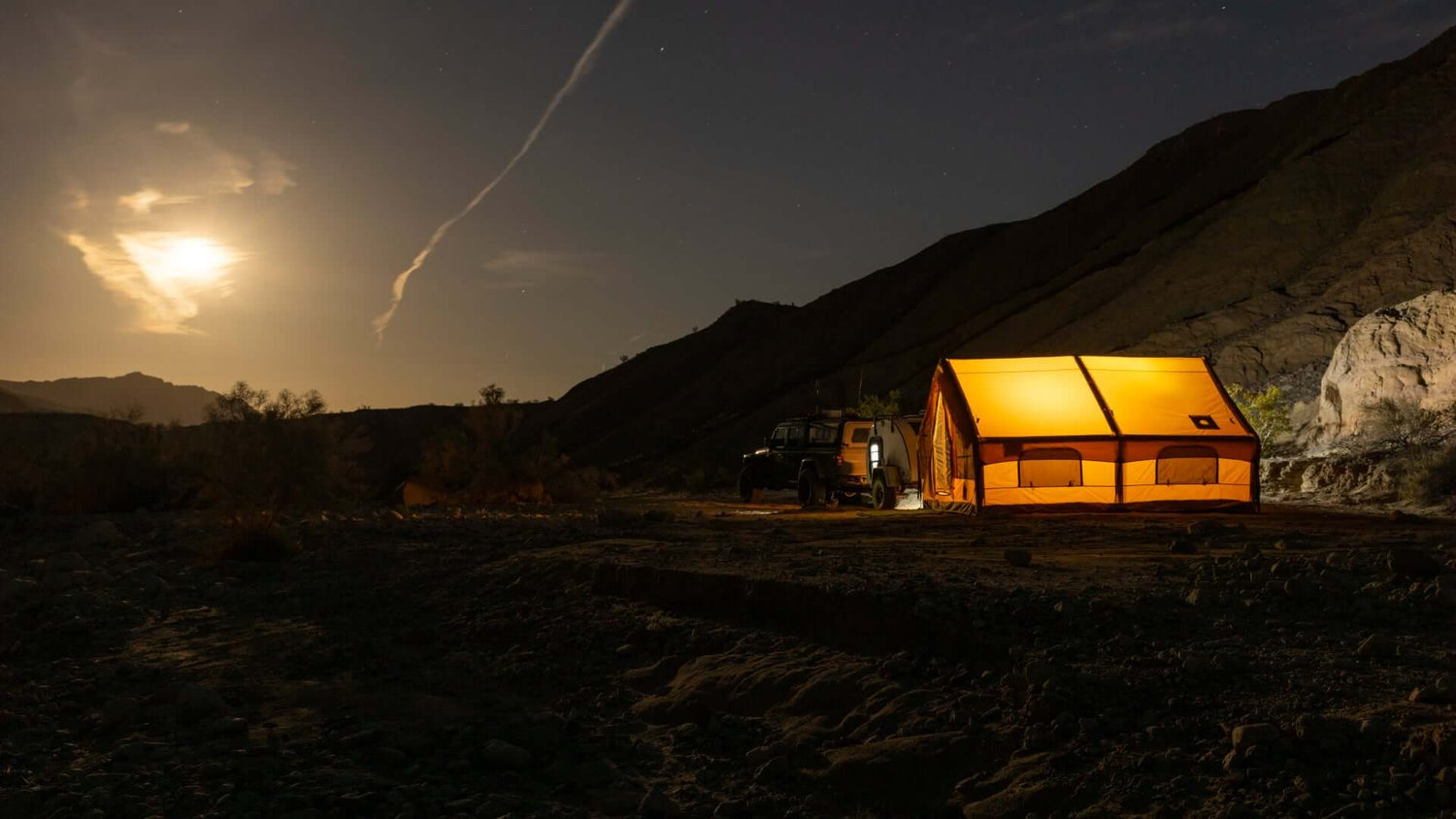
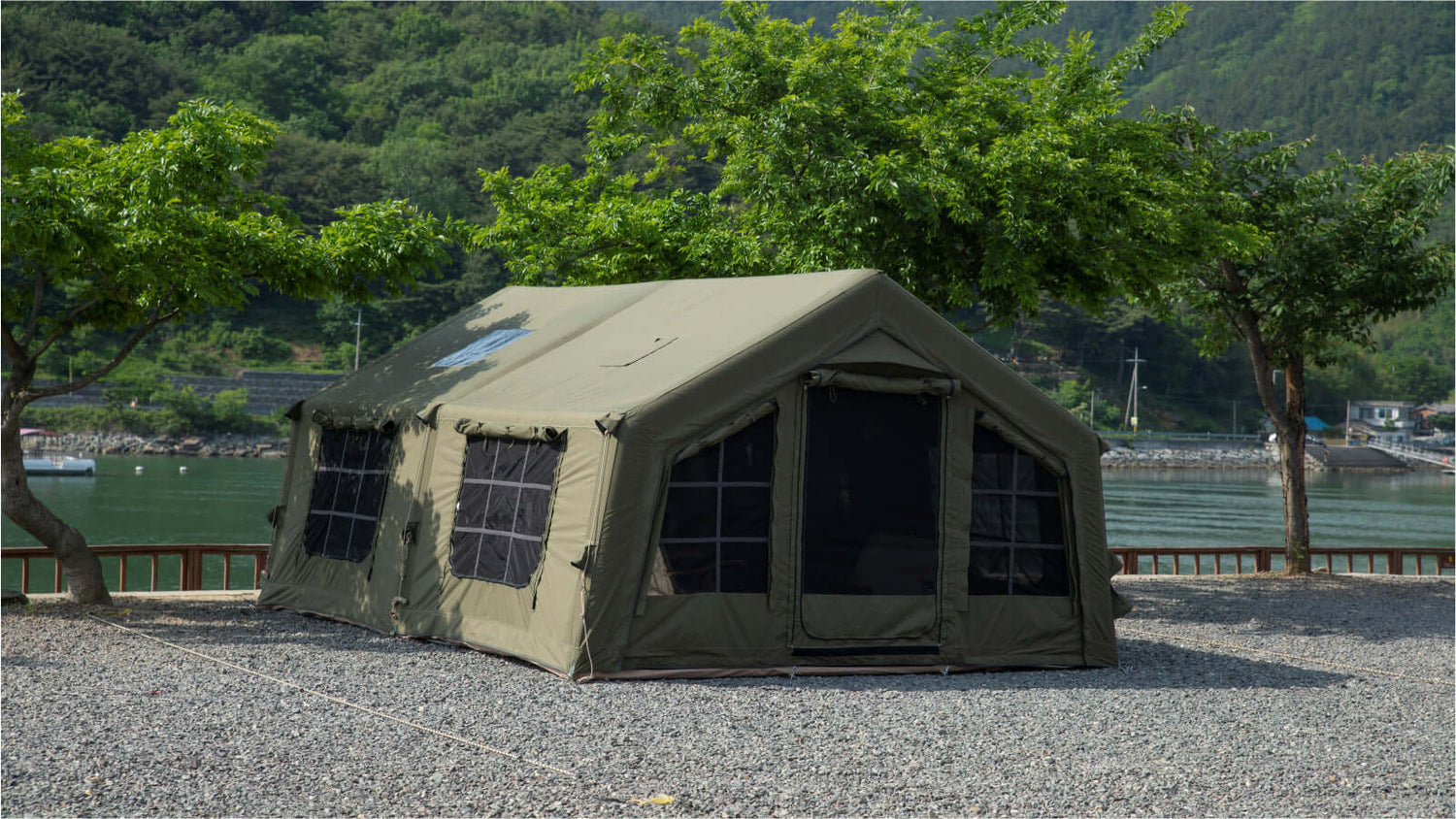
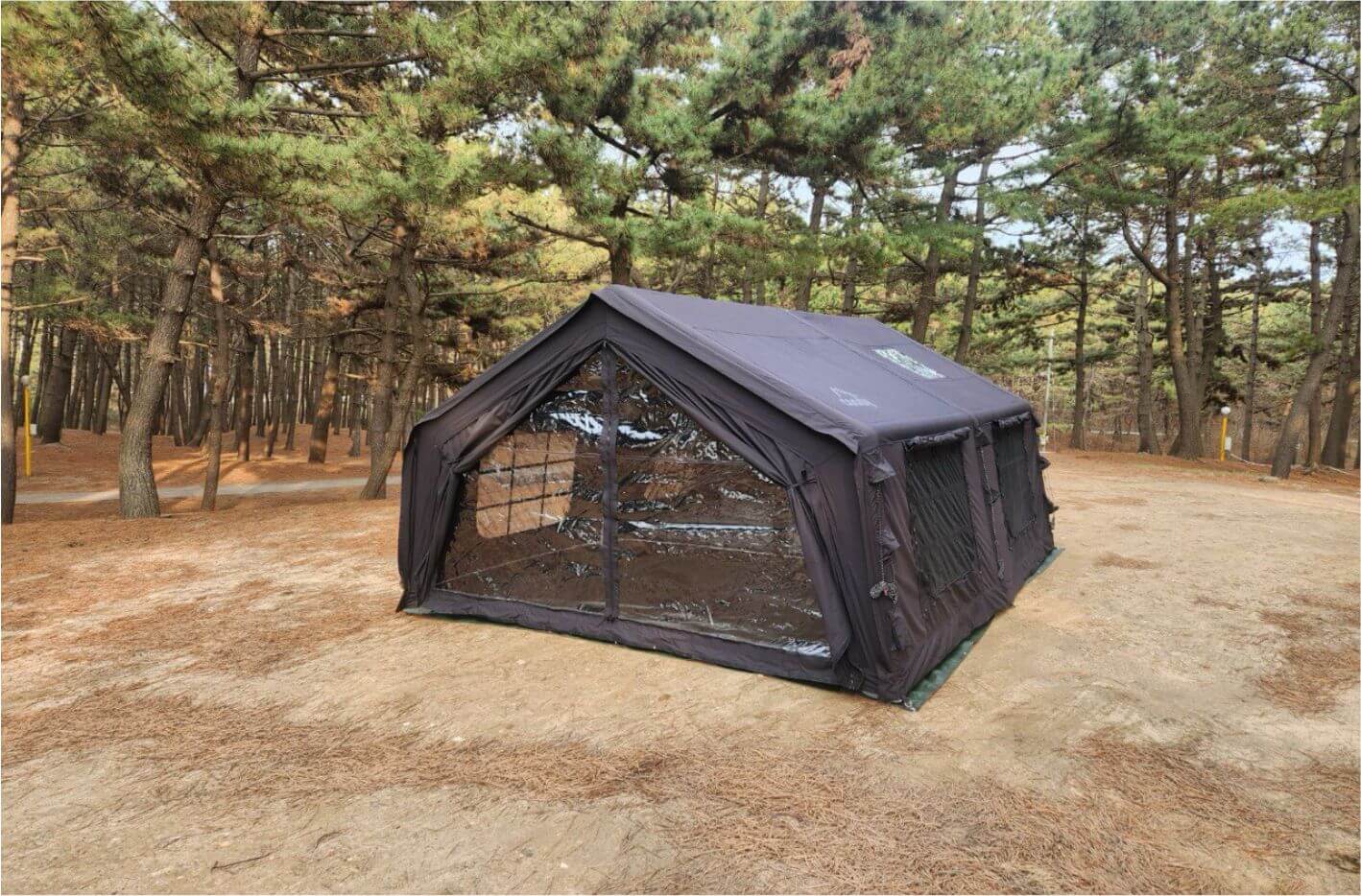
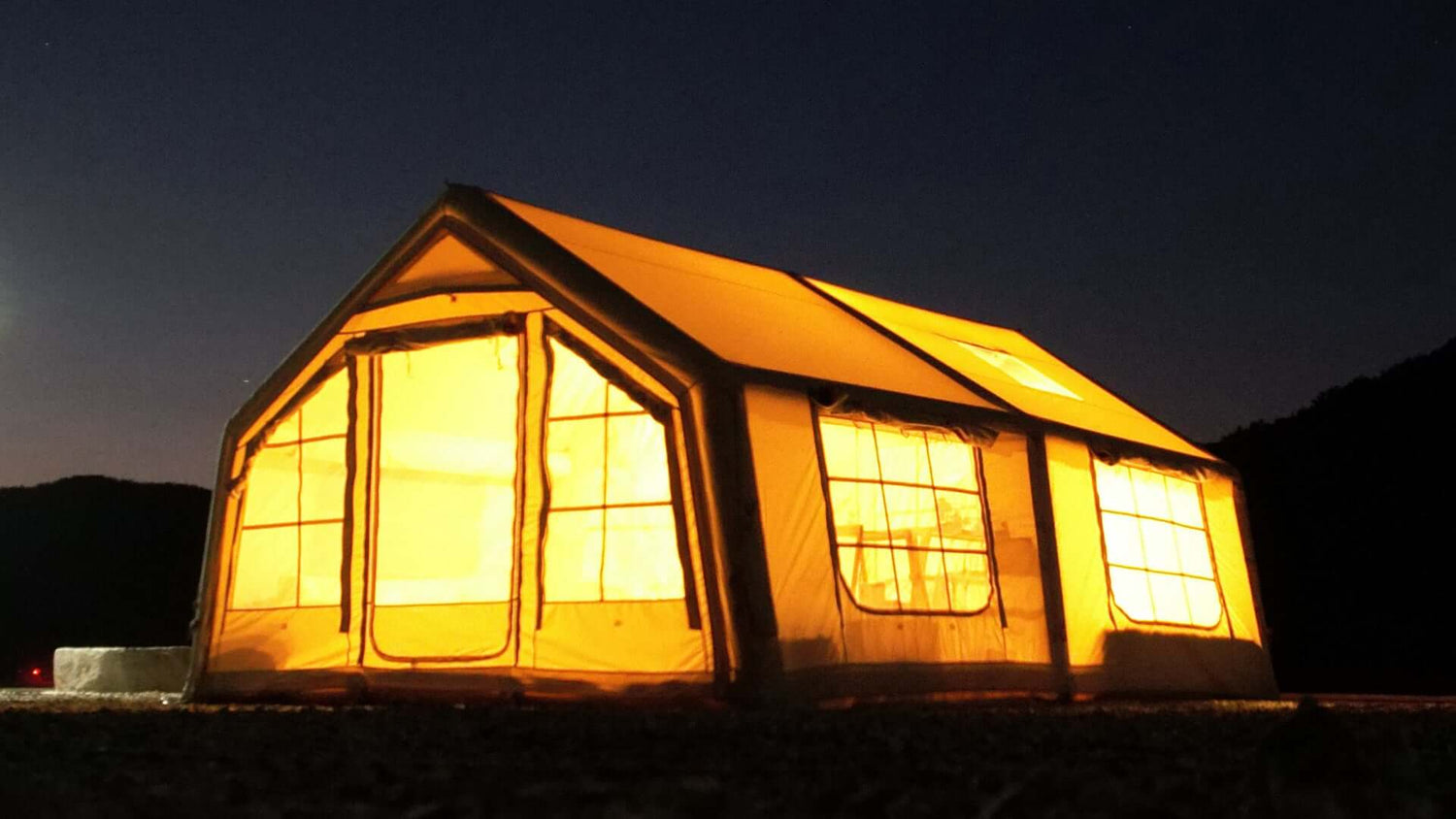
Campers who enjoy the tranquility of the great outdoors but have grown bored of installing knotted pole shelters will discover that inflatable tents are the perfect solution for their camping needs. For the purpose of providing campers with the most convenient and comfortable recreation possible, these models include the most recent and cutting-edge camping innovation that is not offered in any other type of camping shelter. These models, which are also known as inflatable beam tents, blow air houses, or blow up shelters, are definitely something that you should take into consideration further.
If you are interested in this type of shelter, we invite you to explore our blog, where we will delve into a detailed discussion about these wonderful outdoor houses. We will discuss, how to pitch these shelters, what the benefits of using them are, whether they have any shortcomings, and some key things to look for while purchasing them so that you can make an informed decision when choosing one for your next adventure.
What are the advantages of using air shelters?
This shelter's primary distinguishing feature is likely its greatest advantage. We're talking about a simple setup. Unlike conventional models with poles that inexplicably always seem to hook on something, inflatable models only need air to take shape.
Choose a flat, level venue without rocks, branches, or other items that could damage construction. Remove debris before setting up. Get everything you need out onto the ground and set it up. Follow the manufacturer's directions to equally inflate each chamber. Take your time and don't overinflate, which might damage seams. After inflation, pin the shelter down with stakes or guylines. This will stabilize the construction and provide protection from strong winds. Just give your camping house an easy shake to ensure that it firmly stays on the ground and your outdoor house is ready for use.
The size of your blow up shelter will determine how long this process takes, but in most cases, it only takes a few minutes. You can use a special electric pump to simplify the process even more. The electric pump enables you to multitask by allowing you to focus on loading other gear while it does its job. Just be careful not to overinflate your shelter.
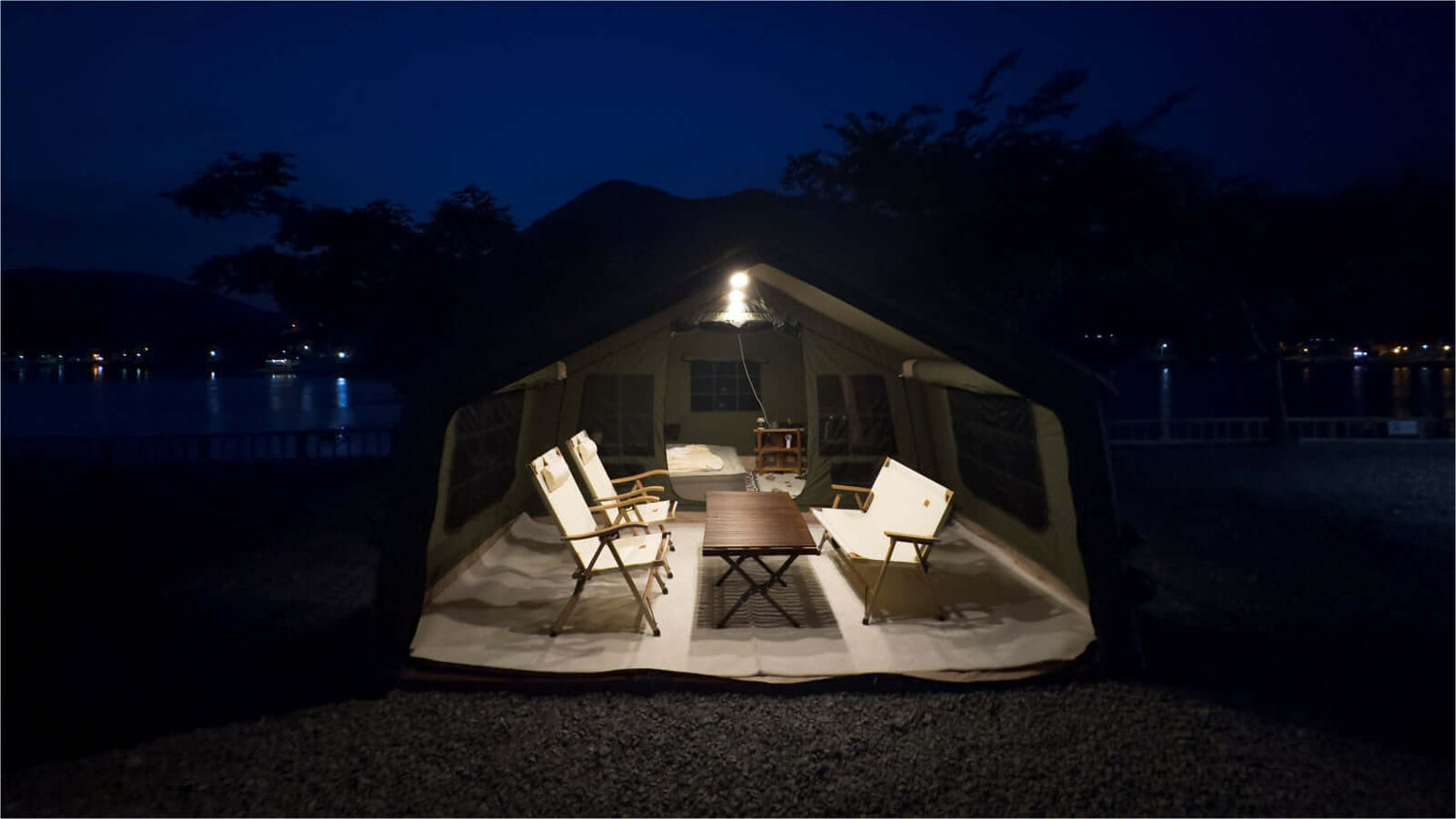
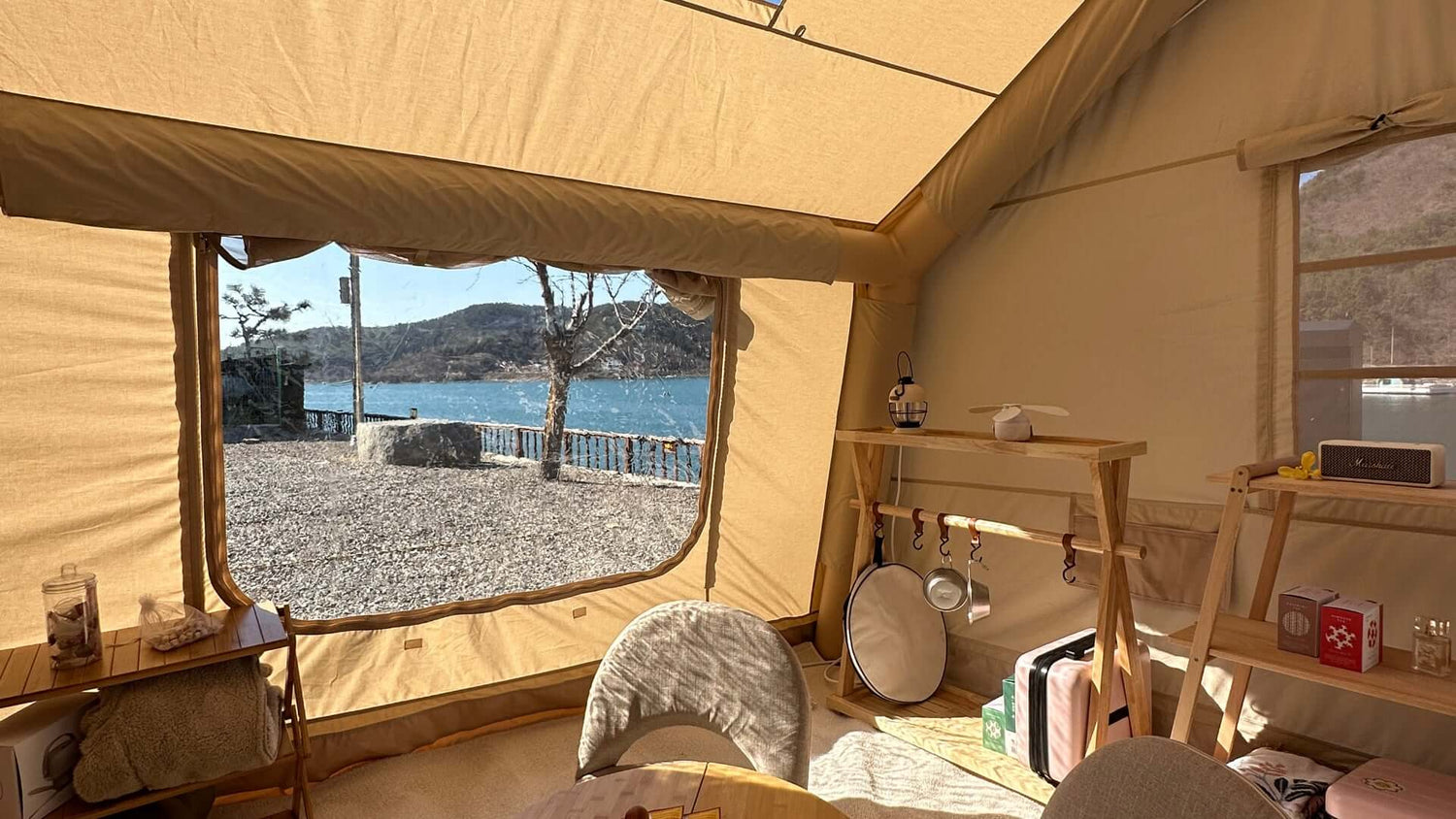
These shelters are superior in terms of usable area, and they outshine conventional shelters in terms of pleasantness as a place to relax and sleep. These models are a wonderful alternative if you're not a fan of wriggling around in small-sized or rooftop tents. Typically, their design allows adults to stand upright. Additionally, the large usable area of this camping house allows you to carry a significant amount of gear on your trip.
These shelters can resist severe winds without any problems. An inflatable house is said to be rock-solid. Once you have finished securing construction with stakes and guy lines, you will be amazed at how stable these constructions can be. One further issue that you could experience when there is strong wind is a noise coming from the shelter. However, you will be surprised by how quiet these tents are, even in the presence of strong winds. Having to stay awake all night because your shelter is flapping noisily in the wind, keeping you awake, is not the best way to relax. However, with a blow up camping house, you won't have to worry about that.
Another common misconception is that they’re fragile. In reality, manufacturers typically craft these shelters from robust fabrics, ensuring exceptional durability with high-quality materials that withstand punctures. And even if it suffers a puncture, most manufacturers provide patch kits that are easy to install and extremely strong.
Why inflatable tents aren't perfect
One of their significant disadvantages is the higher price compared to regular pole models. While they provide convenience, space, and ease of installation, these advantages come at a cost. These models are frequently more expensive due to the high-end materials used in their construction. For many camping enthusiasts, the initial investment may seem steep, especially if they are accustomed to more modest, traditional models. However, the long-term benefits of an inflatable camping house, such as durability, ease of setup, and comfort, may exceed the cost for frequent campers.
Chances that you will puncture your shelter are low but never zero. There is a possibility that these shelters could sustain inadvertent damage throughout the process of setting them up, taking them down, and moving them, regardless of how careful you are.
It may take some time to complete repairs. The process of repairing a leak in an inflatable camping house is quite simple; the challenge is in locating the source of the leak instead. It can also be difficult to repair major punctures, holes, or tears, particularly if you are outdoors and do not have a patch that is large enough to cover the hole.
Things to Think About Before Purchasing an Inflatable Tent
Determine how many adult you need to accommodate and select a size accordingly. Make sure the tent has enough sleeping and living areas for comfort for every member of your party. It depends on your gear and the level of comfort that you want, but it is recommended to have at least 20 square feet per person.
Consider the conditions in which you are going to camp. If you love to spend time on the beach and will only use your camping house in warmer seasons, you can choose a 3-season shelter; this will save you some money. On the other hand, if you are a regular camper who likes to camp year-round, it is better to choose a 4-season model.
If you plan to carry it on foot for any distance, consider its weight when packed. If you travel with your friends, there will be no problems for you in delivering your shelter to the campground. But if you are on a solo journey, it may be inconvenient to deliver your shelter to the destination point.
These shelters must be able to resist the same outside conditions as pole shelters. Check to see if it has reliable guy lines and stakes to withstand heavy winds. Check the specs to see what the waterproofing level is. This is represented in Schmerber or in liters of water per hour per square meter. The average rain pressure ranges from 1,000 to 2,000 Schmerber; the greater the amount, the more waterproof the cloth.
Discover Effortless Camping with the Coody | RBM Koala 5
If you're looking for inflatable shelters, check out The Coody | RBM Inflatable Tent Koala 5. This shelter includes all of the features that a decent air shelter should have. It's made of high-quality, breathable terylene cotton fabric that keeps you dry by preventing condensation. Even without typical poles, its frame is strong and puncture-resistant, allowing for rapid and simple setup. The tent has many ventilation points to improve airflow. With an internal usable space of 13.6 m2 (146.39 square feet), it can accommodate 6 adults with mattresses or 8 adults with sleeping bags. The tent contains a built-in groundsheet and mosquito net windows, ensuring a comfortable night's sleep. Its packaging includes ropes, a storage bag, a rain fly, a repair kit, and a hand pump.
FAQ
-
Yes, blow up camping houses are generally good at withstanding high winds. Their flexible air beams bend rather than break under pressure, making them more resilient in windy conditions. However, it’s important to secure the tent properly with pegs and guy lines for added stability.
-
To repair a blow up camping house, first identify the puncture or tear in the air beam. Clean the damaged area, and apply a patch from the repair kit, ensuring it's properly sealed. Let it dry for the recommended time, then re-inflate the beam to check for any leaks.
-
It heavily depends on the size of your shelter, but most blow up camping houses can be fully pitched within 5-10 minutes, significantly faster than traditional pole shelters, which often require more time and effort
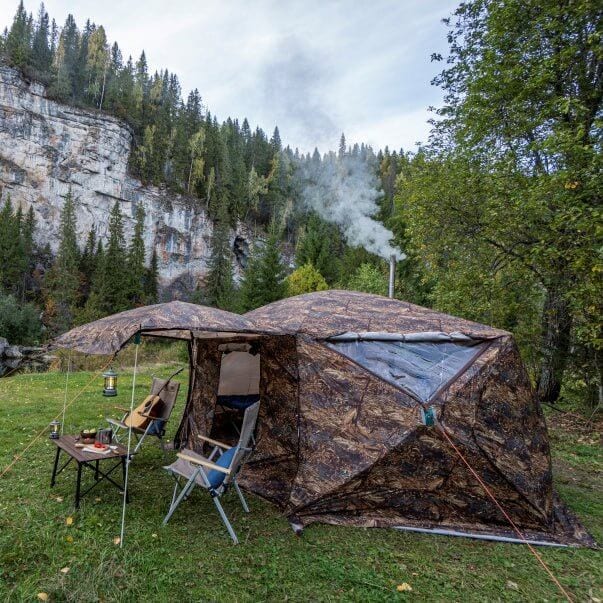
RBM Outdoors Hexagon Hot Tent Review
Discover the RBM Outdoors Hexagon Hot Tent: a 4-season shelter with double-wall insulation, stove jack, and quick 5-minute setup for extreme weather.
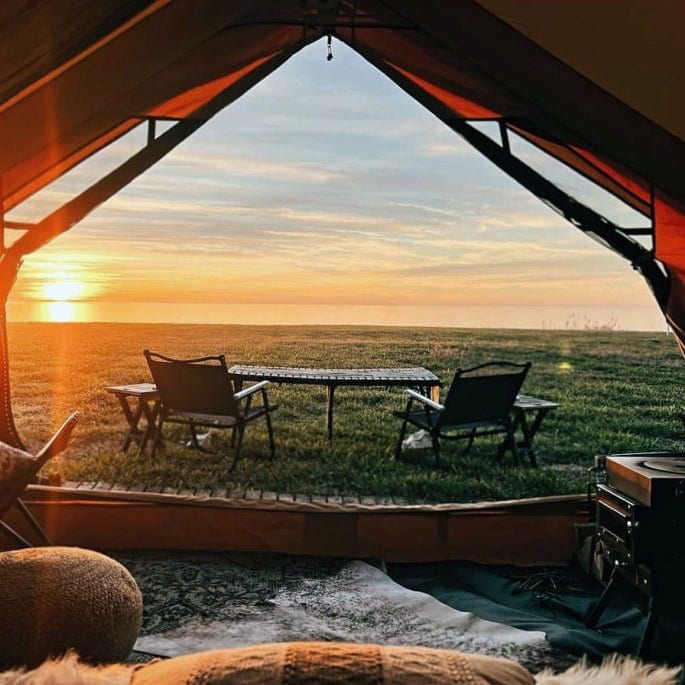
Kodiak Flex-Bow VX vs RBM Panda Large vs RBM Hexagon
Compare the Kodiak Flex-Bow VX, Coody Panda Large, and RBM Hexagon. Discover specs, setup times, and why specialized tents beat "do-it-all" gear.
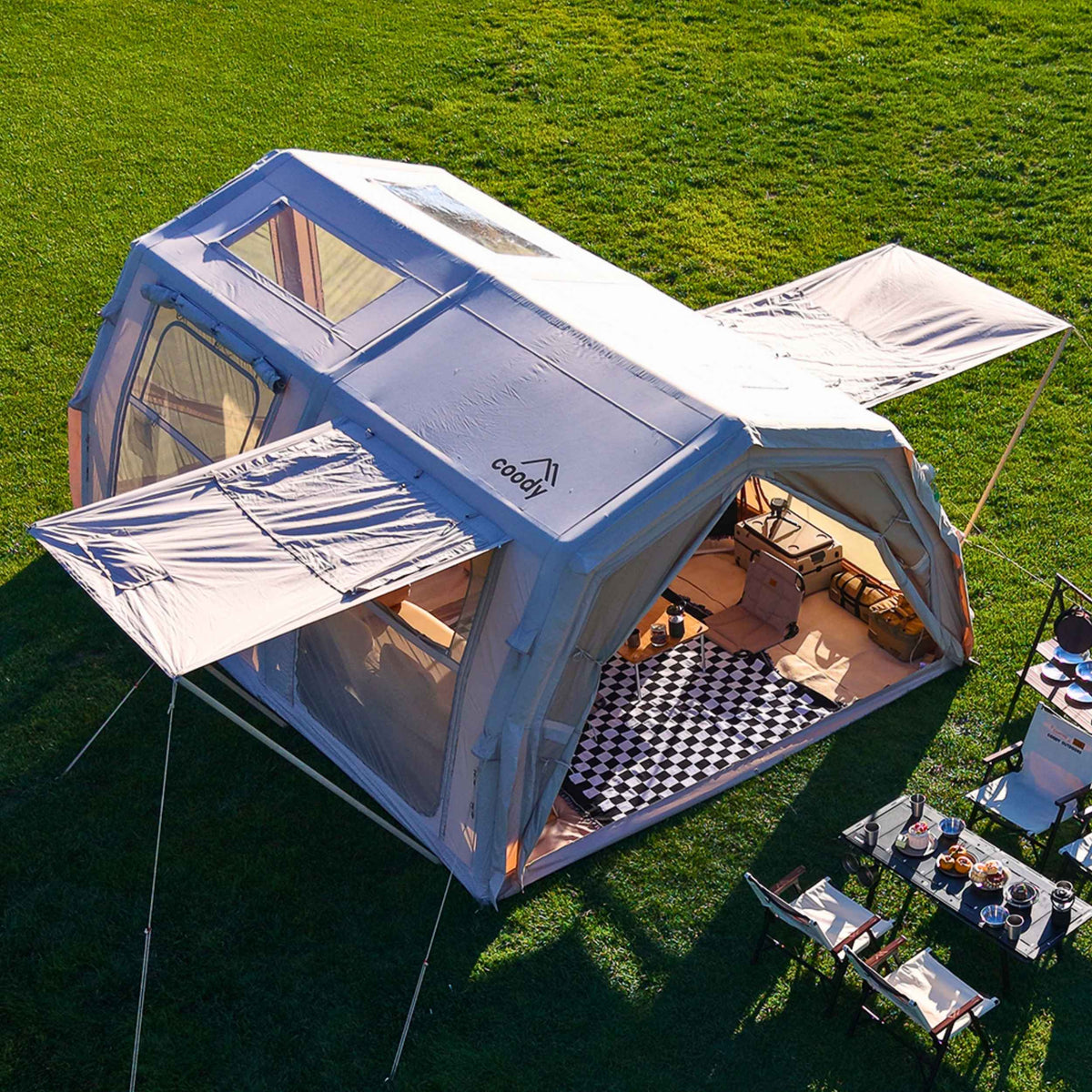
Coody 17.2 Pro vs Sönmez London Maxia 480 Glamping Tent Comparison
Compare Coody 17.2 Pro and Sönmez London Maxia 480. Discover key differences in cotton canvas, weight, condensation, and value to find your best tent.
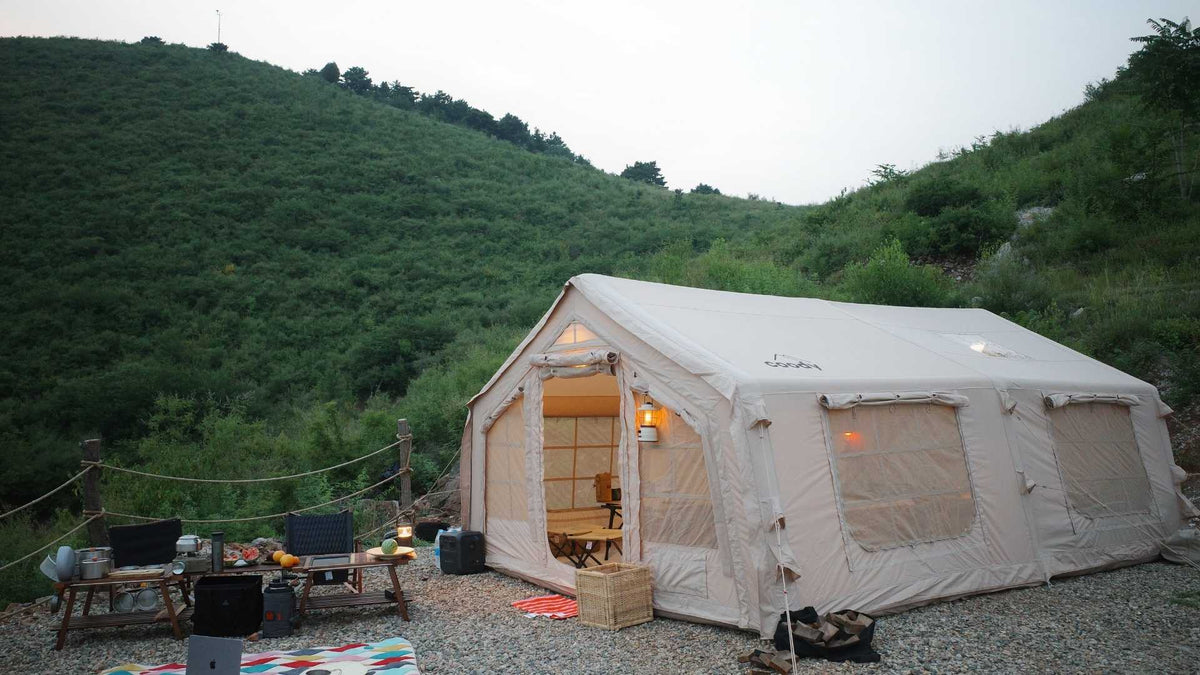
Coody Familia 17.2 Inflatable Canvas Tent Review
Explore the Coody Familia 17.2: a spacious 185 sq ft 4-season inflatable canvas tent featuring modular rooms, rapid air setup, and built-in stove integration.