See the sequence through to the finish: release the air, fold, roll, place the tent in the carrying bag and close it.
Edited demonstrations, not real-time setup claims. Bag and production details may vary. Dry all fabric before storage; the electric pump shown is optional.
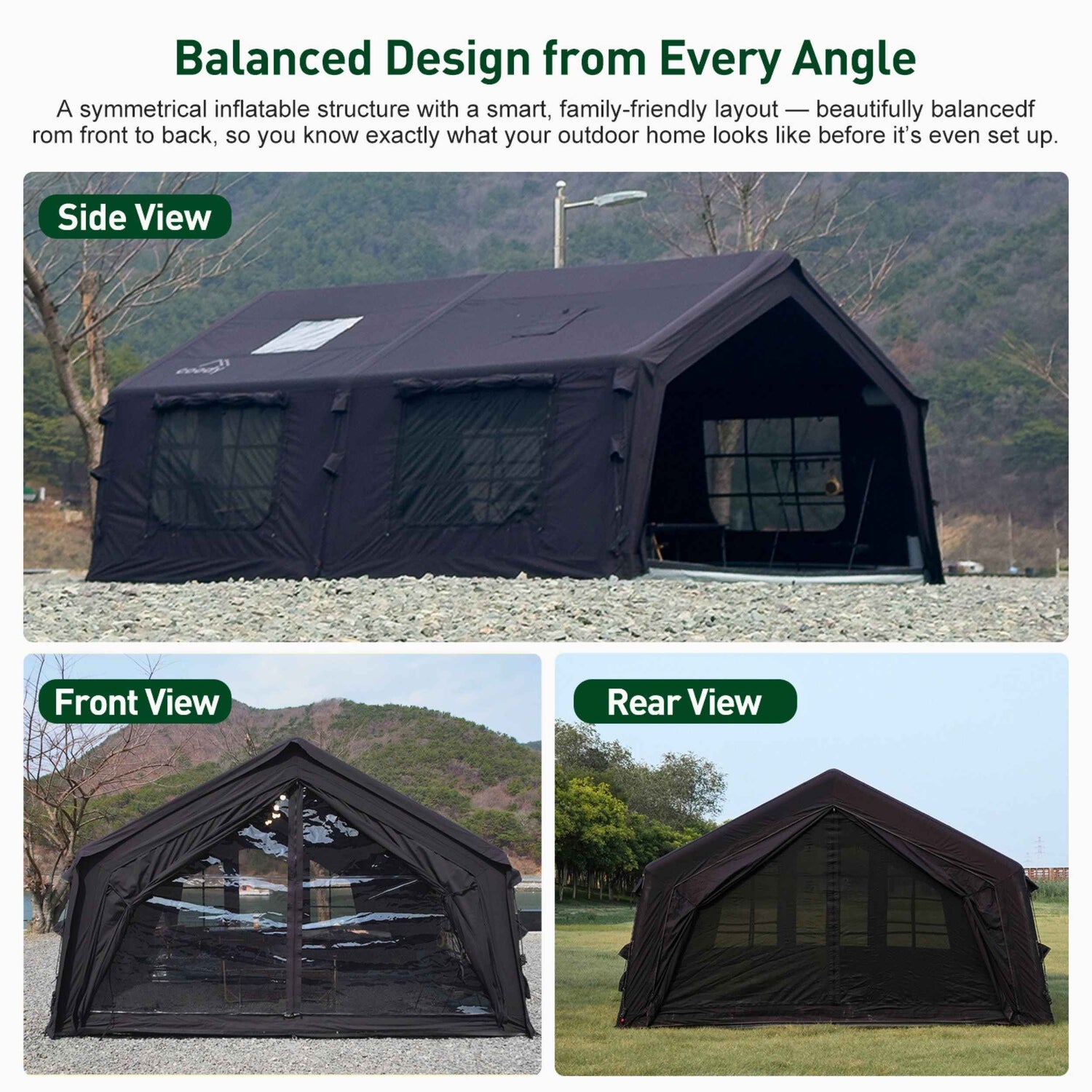
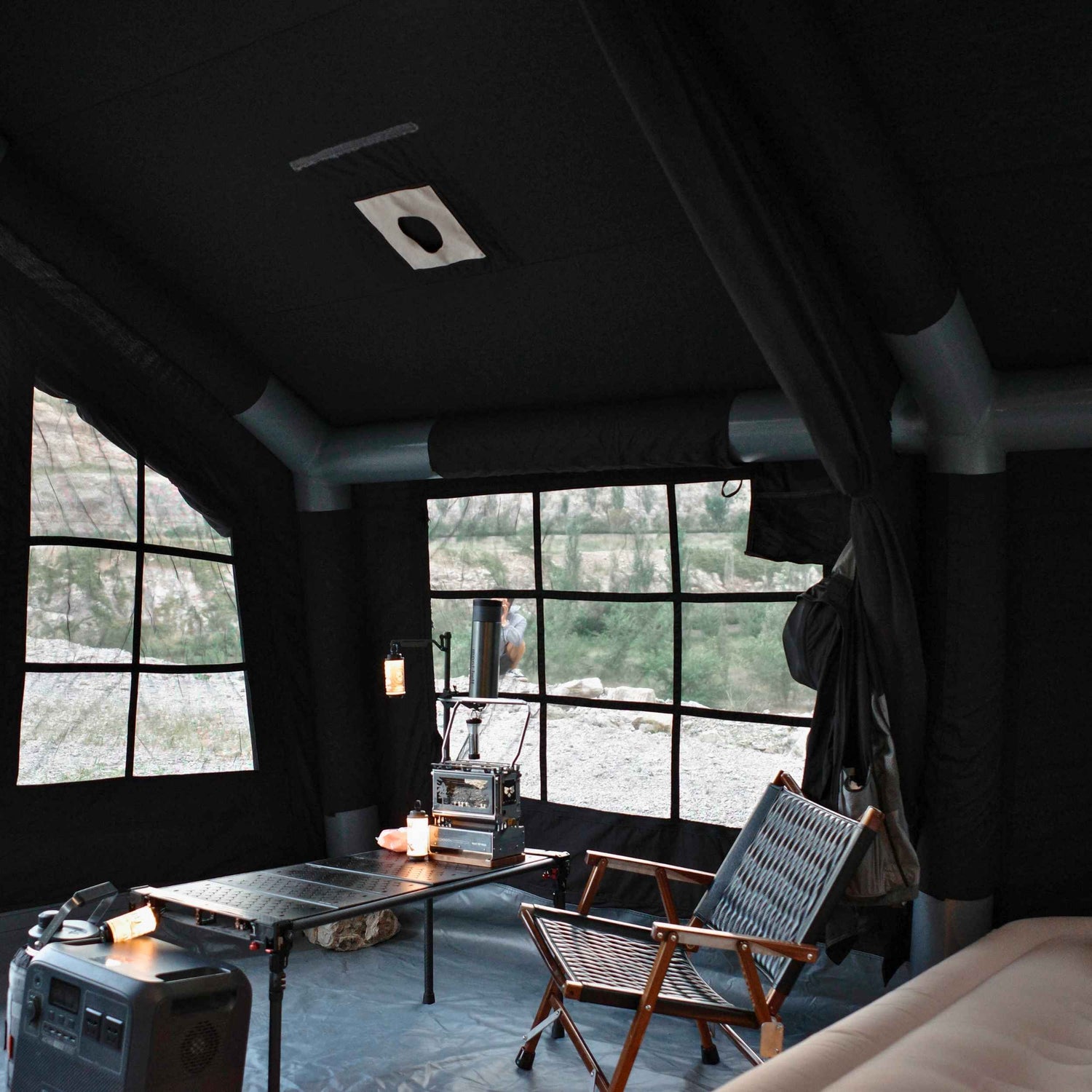
A campsite with room to settle in.
Two rooms. Two separate entrances. Close the divider to create a bedroom and living area, or separate sleeping spaces for kids and parents. Each room has its own door to the outdoors, so you can come and go without walking through the other room.
Two rooms · Two doorsSeparate access to each roomTC canvasCotton-blend fabricFour colorsOne versatile layout
Los muebles que se muestran son opcionales.
Espacio para los momentos entre aventuras.
Desayuna con una vista espectacular. Disfruta de un rincón tranquilo para dormir y de espacio para instalarte cuando cambie el clima. Haz que tu campamento se sienta como tu propio espacio.
Dos habitaciones: separa las áreas de estar y dormir con un divisor removible.
Un interior flexible: abre el divisor para crear un solo espacio compartido.
Dos puertas: organiza el acceso fácilmente según la disposición de tus muebles.
One tent. Three ways to live.
Close off the bedroom, screen just one side, or roll the divider away for a shared cabin. There is no raised threshold between the two rooms.
Close the curtain-style divider to give the sleeping area privacy.
Lower one side to screen the bed while keeping the rest of the cabin connected.
Open the divider for a shared interior and a clear transition between rooms.
Manufacturer photographs show optional furniture and carpets.
A continuous floor. A more enclosed camp.
The current 13.6 has a fixed PVC floor across both rooms, with a raised 5.9 in (15 cm) edge.
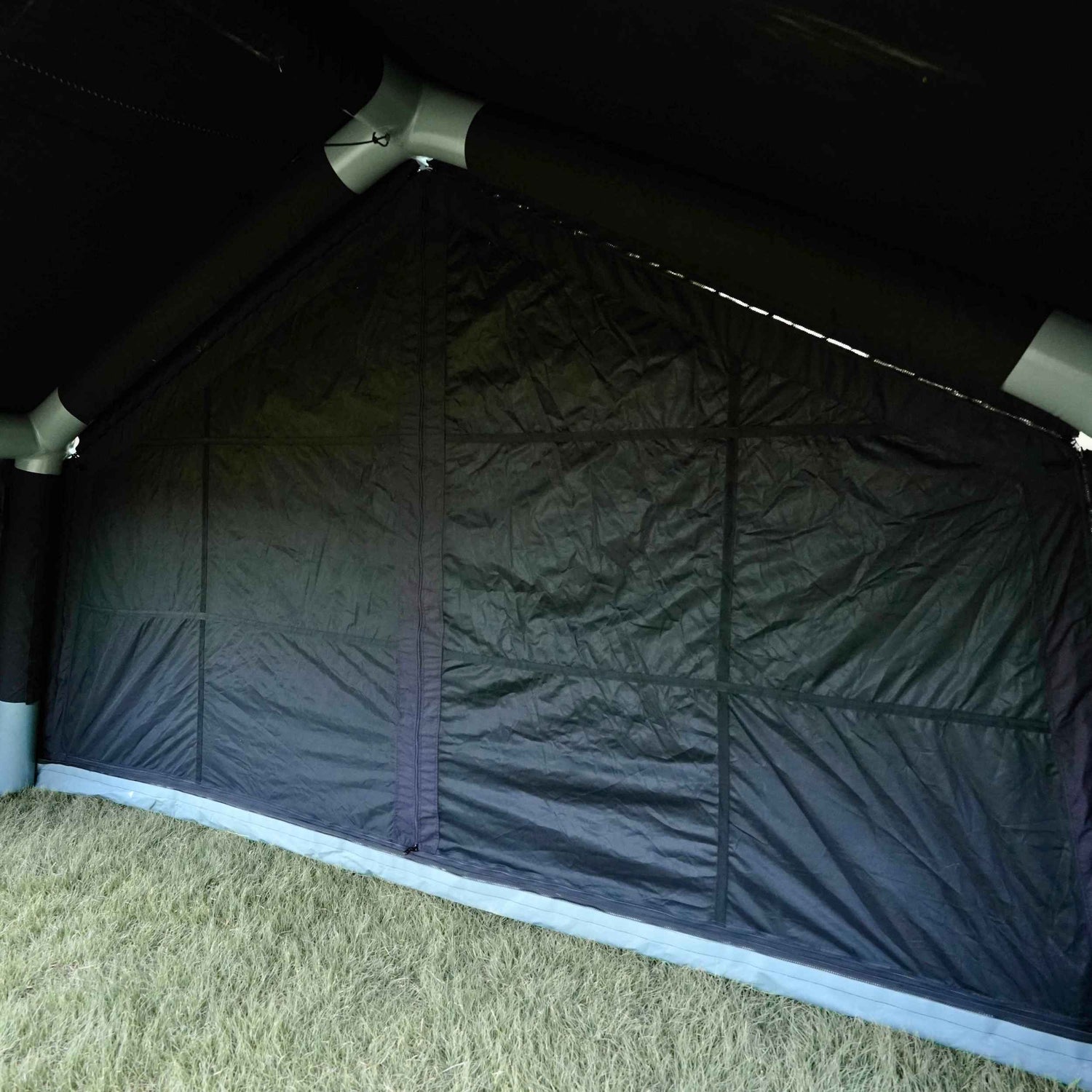
No floor to zip into place: the floor stays attached in the living and sleeping areas.
A raised barrier at ground level: helps keep surface water outside.
Fewer entry paths from below: helps keep insects and snakes outside when doors and other openings are closed.
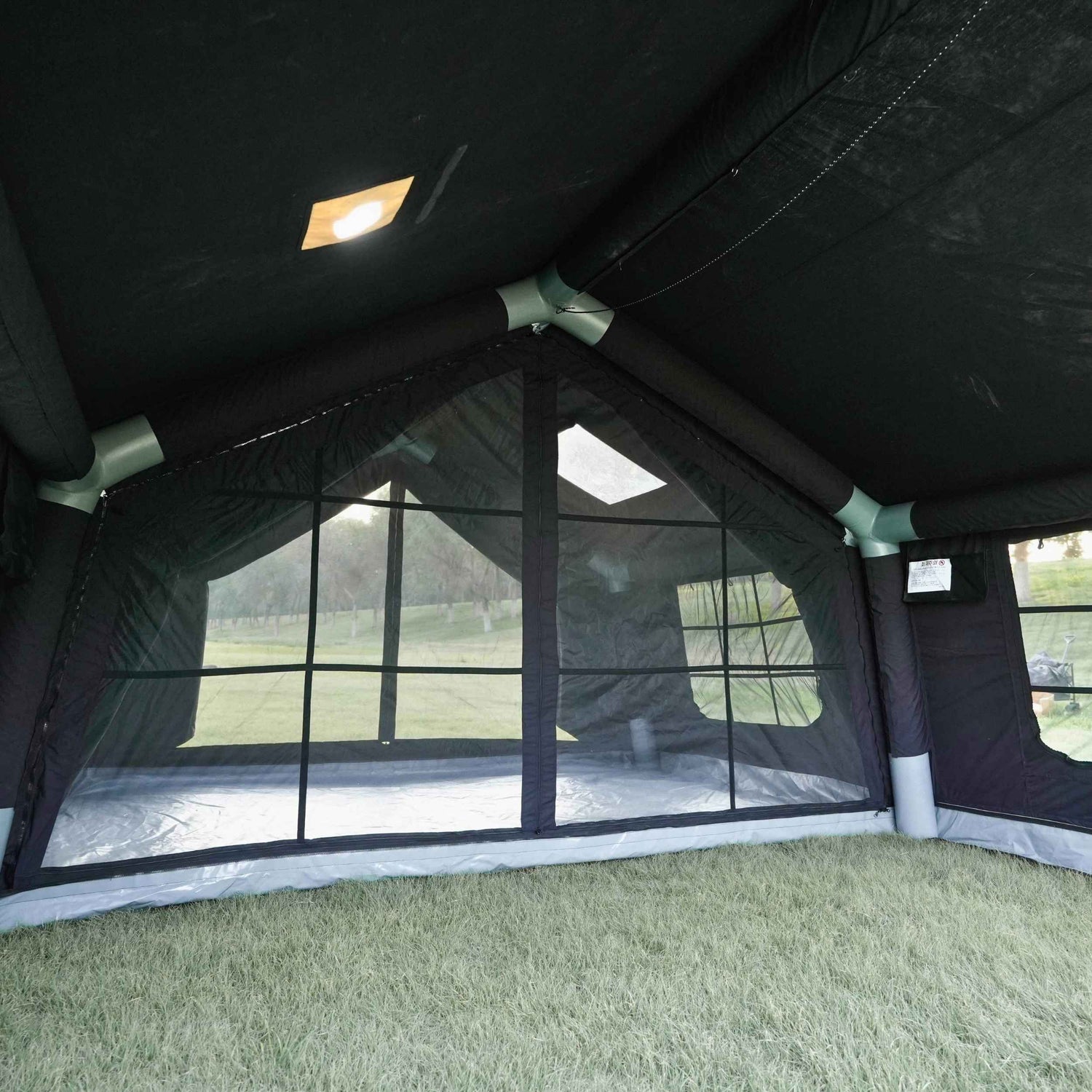
Choose light, airflow or privacy with layered window and door panels. Six windows, including two roof windows, keep the cabin connected to the outdoors.
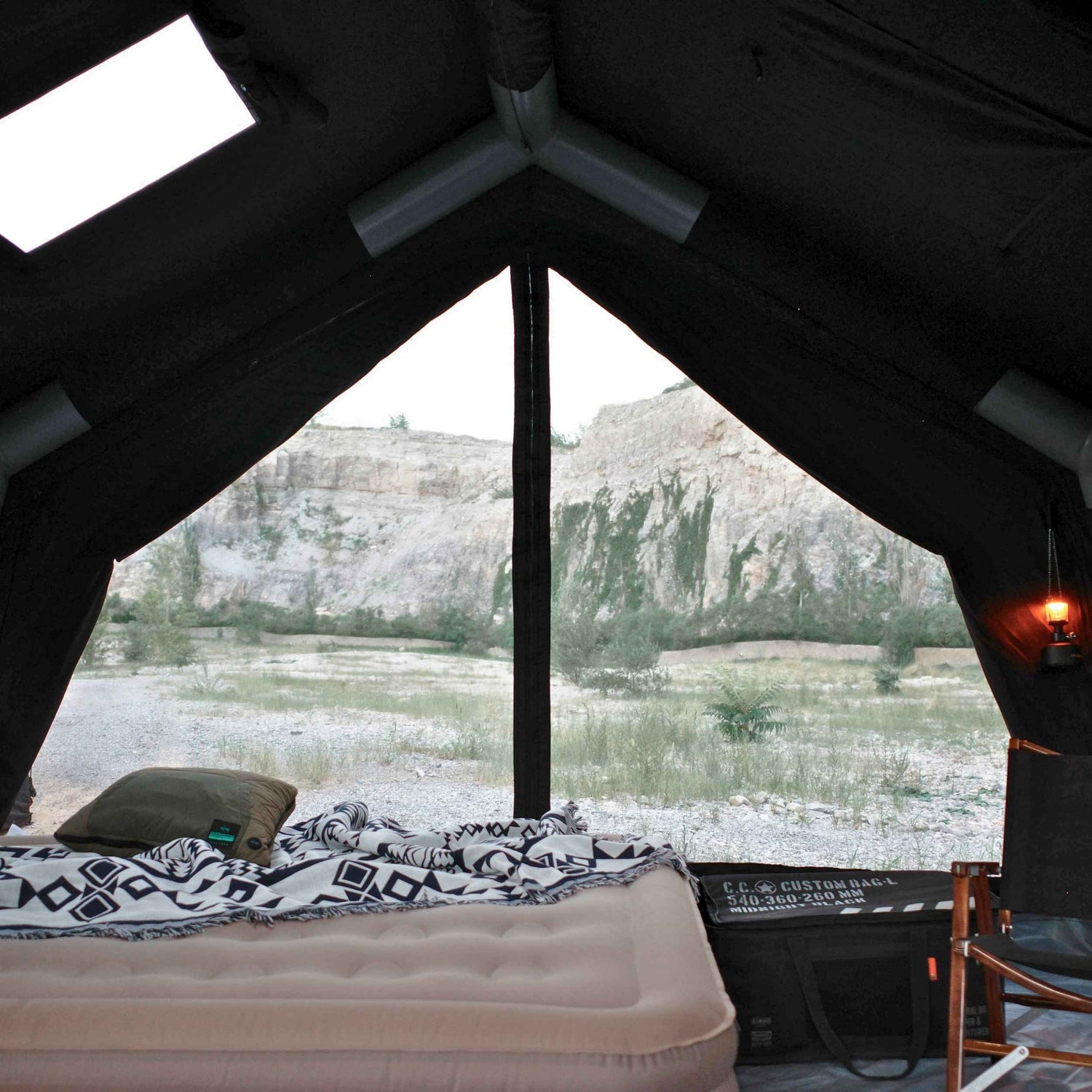
A bright living space: the large clear rear panel lets daylight reach farther inside.
A sheltered outlook: enjoy the scenery from your bed or chair with a barrier against direct wind and windblown dust.
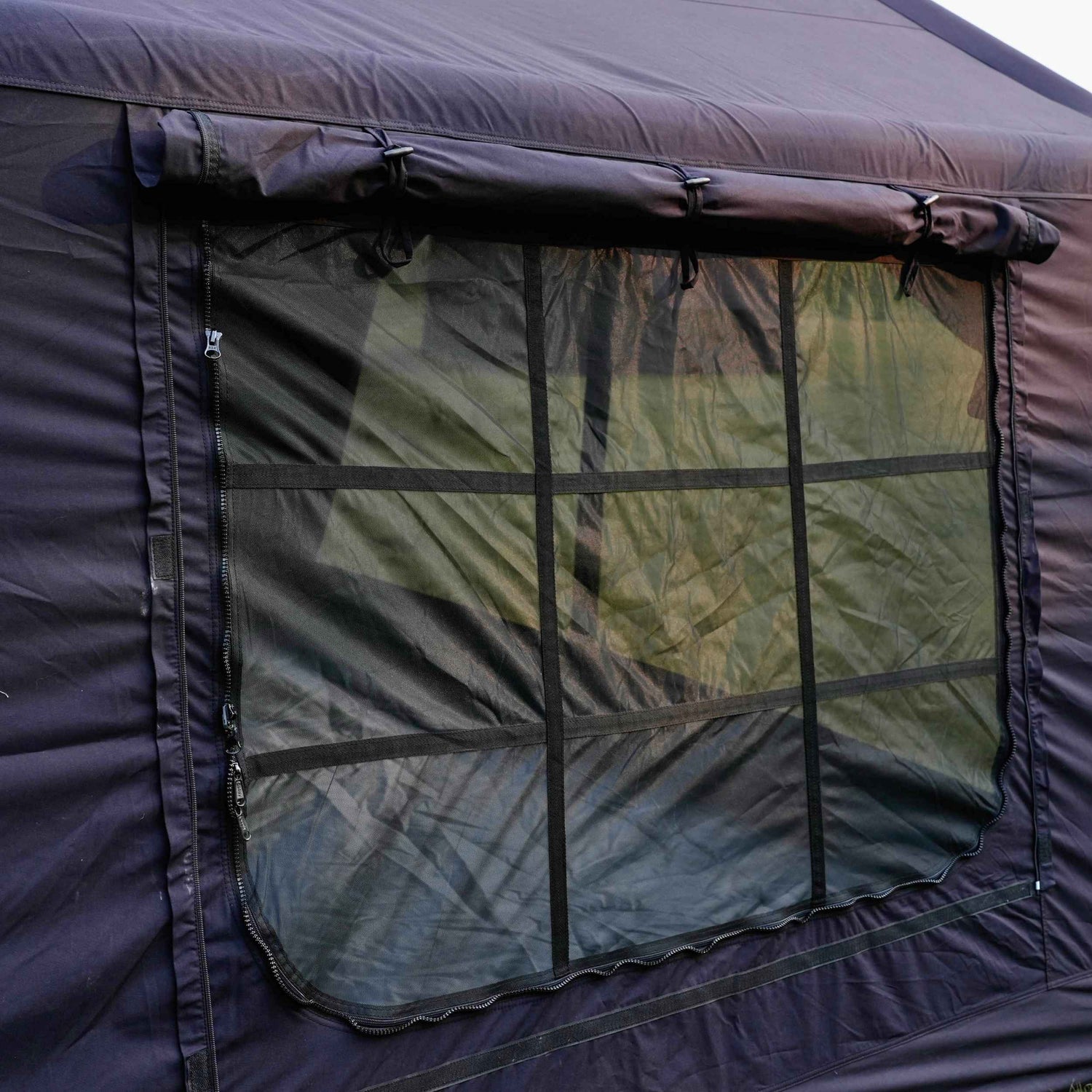
Adapt as the day changes: use mesh for airflow or fabric covers for privacy.
Short demonstrations may show a different 13.6 color. Maintain ventilation with clear panels fitted; open or shade the tent in warm sunshine.
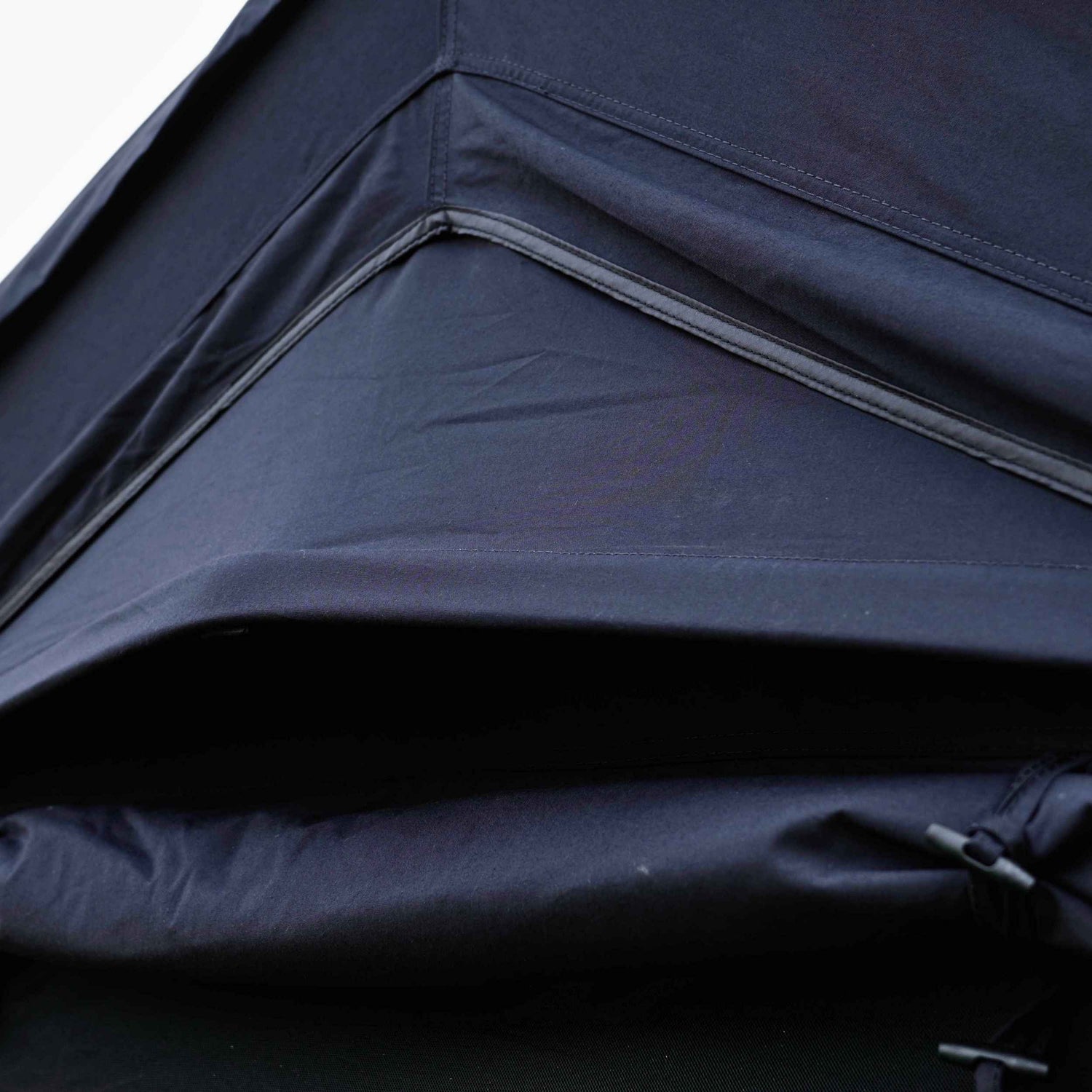
A closer look at the woven texture of Coody canvas.
Lona transpirable. Un interior más acogedor.
Una cabaña de lona para sentirte como en casa. La resistente tela TC de 210 gsm combina 65 % poliéster y 35 % algodón para crear un interior transpirable y con textura, acogedor para estadías más largas.
Más que un lugar para dormir: crea un espacio para comer, leer y disfrutar mañanas tranquilas.
Capas listas para el clima: cuerpo con revestimiento PU2000+ y sobretecho incluido de Oxford 420D con revestimiento PU3000+.
Un campamento al que querrás volver: ventila la carpa durante el uso y seca bien la tela antes de guardarla.
Why fabric breathability matters
Research by Hes and Loghin identifies water-vapor and air transfer as important contributors to textile comfort, including in cotton/polyester woven fabrics. The study also shows that moisture affects these properties — so use your tent’s ventilation openings for fresh air and dry the canvas before storing it.
Primer plano del fabricante de la estructura reforzada con vigas de aire.
Una estructura neumática que puedes ver y sentir.
Infla la estructura en lugar de armar un armazón convencional de varillas. El primer plano muestra el tamaño de la viga inflable junto a una mano.
Vigas inflables de 6.3 in (16 cm) en la especificación actual.
6–8 psi: usa la bomba manual y el manómetro incluidos.
Válvula de alivio de presión: revisa la presión a medida que cambia la temperatura.
THE DETAILS BEHIND THE BUILD
Quality you can look closely at.
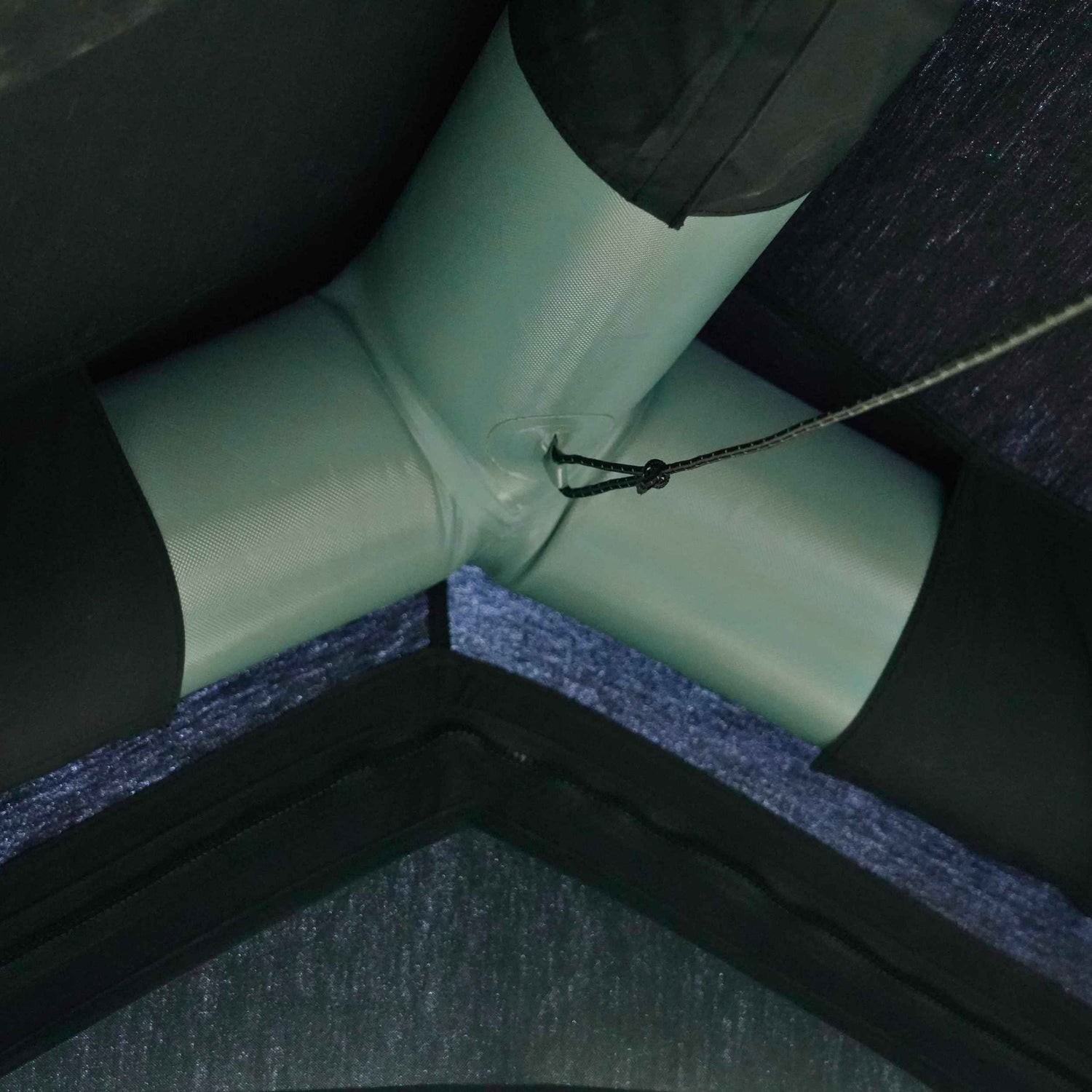
Double-bonded air-beam seams reinforce the joins that hold air in the frame. Coody puts this construction detail at the center of its durability story — and here you can see the seam itself.
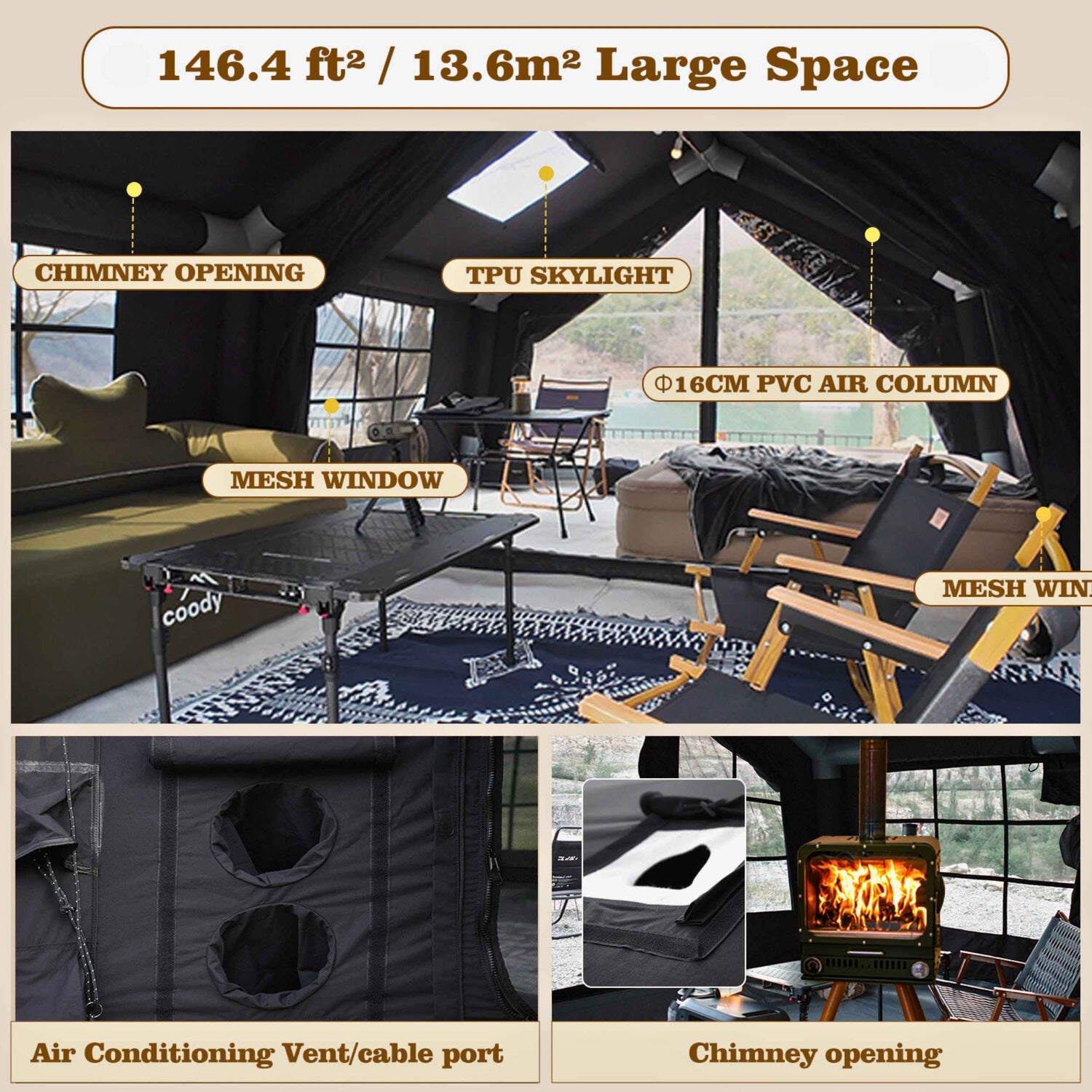
Reinforced PVC air beams: a substantial inflatable structure, without a conventional pole assembly.
Pressure-relief valve: built into the air-frame system.
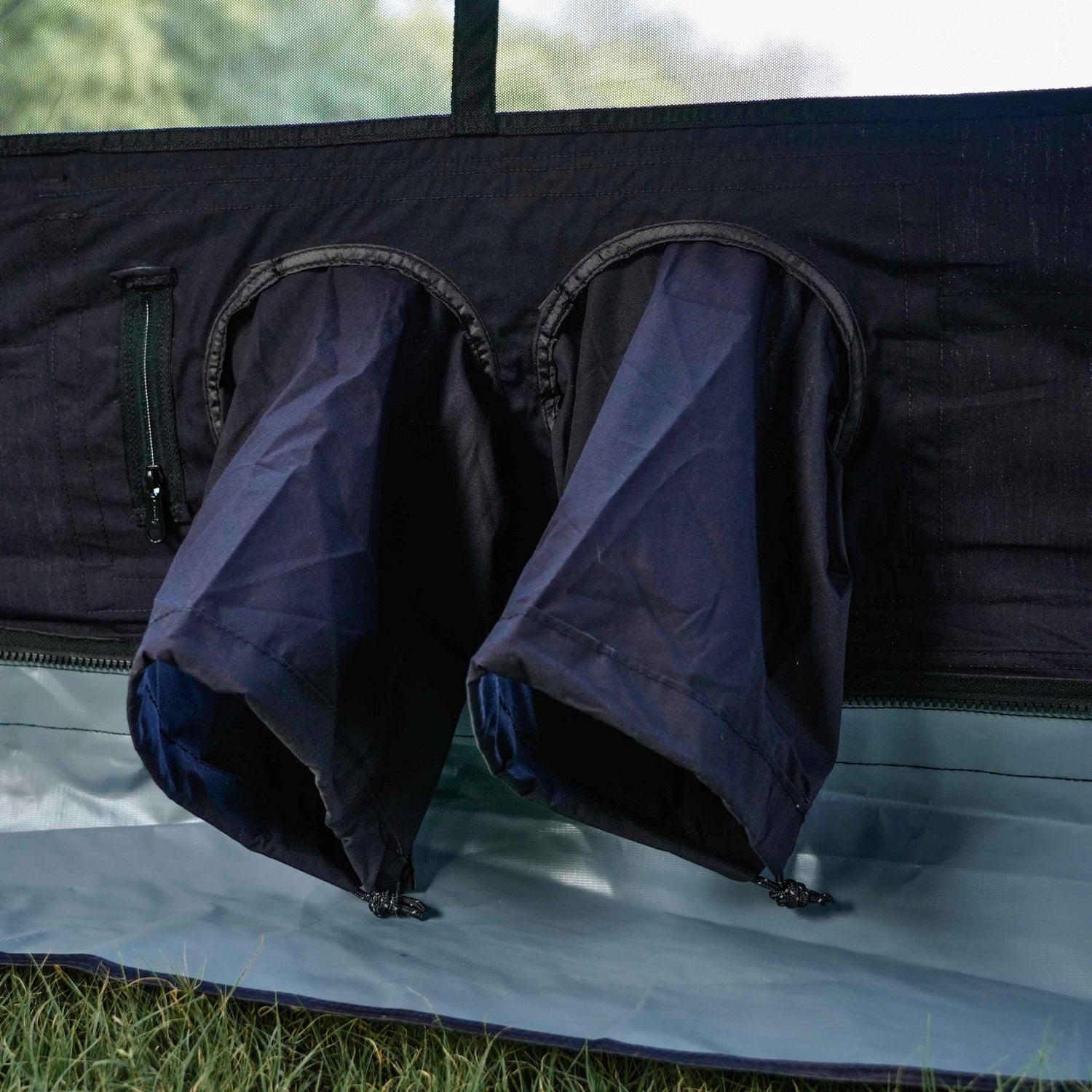
Flexible clear panels: keep the view while closing the window opening.
The material difference, up close.
Air-beam material
Coody’s manufacturer comparison shows a thicker sample at the inflatable frame: 0.55 mm versus 0.35 mm.
Lower-cost sample · 0.35 mm
Coody · 0.55 mmThicker air-beam material
Clear window material
The clear-panel sample measures 0.40 mm versus 0.20 mm — twice the thickness of the comparison sample.
Lower-cost sample · 0.20 mm
Coody · 0.40 mm2× the sample thickness
Manufacturer sample measurements. These compare air-beam and clear-panel materials, not the canvas fabric or every competing tent.
Wind-tested at 44.7 mph (72 km/h).
See Coody’s fan-test demonstration. The manufacturer reports completing a 72 km/h wind test.
A supported air frame: the structure works together with correctly tensioned guy lines.
A complete pitch matters: secure all required pegs and anchors for the ground and weather.
Airflow around the tent — manufacturer illustration
A manufacturer-reported test result, not a guaranteed safe wind limit in every campsite condition. The airflow animation illustrates the tent’s shape; it is not a measured test.
Build your cold-weather camp.
Make cool evenings more inviting.
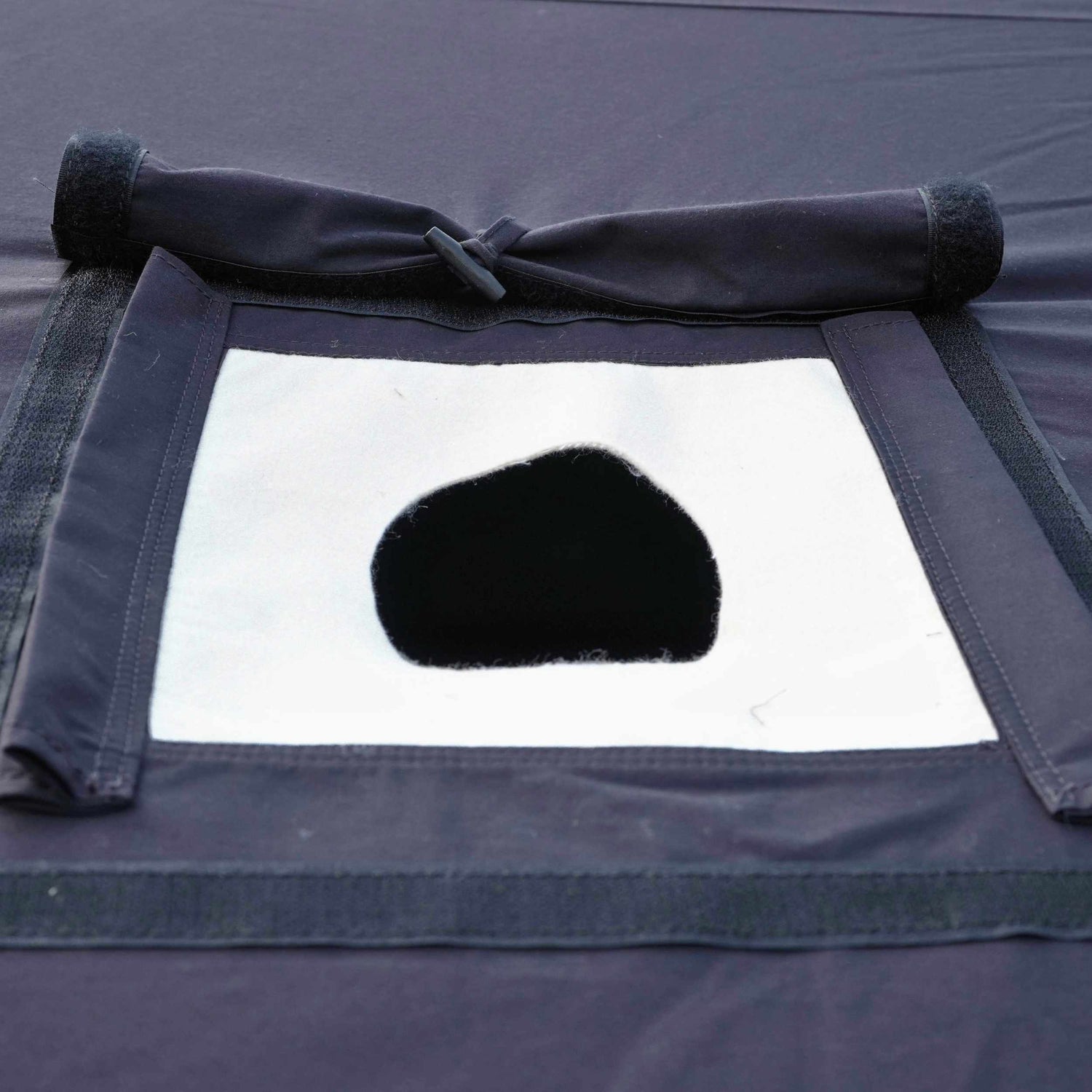
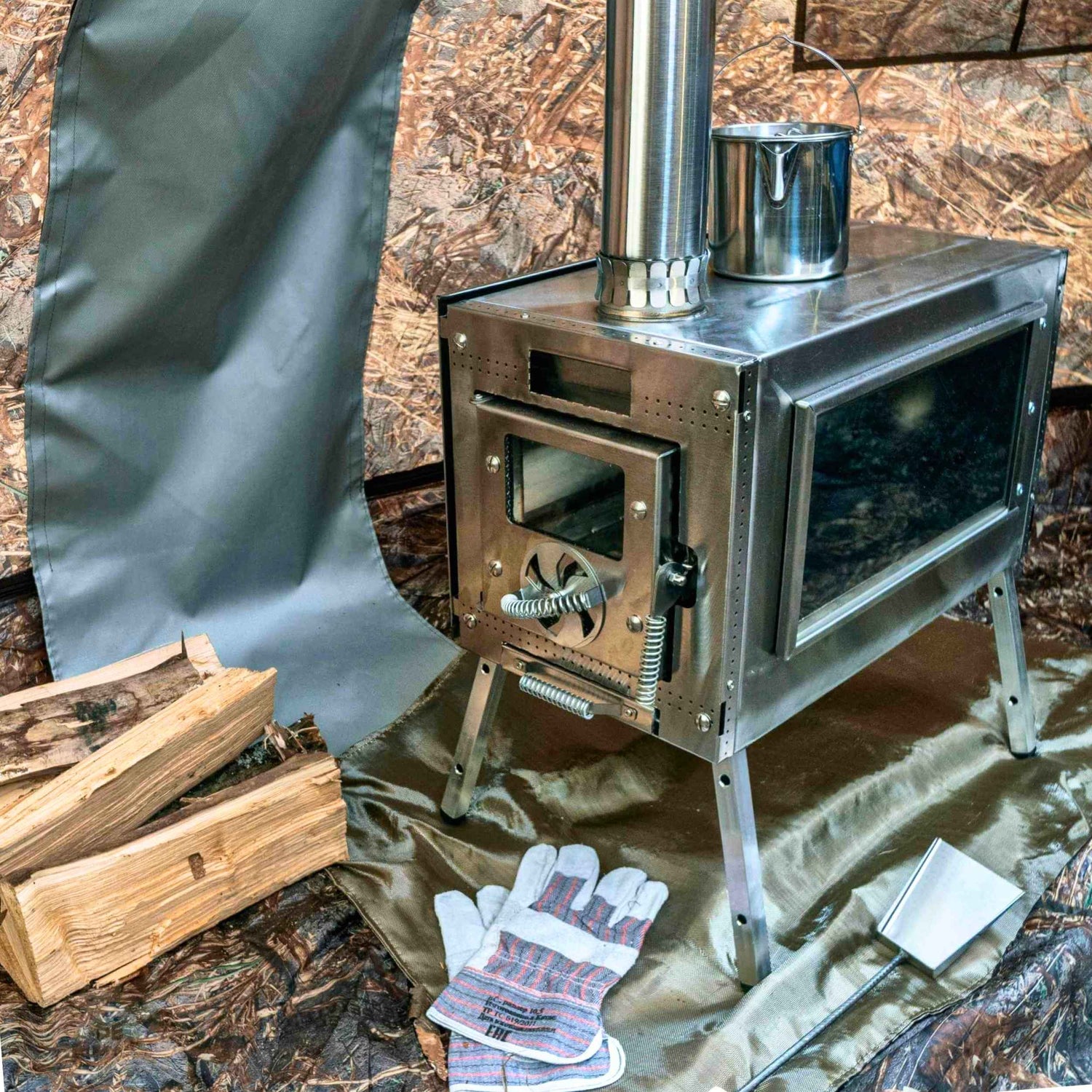
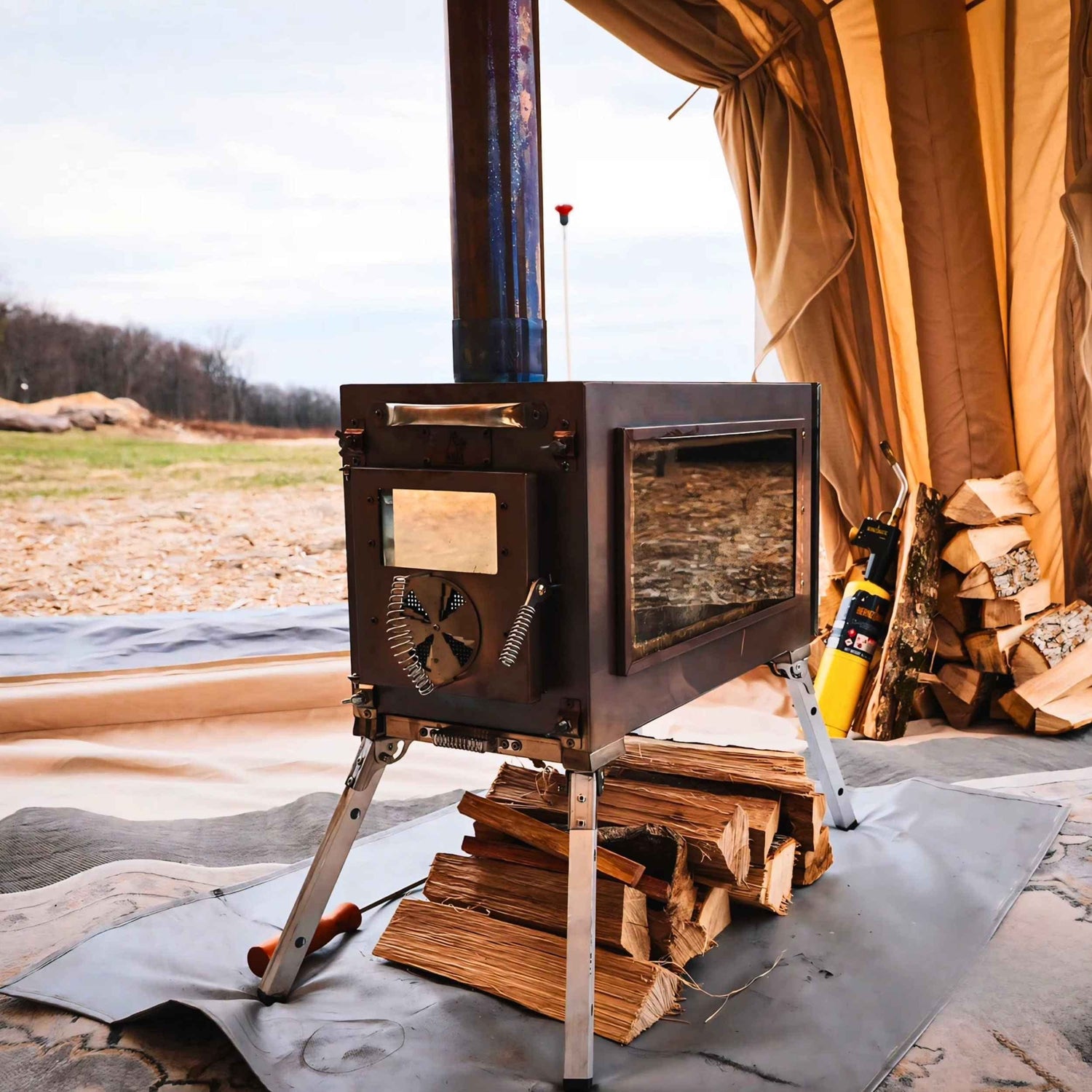
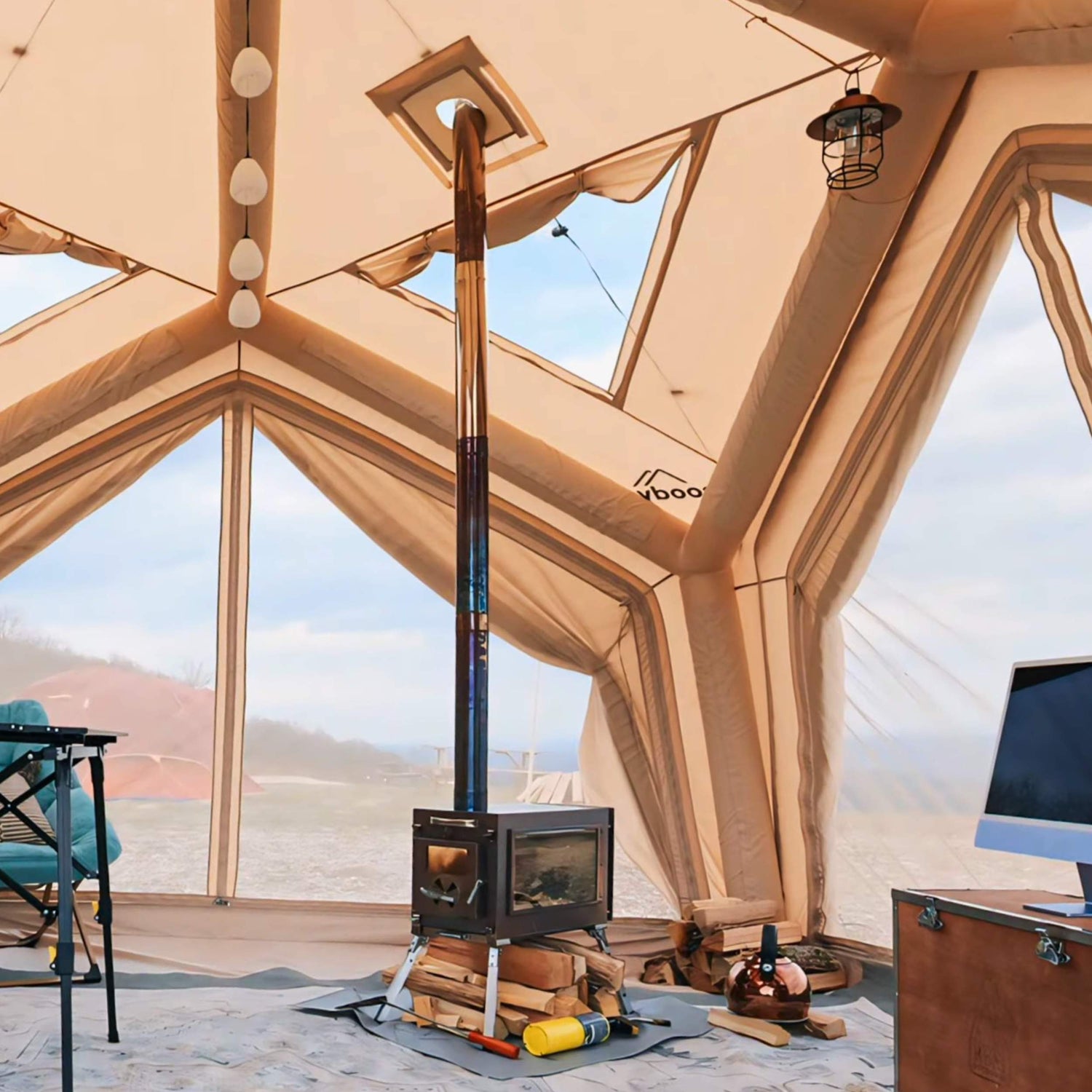
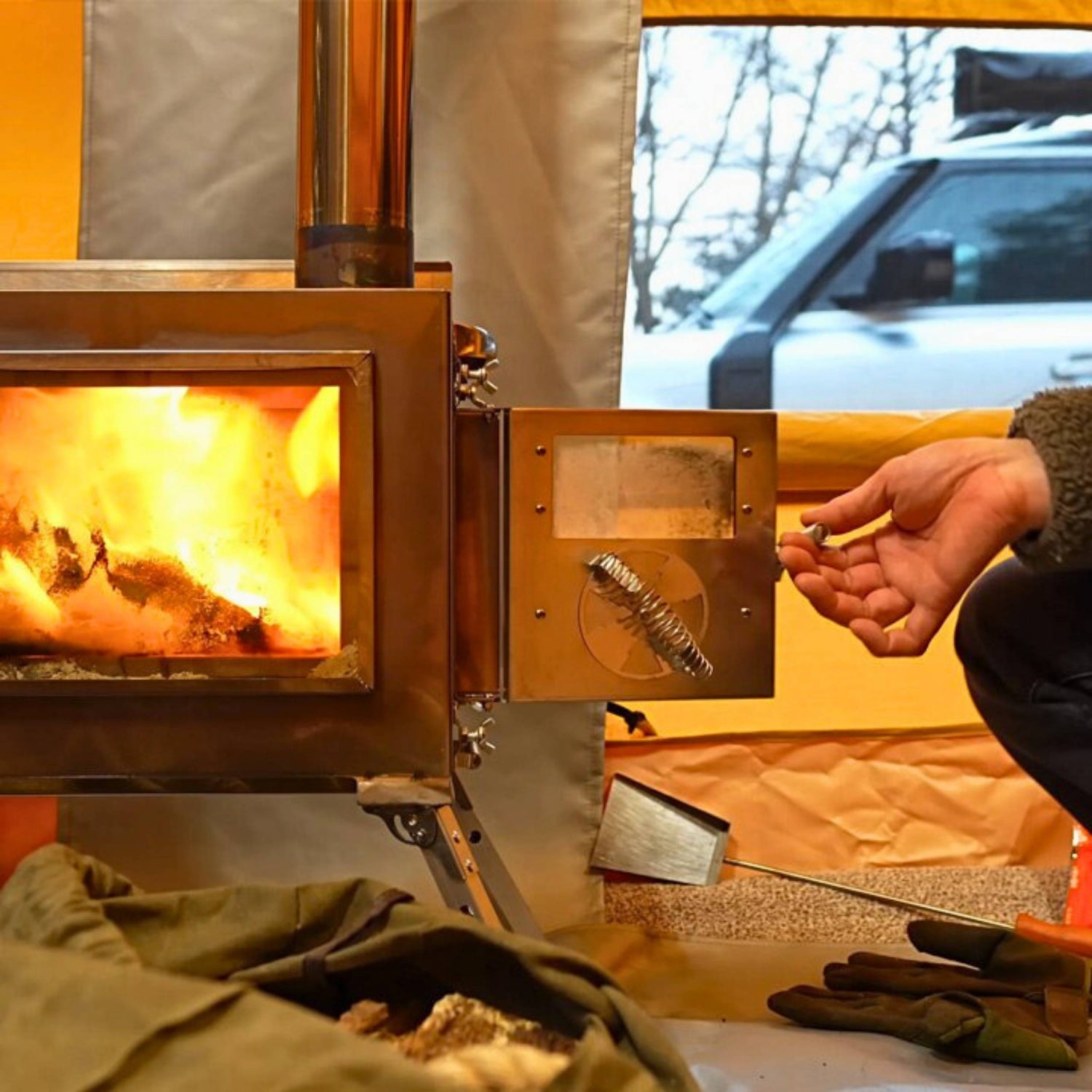
A compatible tent stove can bring warmth and a cozy focal point to camp. The tent body has a designated 3.9 in (10 cm) stove-jack opening for planning the chimney route.
Stove and chimney sold separately. The standard rainfly has no factory stove jack; ask about the appropriate retrofit before using it with a stove. Follow stove clearances and ventilation requirements.
Comfort in. Doorway clear.
Dedicated cable and air-hose openings let you route compatible heating or cooling equipment and power into camp without running them through the main doorway.
Heater and ducts sold separately. Keep a diesel heater and its exhaust outside; bring only warm air into the tent.
Your tent can be the start of a larger camp.
Connect your Familia 13.6 to a compatible Coody tent or Hub with the optional Coody Tent Connector 3.6 + 3.6 — Black ↗. Add a shared gathering space or a separate sleeping tent as your plans grow.
Compatible standard models: Coody 10.0, Familia 13.6, Familia 17.2 and Coody Hub.
One connection side on the 13.6: choose the orientation before anchoring your camp.
Separate accessory: the connector is not included. Pro-series models use different connectors.
Choose structured Coreo mattresses or Coody Air Mattresses with a built-in pump. Compare their exact footprints against the tent’s 137.8 in (350 cm) interior width. Both lines are 13.8 in (35 cm) high.
Open-plan concepts with the divider open. Remaining width is arithmetic, not a measured walkway or verified bedroom fit; check room depth, air beams and door access. Mattresses are sold separately; Coreo pumps are sold separately. Product links open in a new tab.
Specifications, dimensions & package.
Specifications
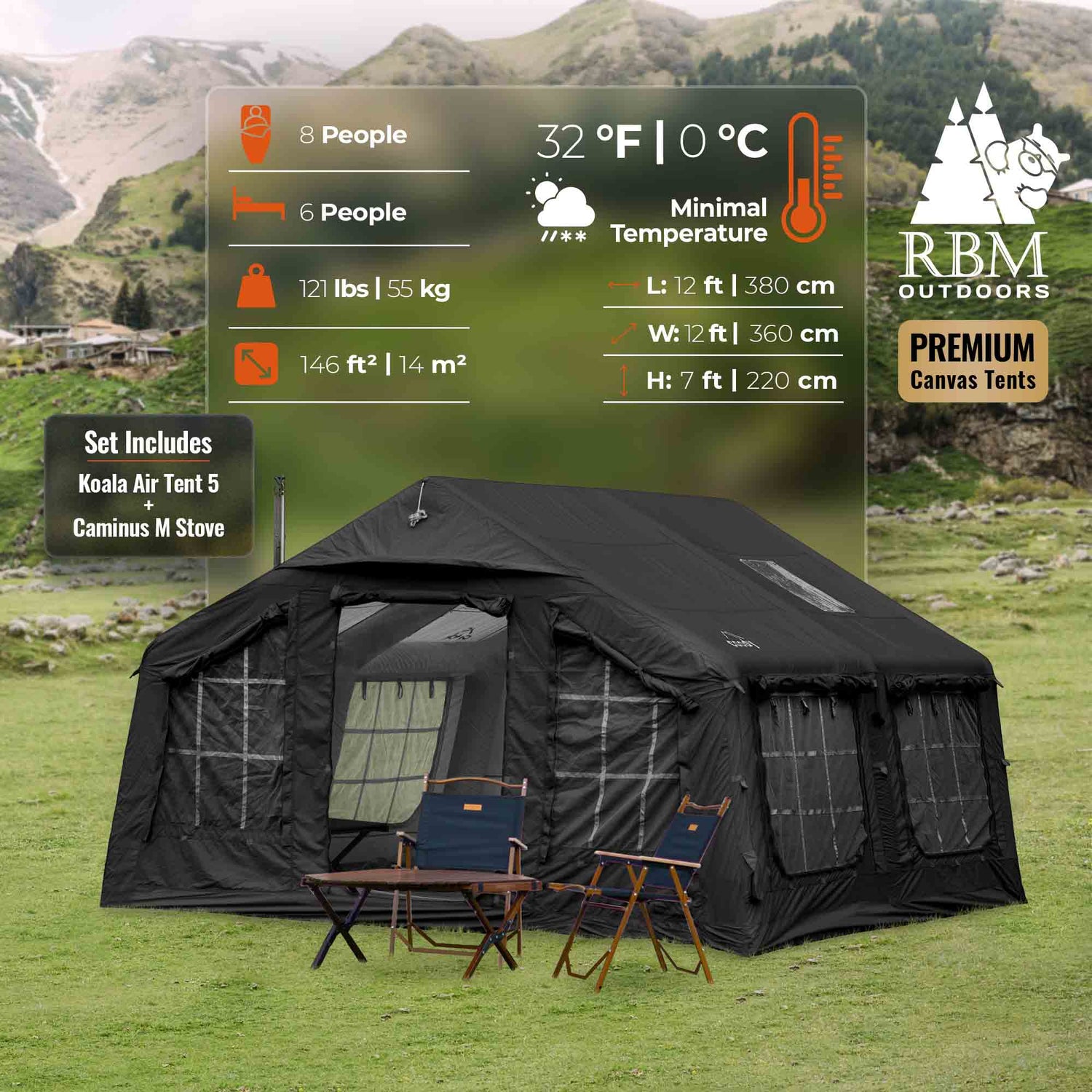
Tipo - Kit de carpa con estufa inflable y estufa de leña
Carpa incluida - Coody Familia AirTent 13.6 Black, carpa con estufa inflable
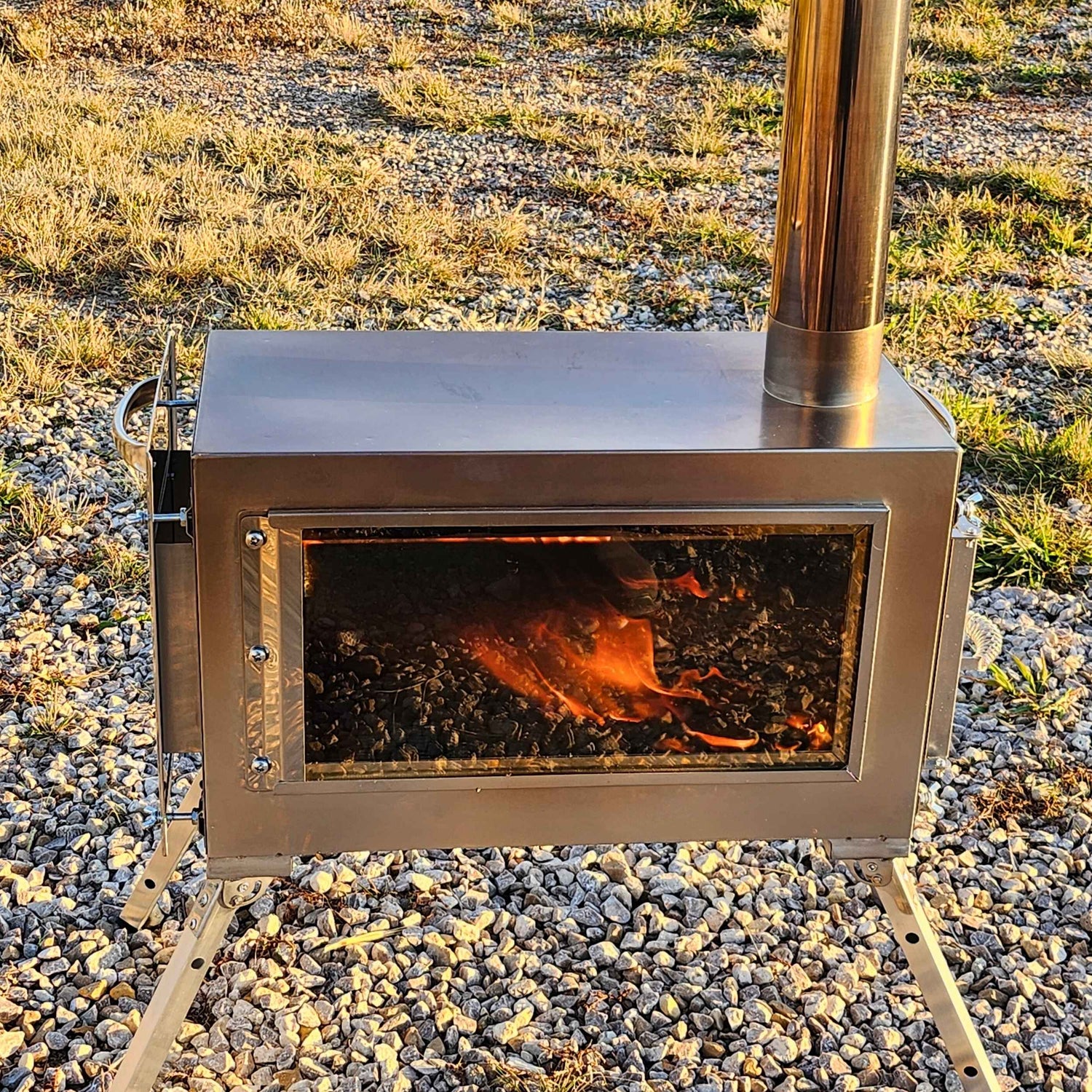
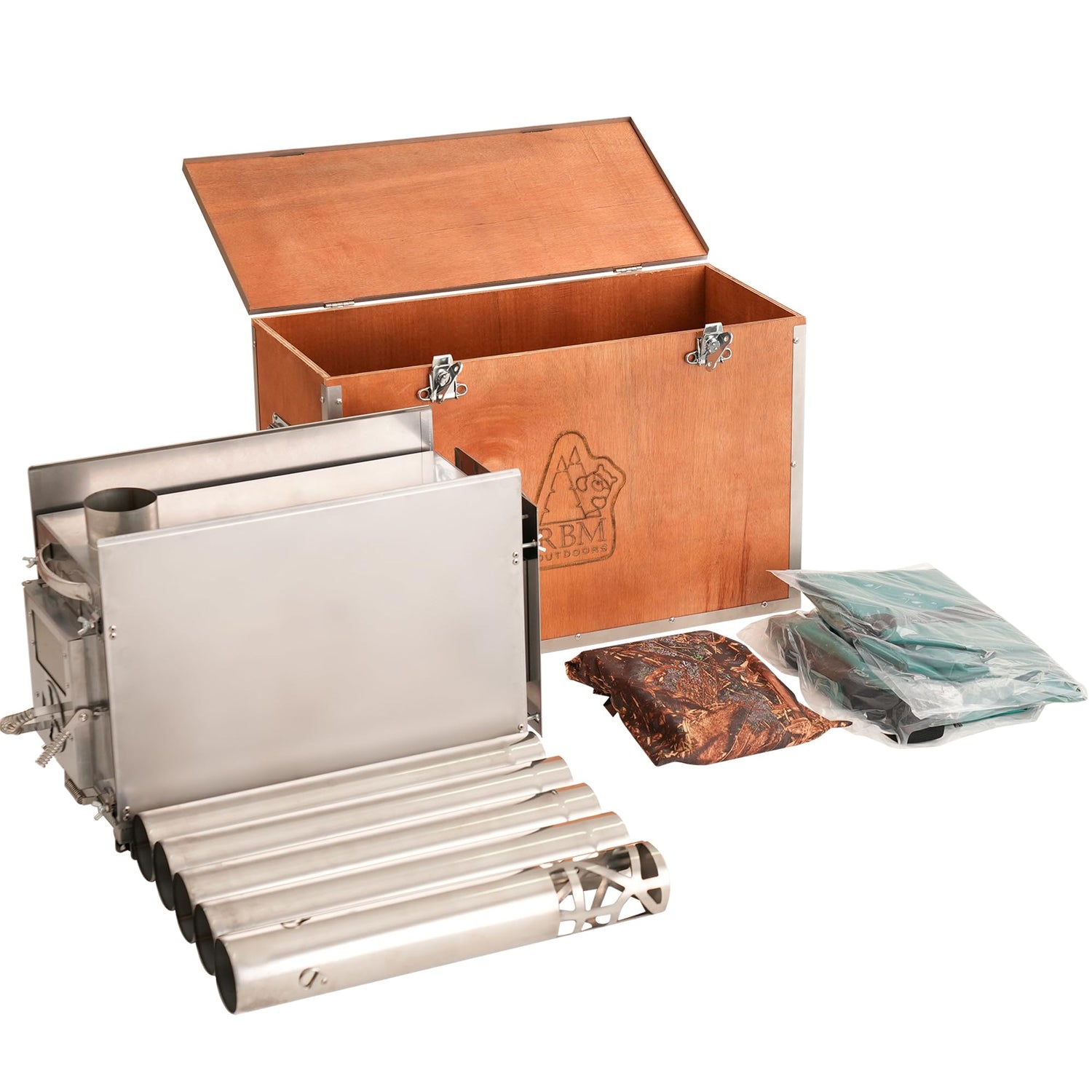
Estufa incluida - RBM Outdoors Caminus M, estufa de leña
Construcción de la carpa Coody 13.6 - Carpa de pared inflable de dos habitaciones
Capacidad de la carpa Coody 13.6 - 2-8 personas
Capacidad para dormir de la carpa Coody 13.6 - Hasta 8 personas en sacos de dormir
Número de habitaciones de la carpa Coody 13.6 - 2 habitaciones
Área del suelo de la carpa Coody 13.6 - 13.6 m² (146.39 ft²)
Tipo de instalación de la carpa Coody 13.6 - Inflable
Tiempo de instalación de la carpa Coody 13.6 - 8 min
Temperatura de operación de la carpa Coody 13.6 - de -10 °C a +40 °C (14 °F a 104 °F)
Tela de la carpa Coody 13.6 - Tela TC de 210 g/m² (algodón Terylene)
Composición de la tela de la carpa Coody 13.6 - 65 % poliéster y 35 % algodón
Impermeabilidad de la carpa Coody 13.6 - 2000+ mm (PU2000+)
Material del tubo de aire de la carpa Coody 13.6 - PVC
Presión recomendada de la carpa Coody 13.6 - 6-8 psi
Prueba de fugas de la estructura de aire de la carpa Coody 13.6 - Inflada y sometida a prueba de presión durante 72 horas para comprobar si hay fugas de aire
Tipo de bomba de aire de la carpa Coody 13.6 - Bomba manual
Material del sobretecho de la carpa Coody 13.6 - Tela Oxford 420D
Impermeabilidad del sobretecho de la carpa Coody 13.6 - 3000+ mm (PU3000+)
Material del suelo de la carpa Coody 13.6 - PVC
Suelo removible de la carpa Coody 13.6 - No
Color del suelo de la carpa Coody 13.6 - Negro
Diámetro de la salida de chimenea de la carpa Coody 13.6 - 10 cm (3.93")
Número de puertas de la carpa Coody 13.6 - 2 unidades
Número de ventanas de la carpa Coody 13.6 - 6 unidades (incluidas 2 ventanas en el techo)
Paneles de ventana de TPU de la carpa Coody 13.6 - 4 unidades
Material de las ventanas de la carpa Coody 13.6 - TPU
Protección contra mosquitos de la carpa Coody 13.6 - En ventanas y puertas
Divisor de habitaciones de la carpa Coody 13.6 - Removible
Válvulas de aire externas de la carpa Coody 13.6 - 1 unidad
Válvulas de aire internas de la carpa Coody 13.6 - 1 unidad
Válvula de alivio de presión de la carpa Coody 13.6 - 1 unidad
Anclaje contra el viento de la carpa Coody 13.6 - 14 vientos preinstalados
Número de estacas de la carpa Coody 13.6 - 16 unidades
Resistencia al viento de la carpa Coody 13.6 - Probada hasta 72 km/h (45 mph)
Protección UV de la carpa Coody 13.6 - UPF 50+
Color de la carpa Coody 13.6 - Negro
Estaciones de la carpa Coody 13.6 - Cuatro estaciones
Cumplimiento canadiense de la carpa Coody 13.6 - Cumple con los requisitos de inflamabilidad y etiquetado de SOR/2024-217 y CAN/CGSB-182.1-2020
Número del informe de prueba de la carpa Coody 13.6 - CCI250200580EN
Garantía de la carpa Coody 13.6 - 1 año
Uso de Caminus M - Calefacción y cocina en carpa con estufa
Material de Caminus M - Acero inoxidable AISI 430 resistente al calor
Material del vidrio de Caminus M - Vidrio cerámico resistente al fuego
Ubicación del vidrio de Caminus M - Paneles laterales
Grosor del vidrio de Caminus M - 4 mm (0.16")
Resistencia a la temperatura del vidrio de Caminus M - Hasta 750 °C (1382 °F)
Tipos de combustible de Caminus M - Leña, briquetas de combustible y carbón
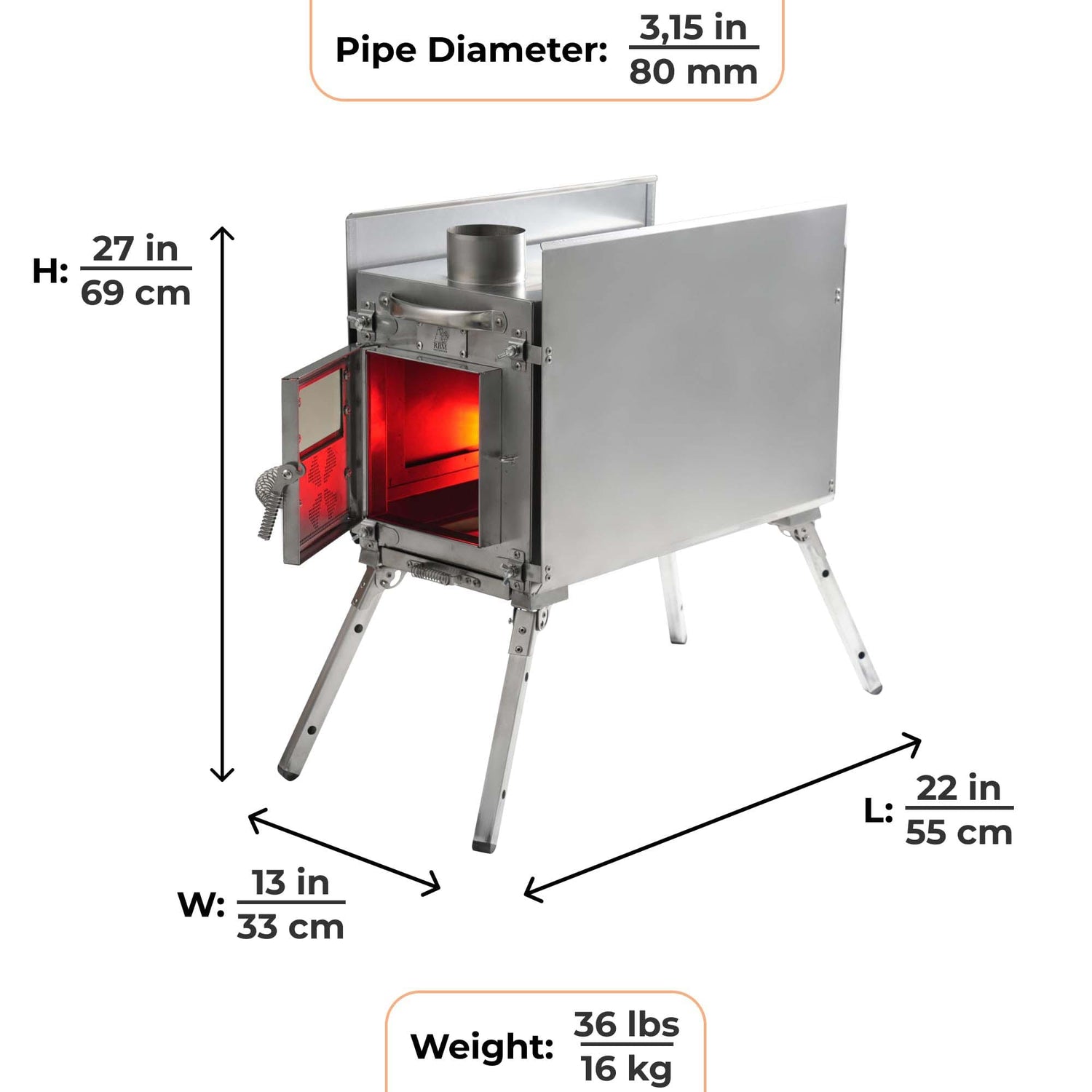
Diámetro de la chimenea de Caminus M - 80 mm (3.15")
Longitud del tubo de la chimenea de Caminus M - 485 mm (19.09")
Parachispas de Caminus M - Incluido
Protectores térmicos de Caminus M - Incluidos
Tiempo máximo de combustión continua de Caminus M - 7 h
Garantía de Caminus M - 1 año
Dimensions
Ancho de la carpa Coody 13.6: 3.6 m (141.73")
Largo de la carpa Coody 13.6: 3.8 m (149.61")
Altura de la carpa Coody 13.6: 2.2 m (86.61")
Ancho interior de la carpa Coody 13.6: 3.4 m (133.86")
Largo interior de la carpa Coody 13.6: 3.7 m (145.67")
Altura del techo de la carpa Coody 13.6: 2.04 m (80.31")
Altura de la pared lateral de la carpa Coody 13.6: 1.35 m (53.15")
Tamaño de la ventana del techo de la carpa Coody 13.6: 54 x 64 cm (21.26 x 25.20")
Tamaño de la ventana lateral de la carpa Coody 13.6: 115 x 80 cm (45.28 x 31.50")
Peso neto de la carpa Coody 13.6: 60 kg (132.28 lb)
Peso bruto de la carpa Coody 13.6: 65 kg (143.30 lb)
Tamaño embalado de la caja 1 de la carpa Coody 13.6: 0.85 x 0.50 x 0.50 m (33.46 x 19.69 x 19.69")
Peso bruto de la caja 1 de la carpa Coody 13.6: 48 kg (105.82 lb)
Tamaño embalado de la caja 2 de la carpa Coody 13.6: 0.60 x 0.25 x 0.25 m (23.62 x 9.84 x 9.84")
Peso bruto de la caja 2 de la carpa Coody 13.6: 17 kg (37.48 lb)
Tamaño ensamblado de Caminus M: 330 x 690 x 600 mm (12.99 x 27.16 x 23.62")
Altura total de Caminus M con chimenea: 2800 mm (110.23")
Altura de Caminus M desde el suelo hasta la estufa: 230 mm (9.05")
Tamaño de la cámara de combustión de Caminus M: 250 x 500 x 250 mm (9.84 x 19.68 x 9.84")
Tamaño de la entrada de la cámara de combustión de Caminus M: 160 x 180 mm (6.29 x 7.08")
Peso neto de Caminus M: 16.5 kg (36.37 lb)
Peso bruto de Caminus M: 29.74 kg (65.56 lb)
Tamaño embalado de Caminus M: 335 x 715 x 460 mm (13.18 x 28.14 x 18.11")
Package
Contenido del paquete de Coody 13.6: 1 carpa inflable, 1 bomba manual, 1 sobretoldo, 4 paneles de ventana de TPU, 1 panel de pared frontal de TPU/lona, 1 panel de pared frontal mosquitero/lona, 1 panel de pared frontal mosquitero adicional, 1 juego de vientos preinstalado, 1 juego de estacas y 2 bolsas de almacenamiento
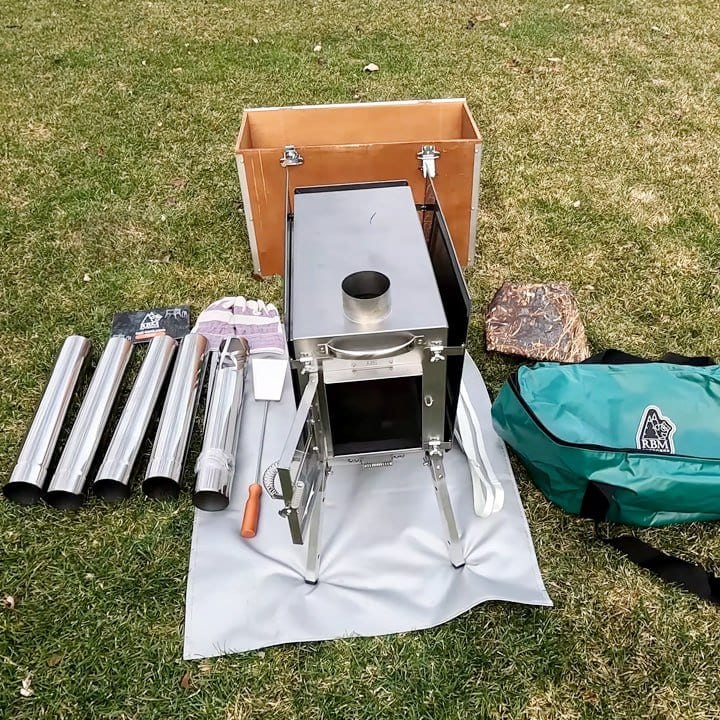
Contenido del paquete de Caminus M: 1 estufa, 5 tubos de chimenea, 2 placas metálicas de repuesto, 1 par de guantes, 1 pala, 1 alfombrilla resistente al calor para estufa, 1 bolsa de transporte y 1 manual de usuario
Número de paquetes: 3 cajas
Configuración de envío: la carpa y la estufa se envían en cajas separadas
Know before you go.
Does the floor detach?
No. The current 13.6 uses a continuous fixed PVC floor in both rooms, with a 5.9 in (15 cm) raised edge. It stays attached when you pack the tent.
How many people fit comfortably?
The 2–8 person rating includes up to eight people in sleeping bags. A furnished camp with beds, chairs and a table needs more room per person. Plan your sleeping arrangement and keep both exits clear.
What is included, and what is extra?
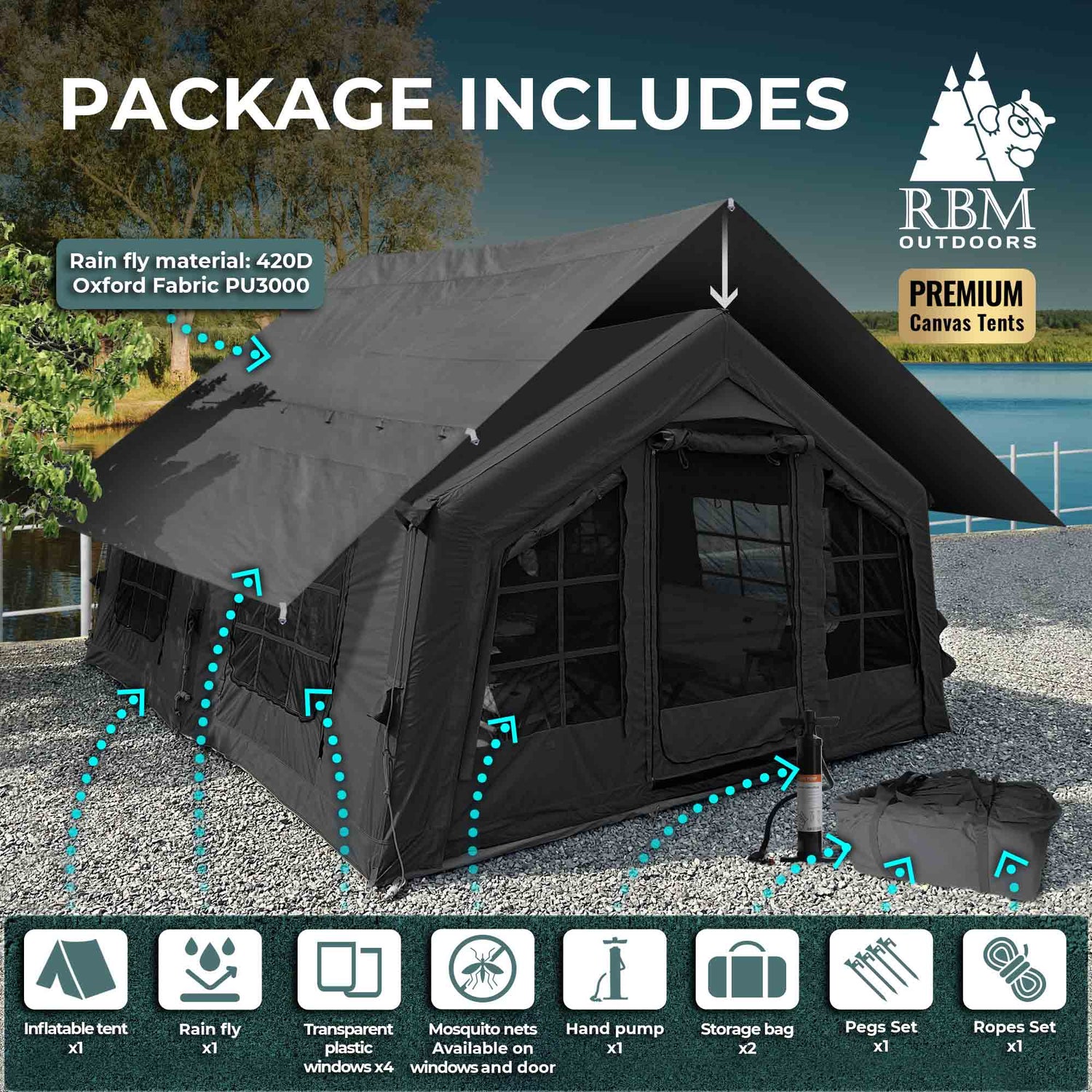
The standard tent includes the hand pump, rainfly, window and front-wall panels, pegs, preinstalled guy lines and two bags. Furniture, stove, external groundsheet, carpet, electric pump and connecting accessories are separate unless your chosen bundle explicitly includes them.
Can I use a stove with the rainfly fitted?
The tent body has a designated stove jack. The standard 13.6 rainfly does not have a factory stove jack. Ask us about the appropriate retrofit and chimney routing before combining a stove with the rainfly. Follow the stove instructions, maintain ventilation and clearances, and use working smoke and carbon monoxide alarms.
What changes between the four colors?
Beige, Forest Green, Black and Gray share the same 13.6 layout and listed equipment. The tent and floor colors change. Lighting can affect the appearance of fabric in photos; color is not a promise of a particular insulation or cooling performance.
How much pressure should I use?
Inflate to 6–8 psi using a pressure gauge. The frame includes a pressure-relief valve. Temperature changes affect pressure, so check it during your stay and never exceed the recommended range.
Is the tent suitable for cold weather?
The approved operating range is 14–104°F (-10–40°C). That is an equipment operating range, not a sleeping-comfort rating. Use appropriately rated sleeping bags and insulated mats, maintain ventilation, use the rainfly as instructed, clear snow promptly, and dry the tent in a warm indoor space after freezing conditions.
Will condensation form?
TC canvas is breathable, but any tent can develop condensation when humid interior air meets a cold surface. Ventilate steadily, reduce indoor moisture and dry all parts thoroughly before storage.
Can I connect it to another tent or shelter?
Yes. Use the optional 3.6 + 3.6 connector to join the 13.6 to a standard Coody 10.0, 13.6, 17.2 or Hub. The 13.6 has one connection side. Pro-series connectors are different.
Will the tent go back into its carrying bag?
The packing demonstration at the beginning shows the tent being folded, rolled, placed in its bag and closed. Release the air fully, fold to the bag width and compress gradually. Do not force the zipper; dry the tent fully before storage.
Do the clear panels keep the tent cool?
Clear TPU panels preserve daylight and the view while covering the opening against direct wind. They are not cooling panels: sunlight can warm the interior. Use mesh, shade and ventilation to suit conditions.
Is 44.7 mph a guaranteed campsite wind limit?
No. Coody reports a 44.7 mph (72 km/h) fan test. Real gusts, ground, anchoring and setup differ, so this is a manufacturer test result rather than a guaranteed safe operating limit.
Is this a backpacking tent?
No. The complete kit weighs about 132.3 lb (60 kg) and is intended for vehicle-supported camping. Check the two packed box dimensions when planning transport and storage.