Coody | RBM Bestona Inflatable Tent for 2-4 Person (Forest Green)
Precautions raw: "⚒️ Preparation and Set Up
– Set up the tent on elevated ground, away from overhanging snow-laden trees and open flames.
– Aim to set up camp before dark.
– To keep the tent clean, we recommend using a groundsheet underneath.
– In strong winds, secure the tent with additional guy lines.
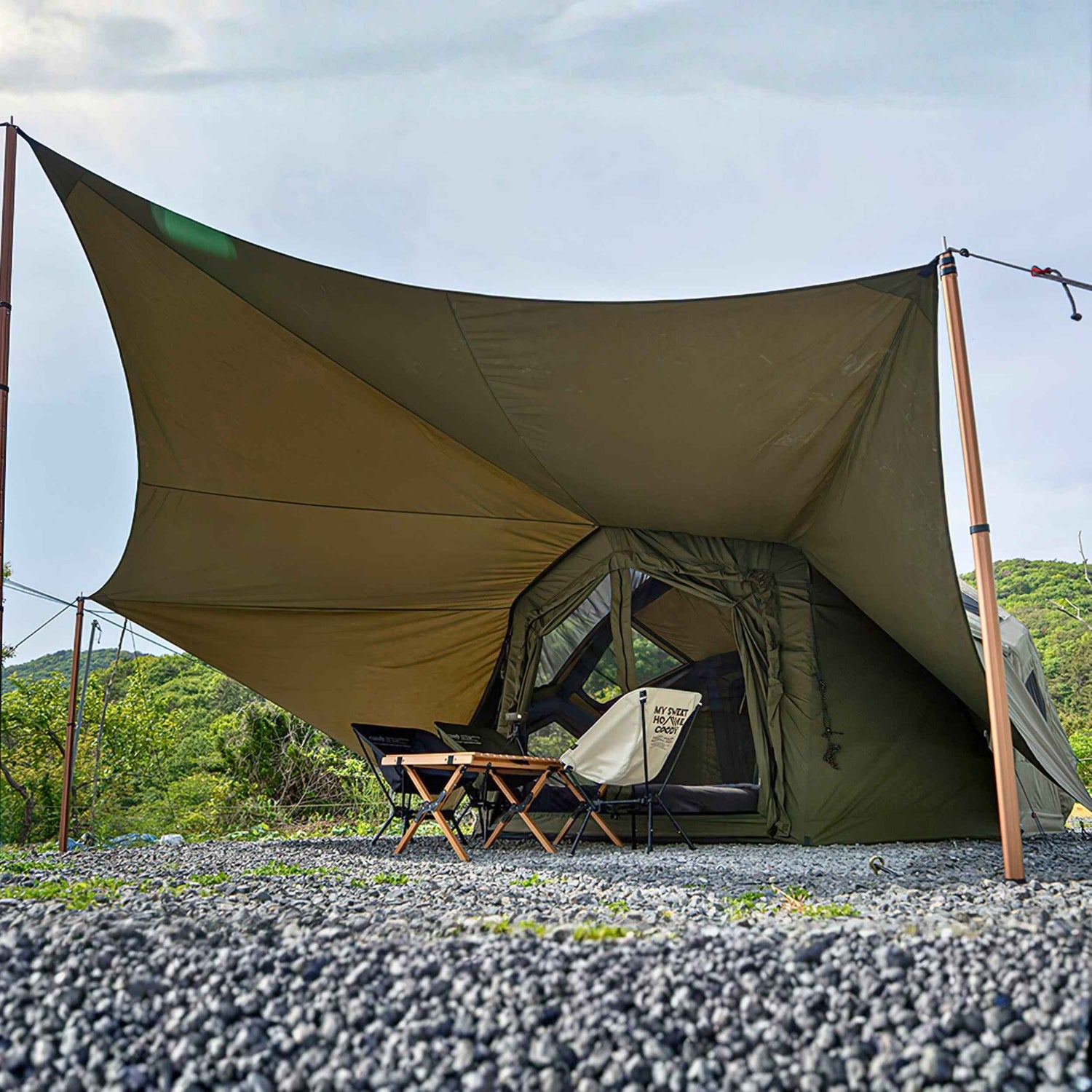
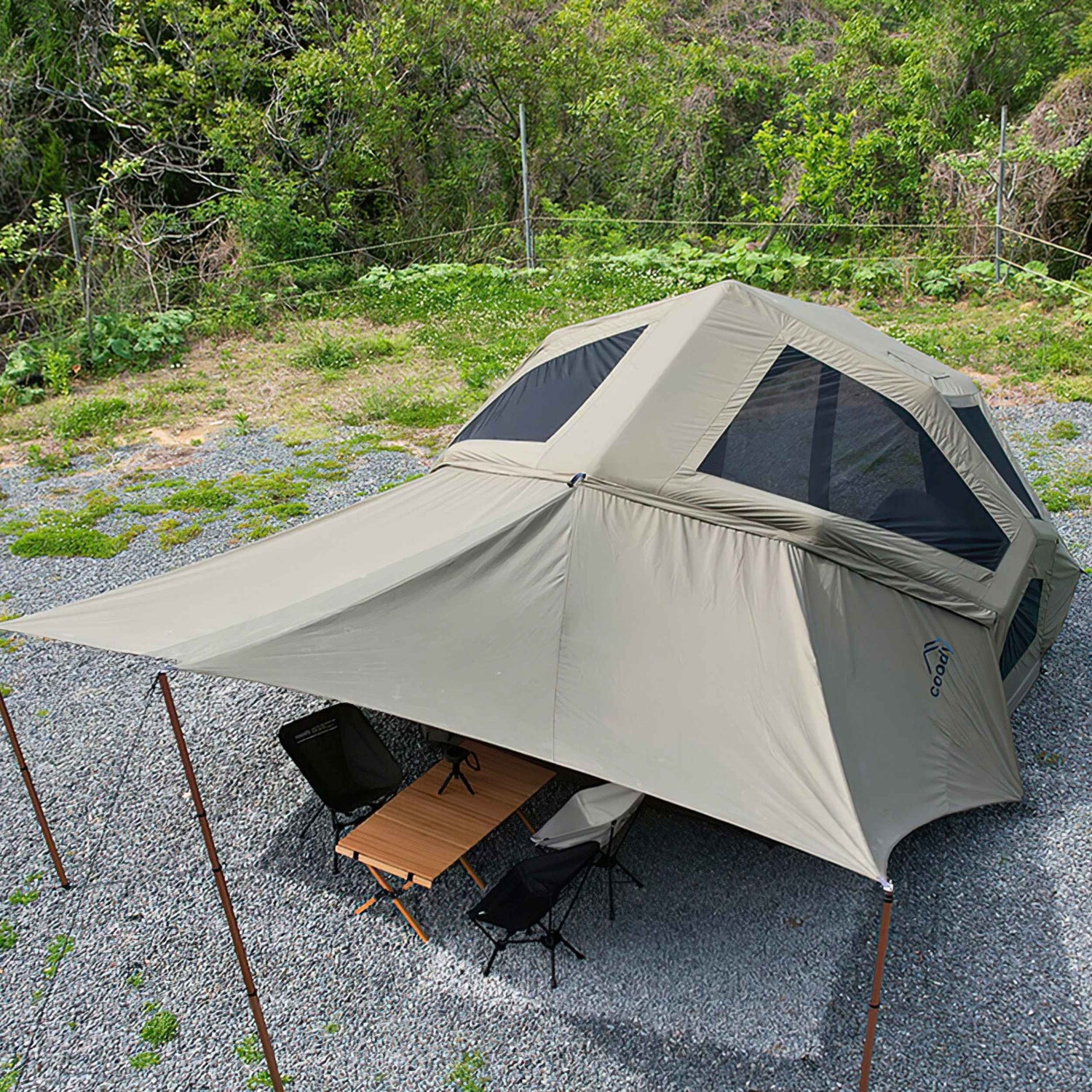
– Use the included rainfly to protect against rain, snow, and sunlight. If necessary, you can create an awning with poles (sold separately), though in this case only half of the tent will be covered.🌡 Temperature Range
Up to 0°C (32°F)
– Optimal conditions for maintaining the tent’s original function and appearance
– Materials remain flexible, packing and setup are easy0°C to -15°C (32°F to 5°F)
– PVC becomes stiffer: folding may be harder, bag fit tight
– Tent must be fully dried after snow or moisture exposure
– Before storage, bring the tent indoors, let it fully dry and warm up to room temperature
– Store only in a dry, ventilated spaceBelow -15°C (5°F)
– High risk of cracks in air-filled components
– Fabric and accessories may freeze together
– Not recommended for use
– Allow all parts to thaw and dry completely in a warm, ventilated place– The tent can be used in outdoor temperatures from 5 °F to 104 °F.
– In cold weather, PVC materials become rigid — the floor and air beams stiffen, making folding more difficult. This is not a defect.
– For a comfortable sleep, use sleeping bags with the proper rating and insulated mats.🔥 Heating & Insulation
– A dedicated chimney opening is provided for wood stoves. Always use stoves with a spark arrestor. Safe electric heaters are also acceptable. Open flames are prohibited.
– Maintain proper ventilation to prevent carbon monoxide buildup.
– If available, use the partition wall to help retain warmth in the sleeping area.
– Keep TPU windows closed to preserve heat, opening only for ventilation.
– Insulate the floor with rugs, blankets, or an additional liner.💨 Air Pressure & Frame
– In freezing conditions, pressure inside the inflatable beams drops — check regularly and top up if needed.
– Ensure all valves are securely closed.💧 Condensation & Moisture
– Condensation is a natural process (similar to fogged car windows). The higher the fabric’s waterproofing, the more likely it is to occur.
– Thanks to the breathable Terylene cotton, condensation inside our tents is minimal.
– Keep vents slightly open.
– Increase temperature gradually to avoid sudden heating.
– Use a groundsheet under the tent.
– Choose dry ground when possible.
– Always dry the tent fully before packing.🌧 Rain & Snow Protection
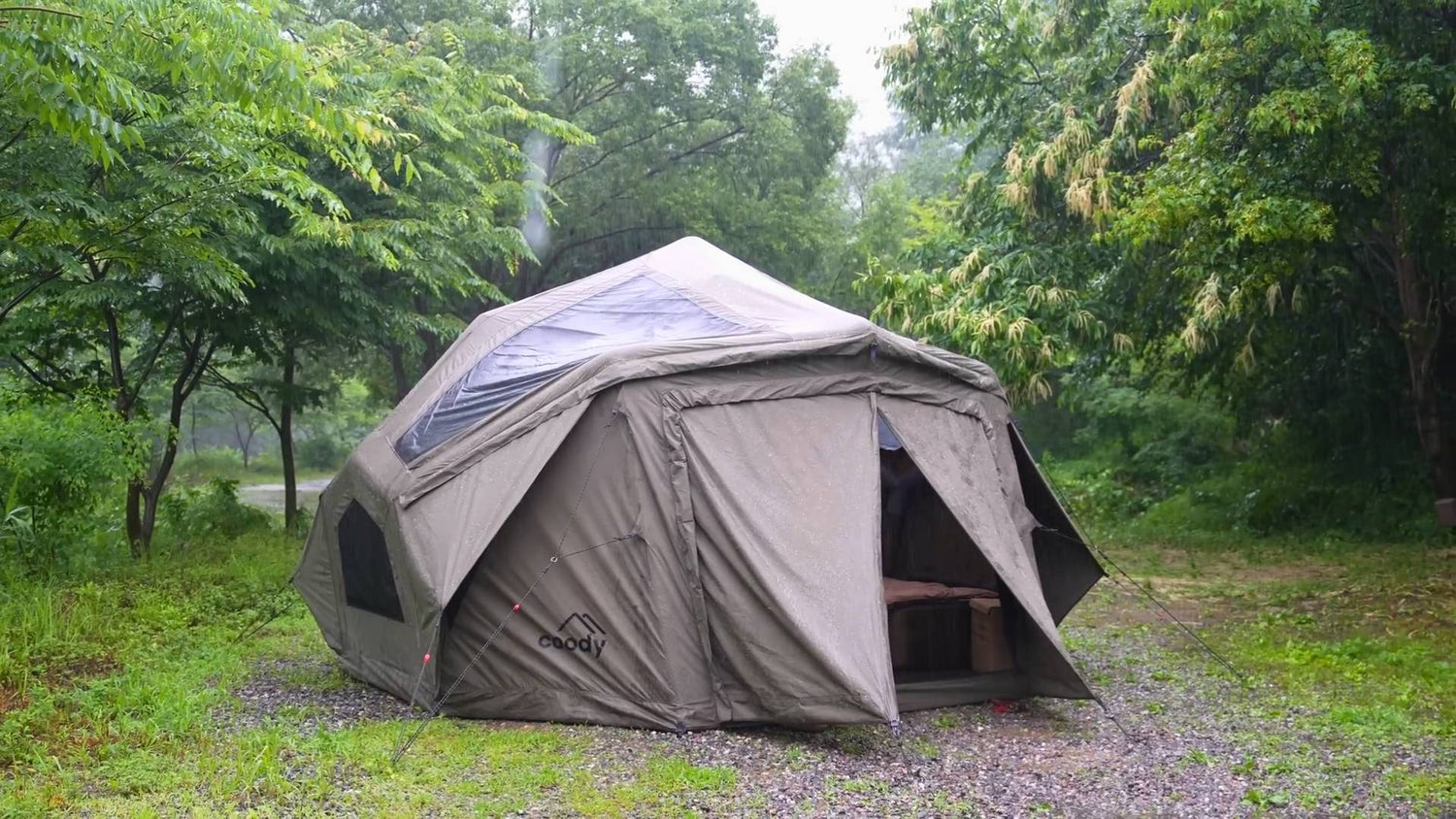
– In moderate rain, the tent protects against water for 4–5 hours (depending on intensity). In light or intermittent rain, the rainfly is not necessary.
– For prolonged rainfall, the included rainfly must be used.
– After rain, remove the rainfly to allow ventilation and prevent condensation.
– You may pre-attach or keep the rainfly rolled at the edge of the tent for quick use if extended showers are expected.
– In snowfall, always use the rainfly immediately. Snow accumulation on the fabric increases the risk of moisture penetration.
– Clear snow from the tent roof regularly.
– If zippers freeze, warm them with your hands or water — never force them.
– After winter use, thoroughly dry the tent before storage.📦 Packing & Storage
– Remember: in cold weather, the PVC floor and fabric stiffen and fold less easily.
– Fully deflate the tent before packing.
– Dry in a well-ventilated place and store only when completely dry.🧹 Care and Use
– Avoid wearing shoes inside the tent.
– Keep sharp objects away from the floor and walls.
– Protect from flammable substances and acids.
– Maintain cleanliness: mold and prolonged UV exposure reduce lifespan.
– Avoid extended direct sunlight; use the rainfly when needed.⚠️ Fire Safety
– Exercise caution with electrical appliances.
"
– Keep exits clear for emergency use.
– Keep a fire extinguisher or other firefighting tool nearby.
– Do not allow children to play with fireworks near the tent.
Precautions value: "⚒️ Preparation and Set Up
– Set up the tent on elevated ground, away from overhanging snow-laden trees and open flames.
– Aim to set up camp before dark.
– To keep the tent clean, we recommend using a groundsheet underneath.
– In strong winds, secure the tent with additional guy lines.
– Use the included rainfly to protect against rain, snow, and sunlight. If necessary, you can create an awning with poles (sold separately), though in this case only half of the tent will be covered.🌡 Temperature Range
Up to 0°C (32°F)
– Optimal conditions for maintaining the tent’s original function and appearance
– Materials remain flexible, packing and setup are easy0°C to -15°C (32°F to 5°F)
– PVC becomes stiffer: folding may be harder, bag fit tight
– Tent must be fully dried after snow or moisture exposure
– Before storage, bring the tent indoors, let it fully dry and warm up to room temperature
– Store only in a dry, ventilated spaceBelow -15°C (5°F)
– High risk of cracks in air-filled components
– Fabric and accessories may freeze together
– Not recommended for use
– Allow all parts to thaw and dry completely in a warm, ventilated place– The tent can be used in outdoor temperatures from 5 °F to 104 °F.
– In cold weather, PVC materials become rigid — the floor and air beams stiffen, making folding more difficult. This is not a defect.
– For a comfortable sleep, use sleeping bags with the proper rating and insulated mats.🔥 Heating & Insulation
– A dedicated chimney opening is provided for wood stoves. Always use stoves with a spark arrestor. Safe electric heaters are also acceptable. Open flames are prohibited.
– Maintain proper ventilation to prevent carbon monoxide buildup.
– If available, use the partition wall to help retain warmth in the sleeping area.
– Keep TPU windows closed to preserve heat, opening only for ventilation.
– Insulate the floor with rugs, blankets, or an additional liner.💨 Air Pressure & Frame
– In freezing conditions, pressure inside the inflatable beams drops — check regularly and top up if needed.
– Ensure all valves are securely closed.💧 Condensation & Moisture
– Condensation is a natural process (similar to fogged car windows). The higher the fabric’s waterproofing, the more likely it is to occur.
– Thanks to the breathable Terylene cotton, condensation inside our tents is minimal.
– Keep vents slightly open.
– Increase temperature gradually to avoid sudden heating.
– Use a groundsheet under the tent.
– Choose dry ground when possible.
– Always dry the tent fully before packing.🌧 Rain & Snow Protection
– In moderate rain, the tent protects against water for 4–5 hours (depending on intensity). In light or intermittent rain, the rainfly is not necessary.
– For prolonged rainfall, the included rainfly must be used.
– After rain, remove the rainfly to allow ventilation and prevent condensation.
– You may pre-attach or keep the rainfly rolled at the edge of the tent for quick use if extended showers are expected.
– In snowfall, always use the rainfly immediately. Snow accumulation on the fabric increases the risk of moisture penetration.
– Clear snow from the tent roof regularly.
– If zippers freeze, warm them with your hands or water — never force them.
– After winter use, thoroughly dry the tent before storage.📦 Packing & Storage
– Remember: in cold weather, the PVC floor and fabric stiffen and fold less easily.
– Fully deflate the tent before packing.
– Dry in a well-ventilated place and store only when completely dry.🧹 Care and Use
– Avoid wearing shoes inside the tent.
– Keep sharp objects away from the floor and walls.
– Protect from flammable substances and acids.
– Maintain cleanliness: mold and prolonged UV exposure reduce lifespan.
– Avoid extended direct sunlight; use the rainfly when needed.⚠️ Fire Safety
– Exercise caution with electrical appliances.
"
– Keep exits clear for emergency use.
– Keep a fire extinguisher or other firefighting tool nearby.
– Do not allow children to play with fireworks near the tent.
Dimensions
Width — 3.80 m (149.60")
Length — 3.80 m (149.60")
Height — 2.70 m (106.30")
Ceiling height — 2.55 m (100.39")
Internal usable area — 12.0 m² (129.17 ft²)
Net weight — 55 kg (121.30 lb)
Gross weight — 61 kg (134.50 lb)
Packaging Dimensions
Box 1
Width — 0.89 m (35.00")
Length — 0.54 m (21.30")
Height — 0.50 m (19.70")
Weight — 43.0 kg (94.8 lb)
Box 2
Width — 0.62 m (24.40")
Length — 0.40 m (15.80")
Height — 0.28 m (11.00")
Weight — 18.0 kg (35.27 lb)
Included in Package
Inflatable Tent — 1 piece
Hand Pump — 1 piece
Rain Fly — 1 piece
Sky Canopy — 1 piece
Rods for Rain Fly — 3 pieces
TPU Windows — 3 pieces
Front TPU Wall — 1 piece
Ropes — 1 set
Pegs — 1 set
Storage Bags — 2 pieces
⚒️ Preparation and Set Up
– Set up the tent on elevated ground, away from overhanging snow-laden trees and open flames.
– Aim to set up camp before dark.
– To keep the tent clean, we recommend using a groundsheet underneath.
– In strong winds, secure the tent with additional guy lines.
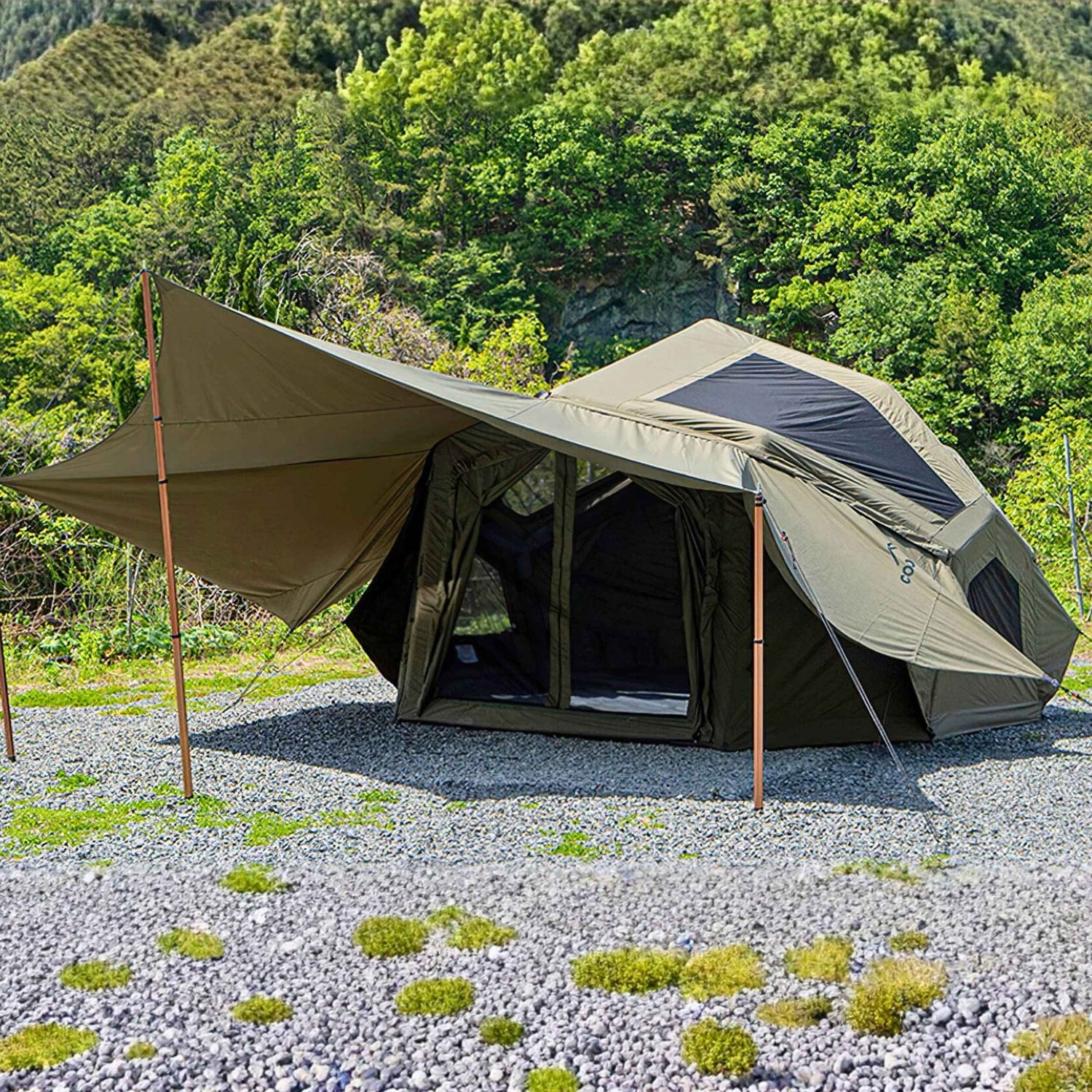
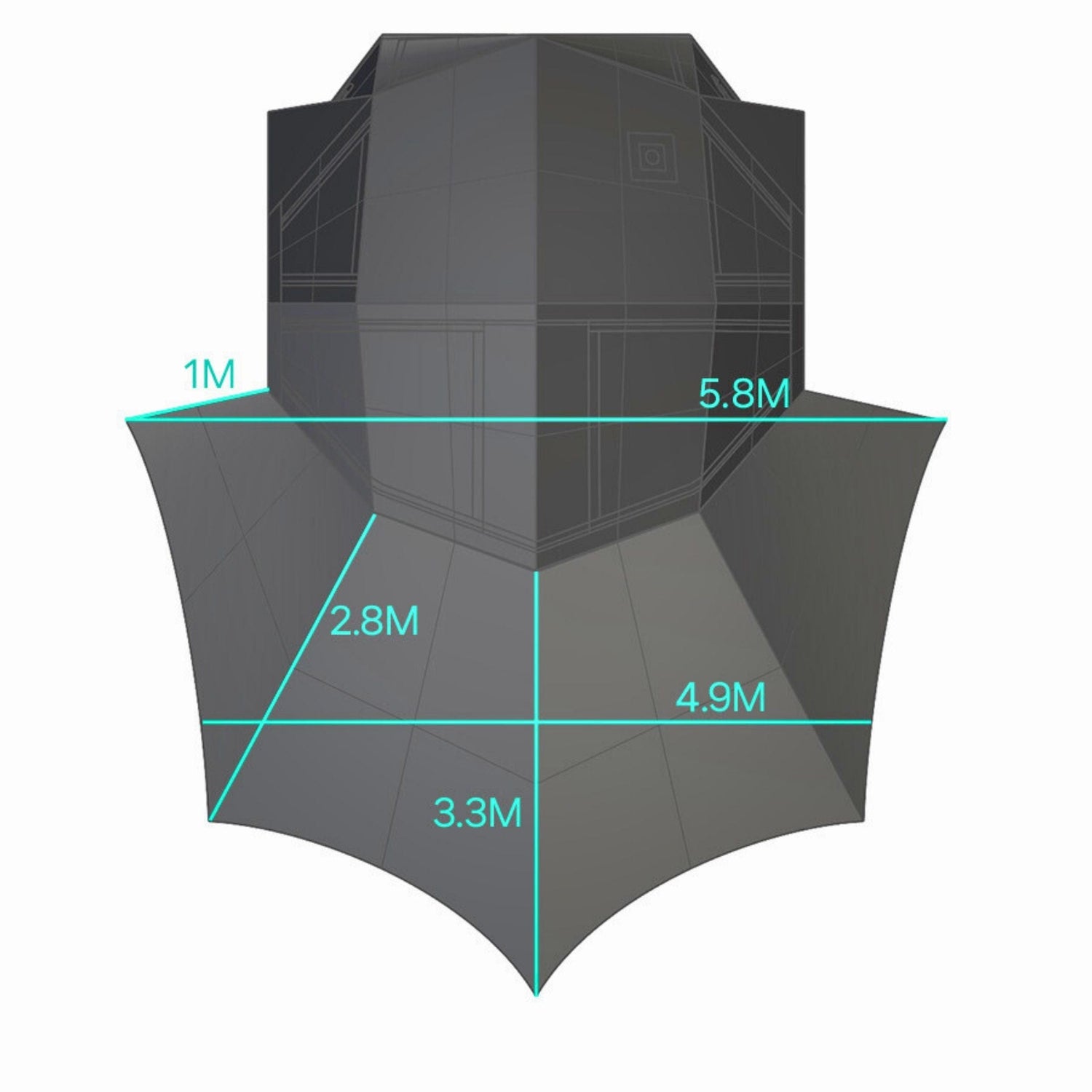
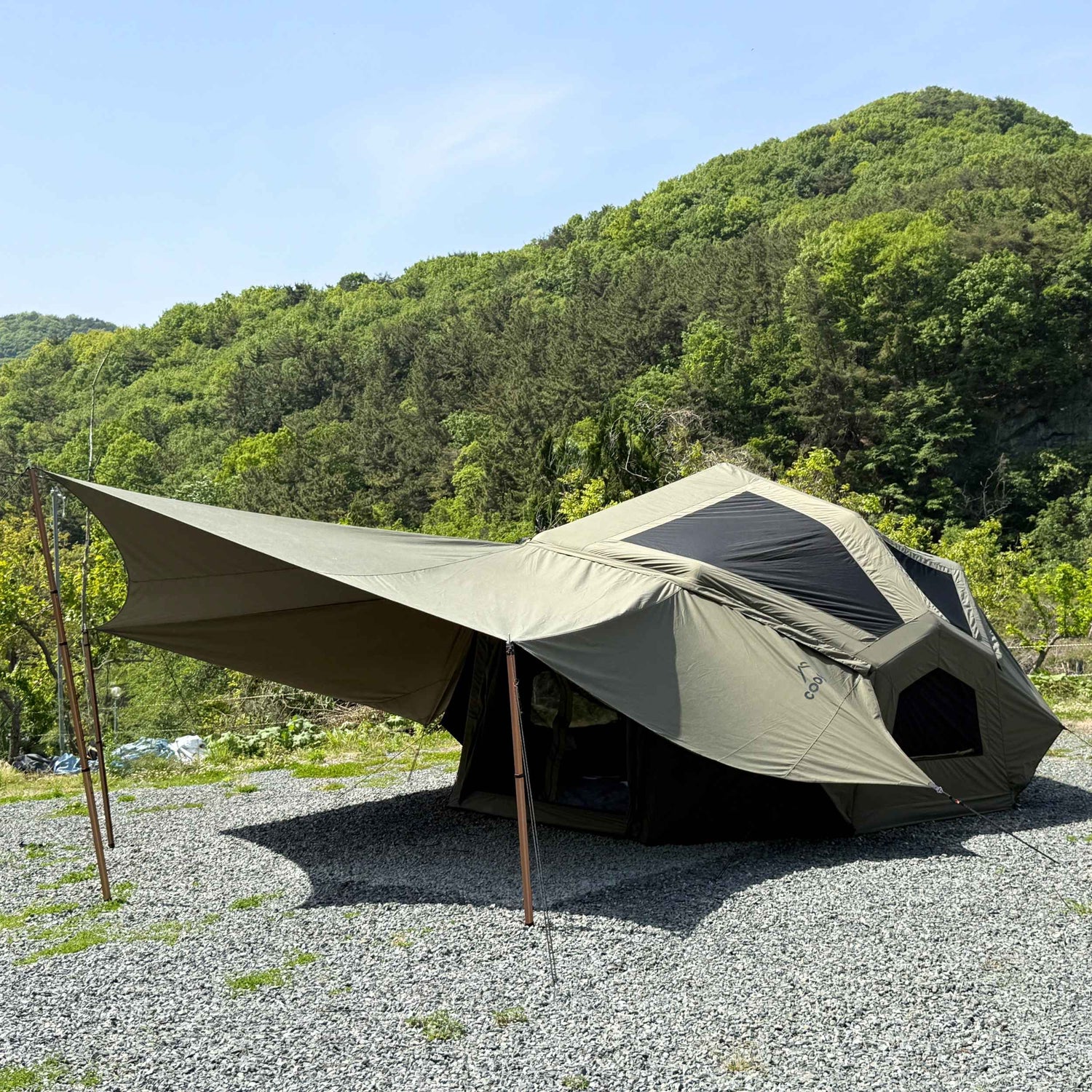
– Use the included rainfly to protect against rain, snow, and sunlight. If necessary, you can create an awning with poles (sold separately), though in this case only half of the tent will be covered.
🌡 Temperature Range
Up to 0°C (32°F)
– Optimal conditions for maintaining the tent’s original function and appearance
– Materials remain flexible, packing and setup are easy
0°C to -15°C (32°F to 5°F)
– PVC becomes stiffer: folding may be harder, bag fit tight
– Tent must be fully dried after snow or moisture exposure
– Before storage, bring the tent indoors, let it fully dry and warm up to room temperature
– Store only in a dry, ventilated space
Below -15°C (5°F)
– High risk of cracks in air-filled components
– Fabric and accessories may freeze together
– Not recommended for use
– Allow all parts to thaw and dry completely in a warm, ventilated place
– The tent can be used in outdoor temperatures from 5 °F to 104 °F.
– In cold weather, PVC materials become rigid — the floor and air beams stiffen, making folding more difficult. This is not a defect.
– For a comfortable sleep, use sleeping bags with the proper rating and insulated mats.
🔥 Heating & Insulation
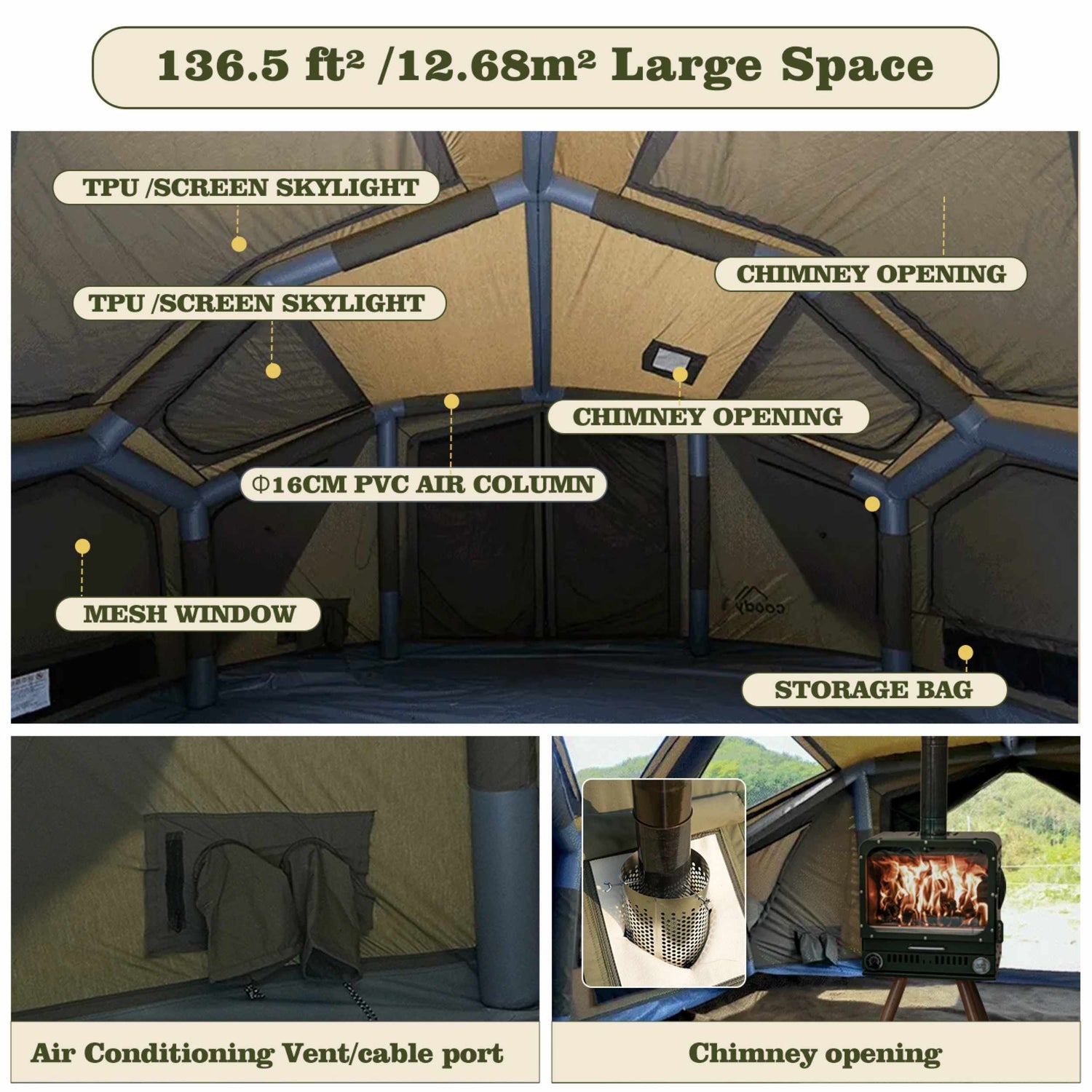
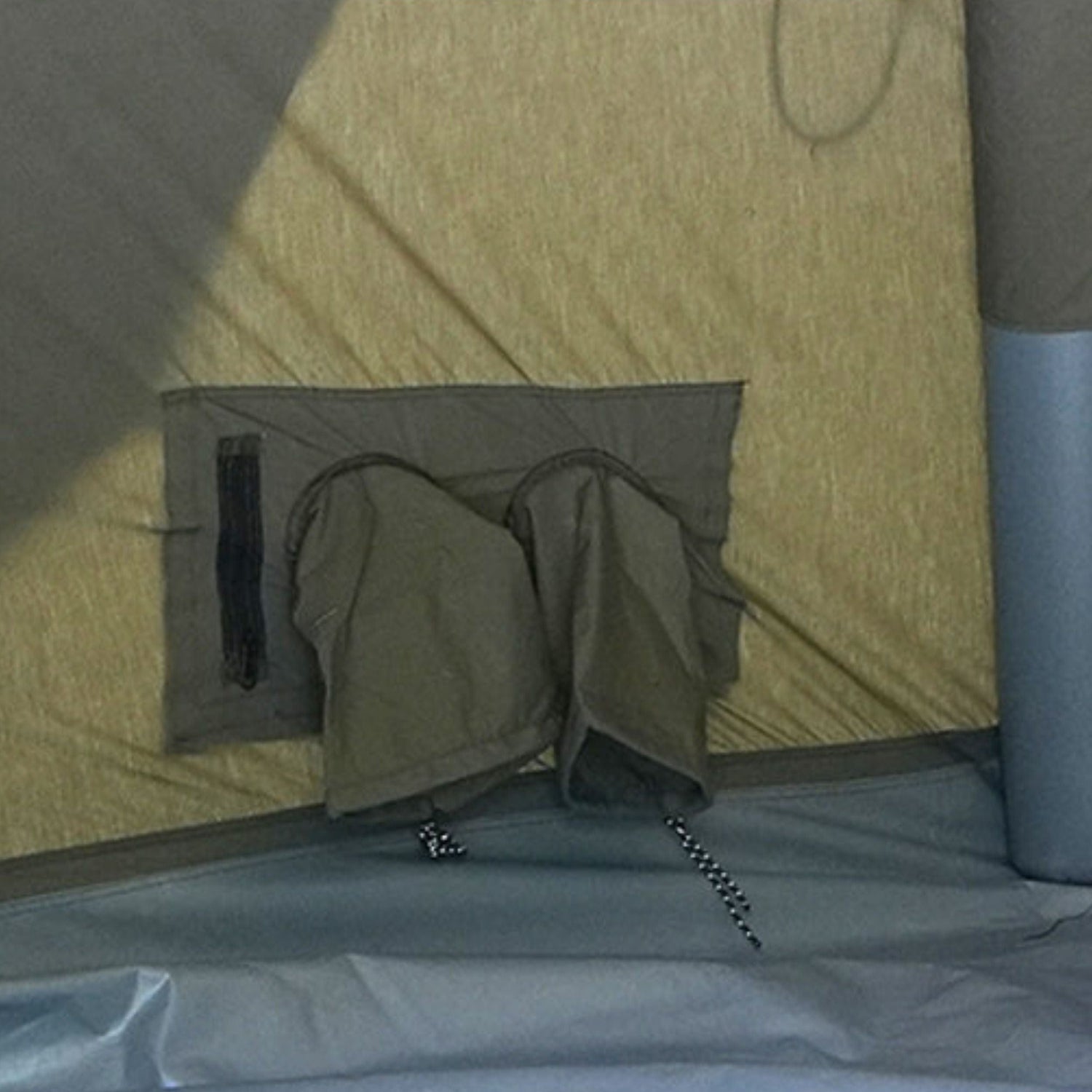
– A dedicated chimney opening is provided for wood stoves. Always use stoves with a spark arrestor. Safe electric heaters are also acceptable. Open flames are prohibited.
– Maintain proper ventilation to prevent carbon monoxide buildup.
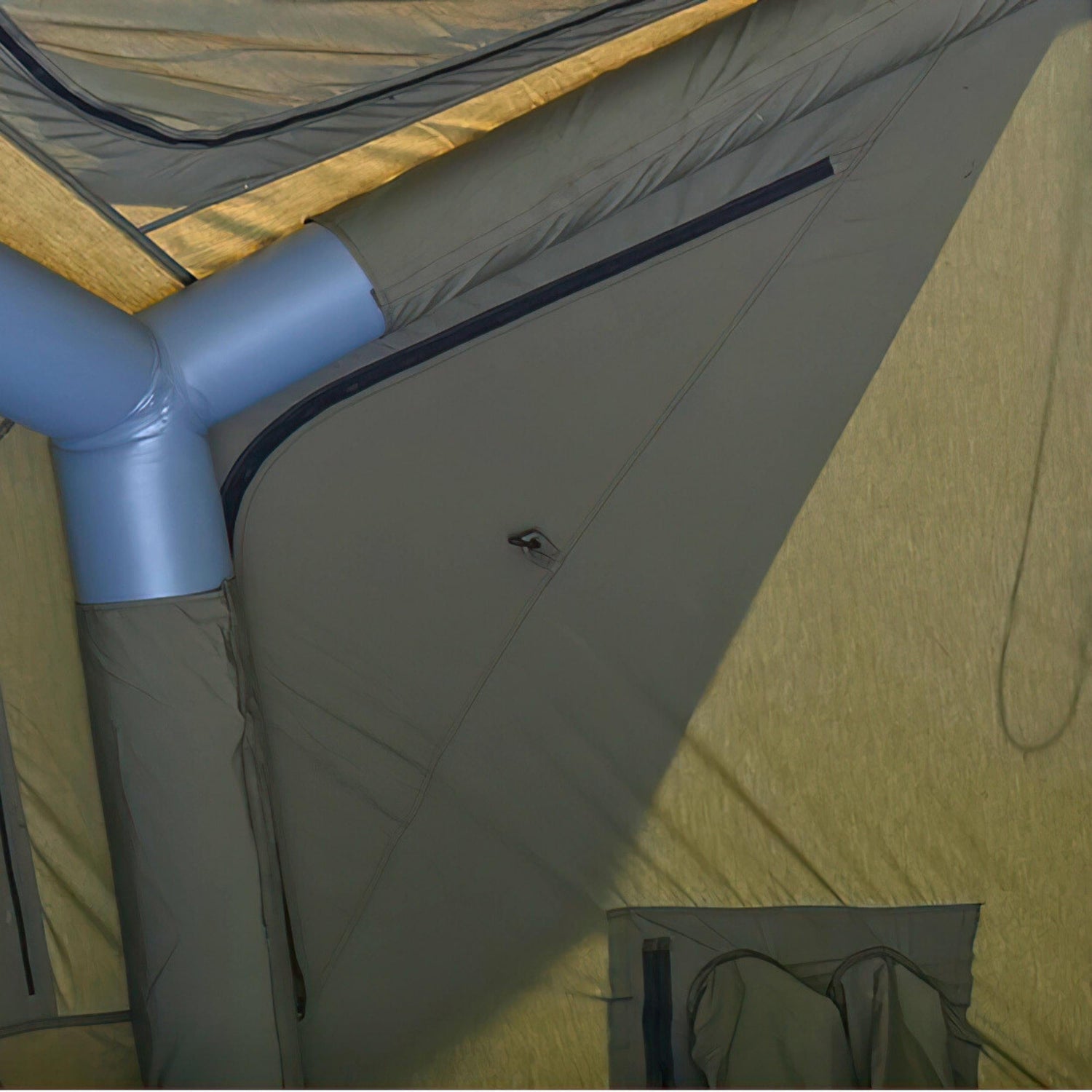
– If available, use the partition wall to help retain warmth in the sleeping area.
– Keep TPU windows closed to preserve heat, opening only for ventilation.
– Insulate the floor with rugs, blankets, or an additional liner.
💨 Air Pressure & Frame
– In freezing conditions, pressure inside the inflatable beams drops — check regularly and top up if needed.
– Ensure all valves are securely closed.
💧 Condensation & Moisture
– Condensation is a natural process (similar to fogged car windows). The higher the fabric’s waterproofing, the more likely it is to occur.
– Thanks to the breathable Terylene cotton, condensation inside our tents is minimal.
– Keep vents slightly open.
– Increase temperature gradually to avoid sudden heating.
– Use a groundsheet under the tent.
– Choose dry ground when possible.
– Always dry the tent fully before packing.
🌧 Rain & Snow Protection
– In moderate rain, the tent protects against water for 4–5 hours (depending on intensity). In light or intermittent rain, the rainfly is not necessary.
– For prolonged rainfall, the included rainfly must be used.
– After rain, remove the rainfly to allow ventilation and prevent condensation.
– You may pre-attach or keep the rainfly rolled at the edge of the tent for quick use if extended showers are expected.
– In snowfall, always use the rainfly immediately. Snow accumulation on the fabric increases the risk of moisture penetration.
– Clear snow from the tent roof regularly.
– If zippers freeze, warm them with your hands or water — never force them.
– After winter use, thoroughly dry the tent before storage.
📦 Packing & Storage
– Remember: in cold weather, the PVC floor and fabric stiffen and fold less easily.
– Fully deflate the tent before packing.
– Dry in a well-ventilated place and store only when completely dry.
🧹 Care and Use
– Avoid wearing shoes inside the tent.
– Keep sharp objects away from the floor and walls.
– Protect from flammable substances and acids.
– Maintain cleanliness: mold and prolonged UV exposure reduce lifespan.
– Avoid extended direct sunlight; use the rainfly when needed.
⚠️ Fire Safety
– Exercise caution with electrical appliances.
– Keep exits clear for emergency use.
– Keep a fire extinguisher or other firefighting tool nearby.
– Do not allow children to play with fireworks near the tent.
Specification
Capacity — 2–4
Seasons — 4-season tent
Tent color — Forest Green
Floor color — Forest Green
Tent material — 210gsm TC Fabric (Terylene Cotton)
Floor material — PVC
Air tube material — PVC
Number of windows (walls) — 2
Number of windows (roof) — 4
Number of entrances — 2
Stove jack — Yes
Air pump type — Hand pump
Recommended pressure — 6–8 psi
Warranty — 1 year
▪ Bestona Air Tent
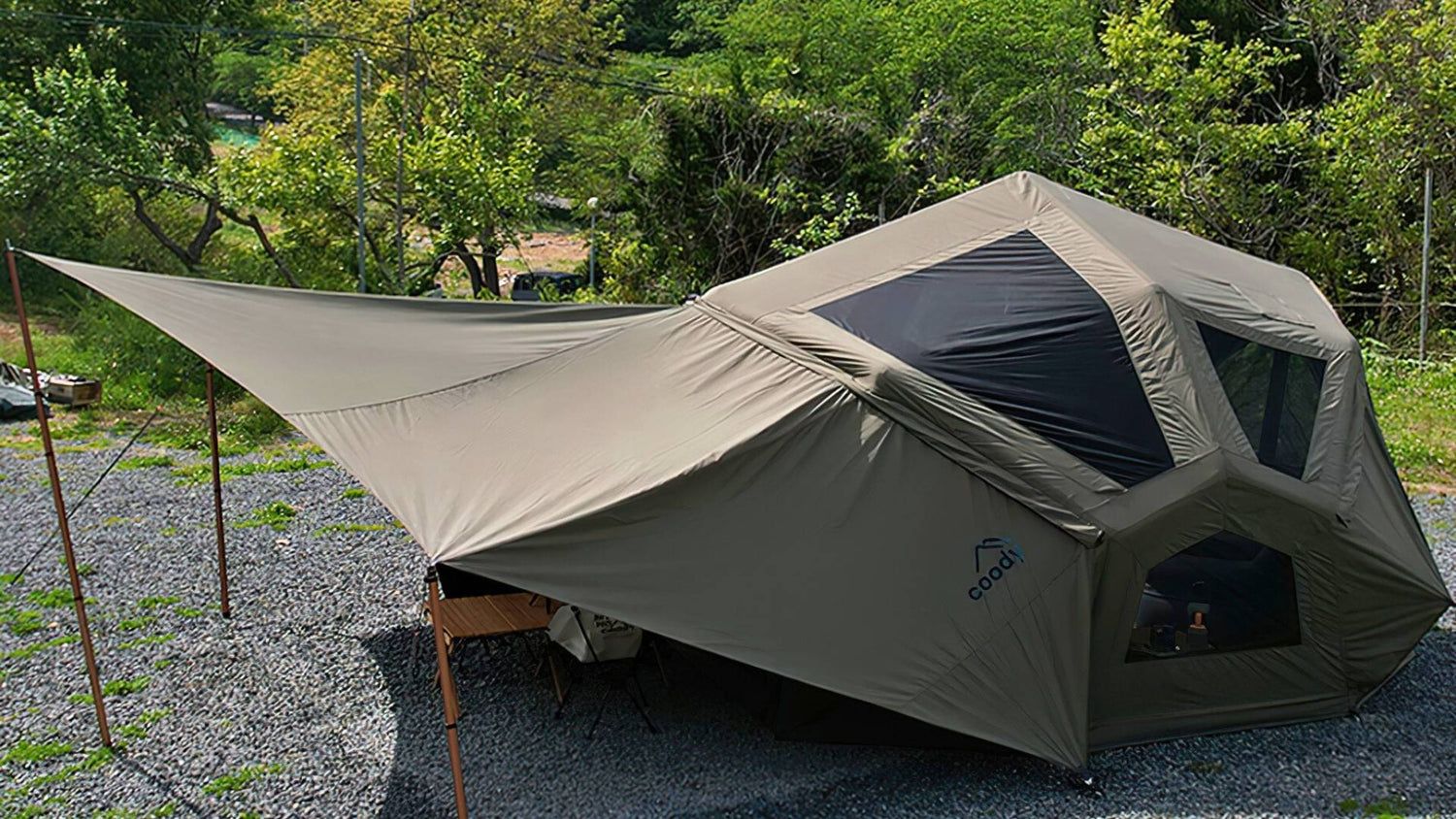
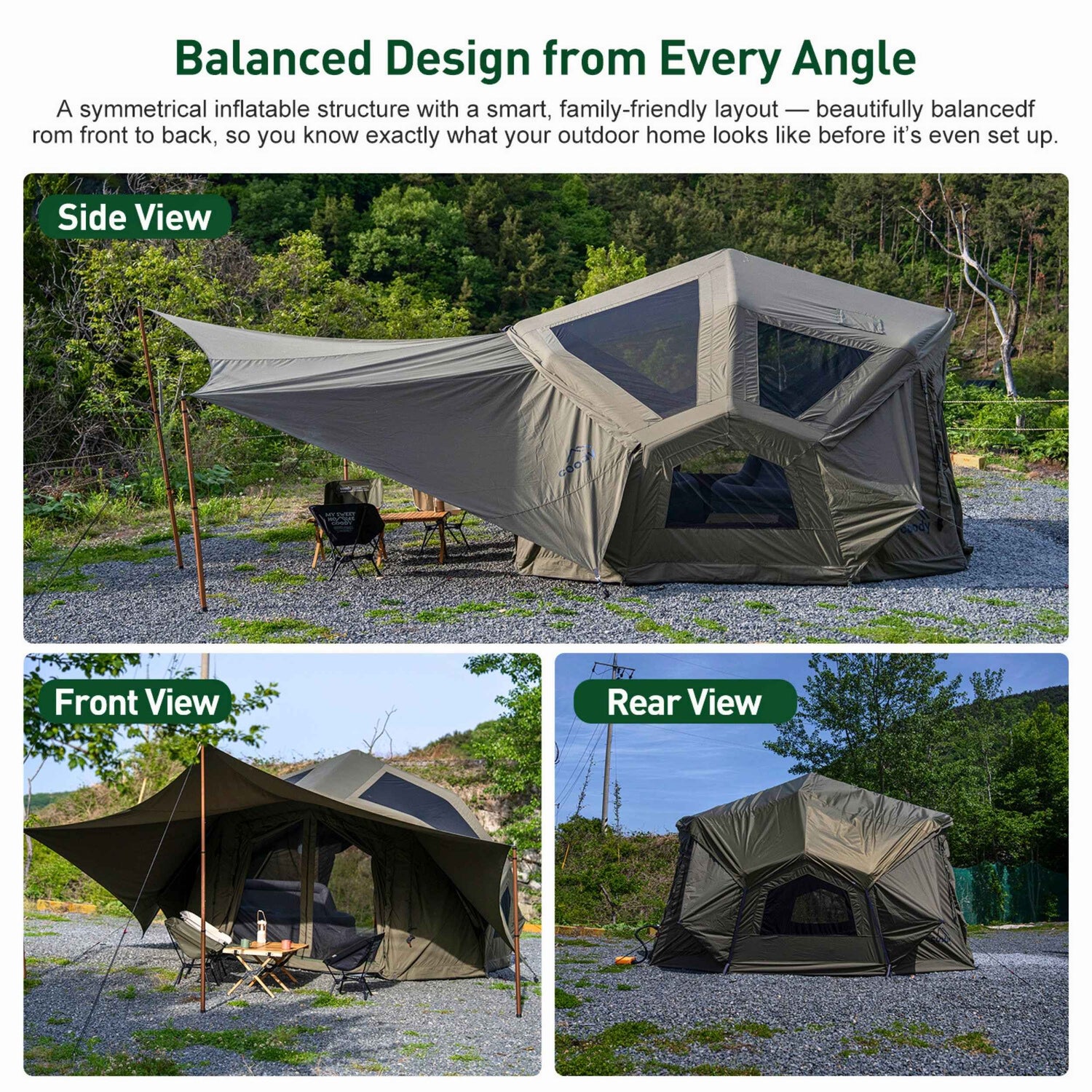
A spacious, breathable inflatable tent with sculpted geometry — designed for comfort and thoughtful outdoor living.
▪ Setup in 10 Minutes
The inflatable air-beam structure replaces traditional poles for fast, straightforward setup. Lay it out, secure it, attach the pump, and inflate — the tent rises evenly in minutes.
▪ Naturally Breathable
Crafted from premium TC canvas (35% cotton / 65% polyester), the fabric feels soft and natural, never synthetic.
✔ Smooth, consistent airflow without cold drafts
✔ No trapped heat or artificial feel
✔ A calm, well-balanced interior climate — even with doors closed
▪ Smart Geometry, More Usable Space
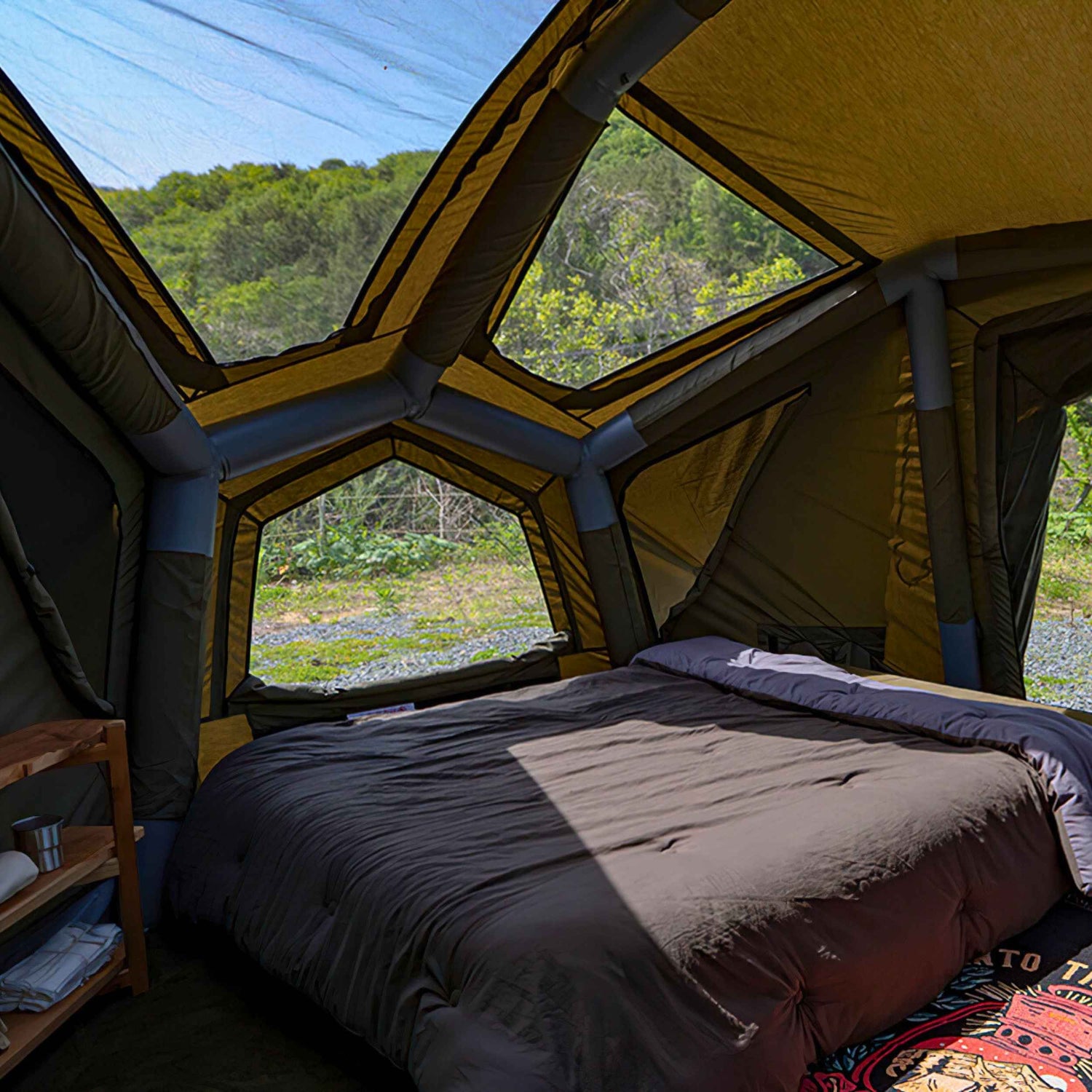
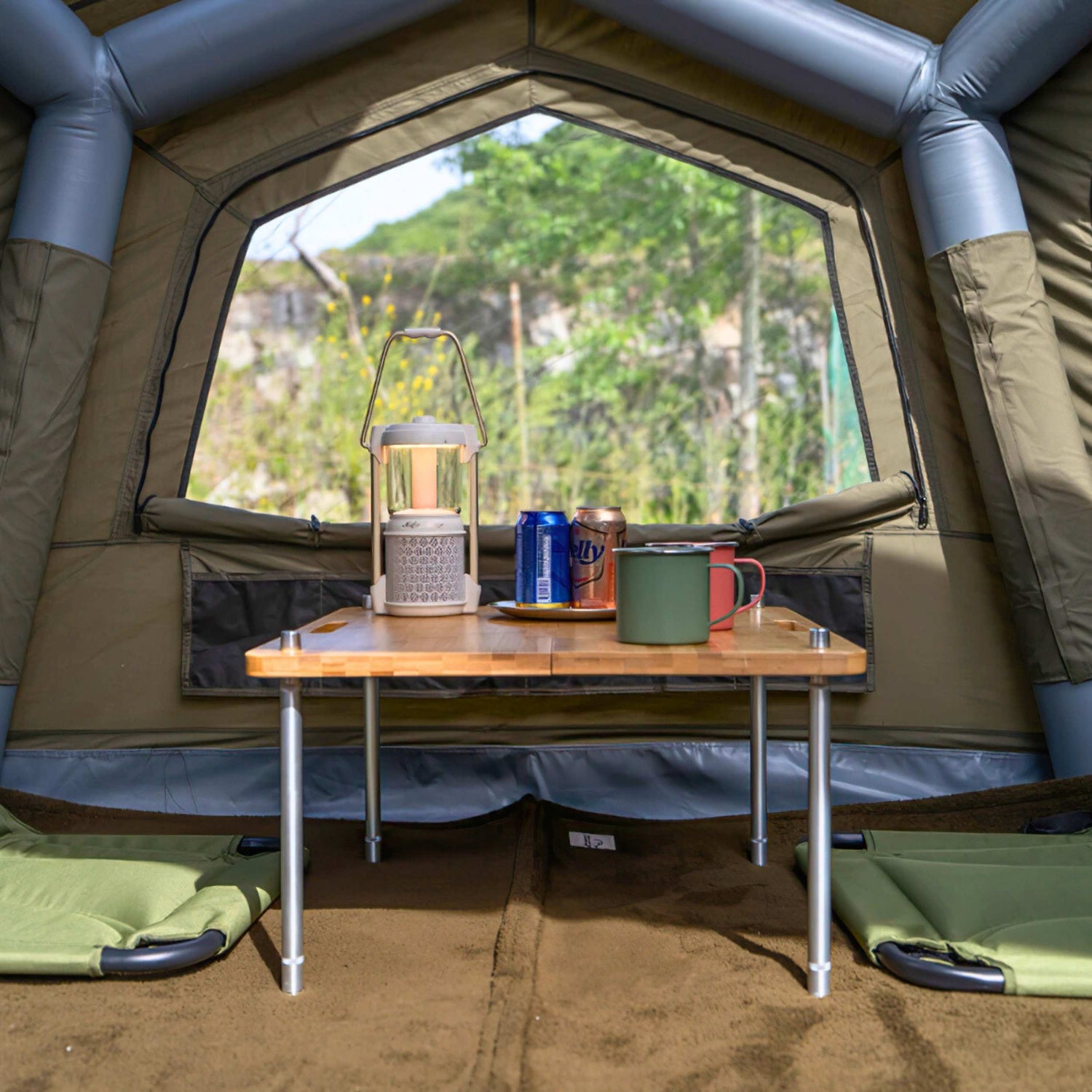
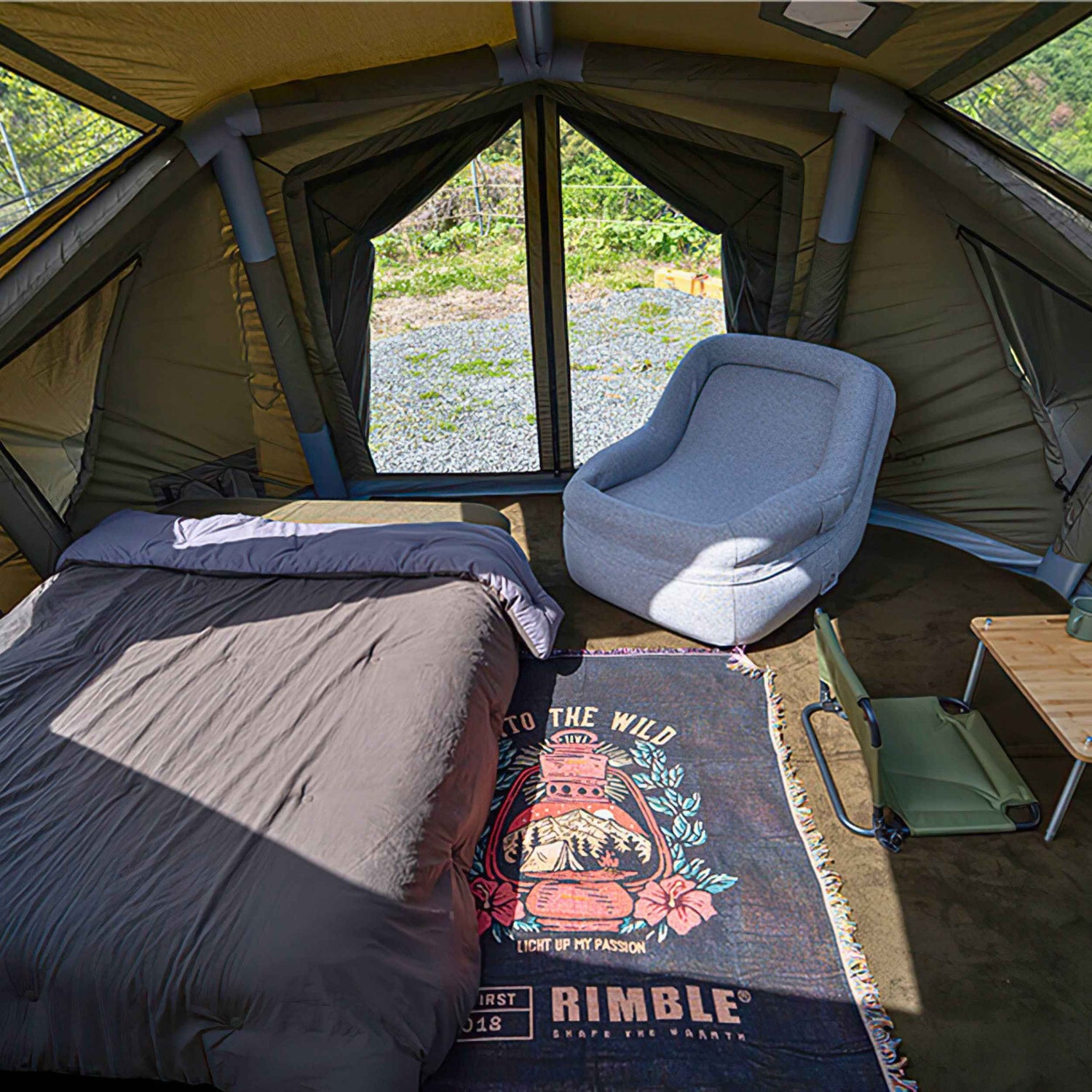
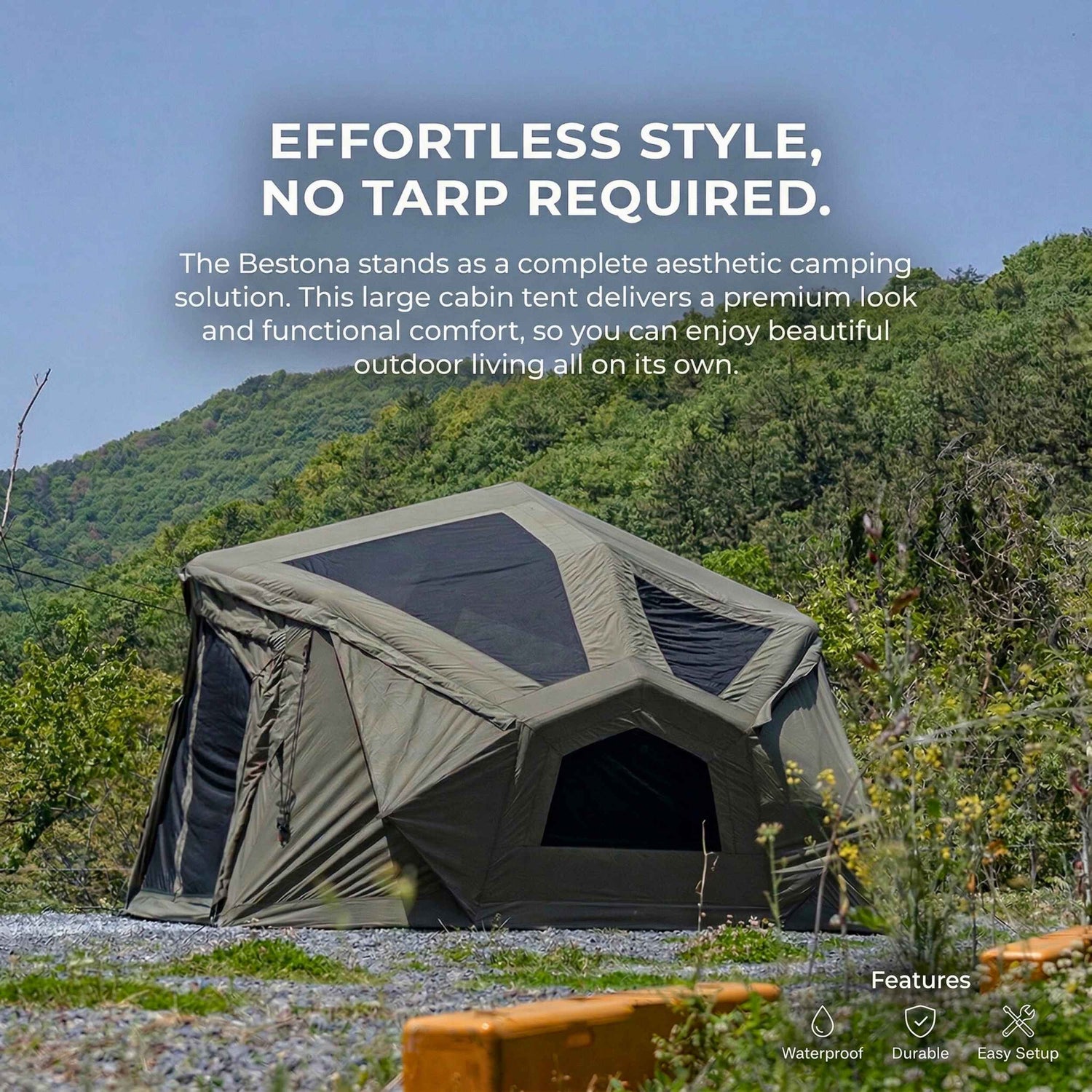
Bestona’s gently contoured dome creates an open, well-balanced interior. Curved walls maximize usable space from front to back, eliminating awkward corners and making movement, rest, and organization feel effortless.
▪ Light, Air & Natural Connection
Four ceiling TPU windows bring the sky inside — rain or stargazing from the comfort of your bed.
✔ Zipper and Velcro panels for flexible control
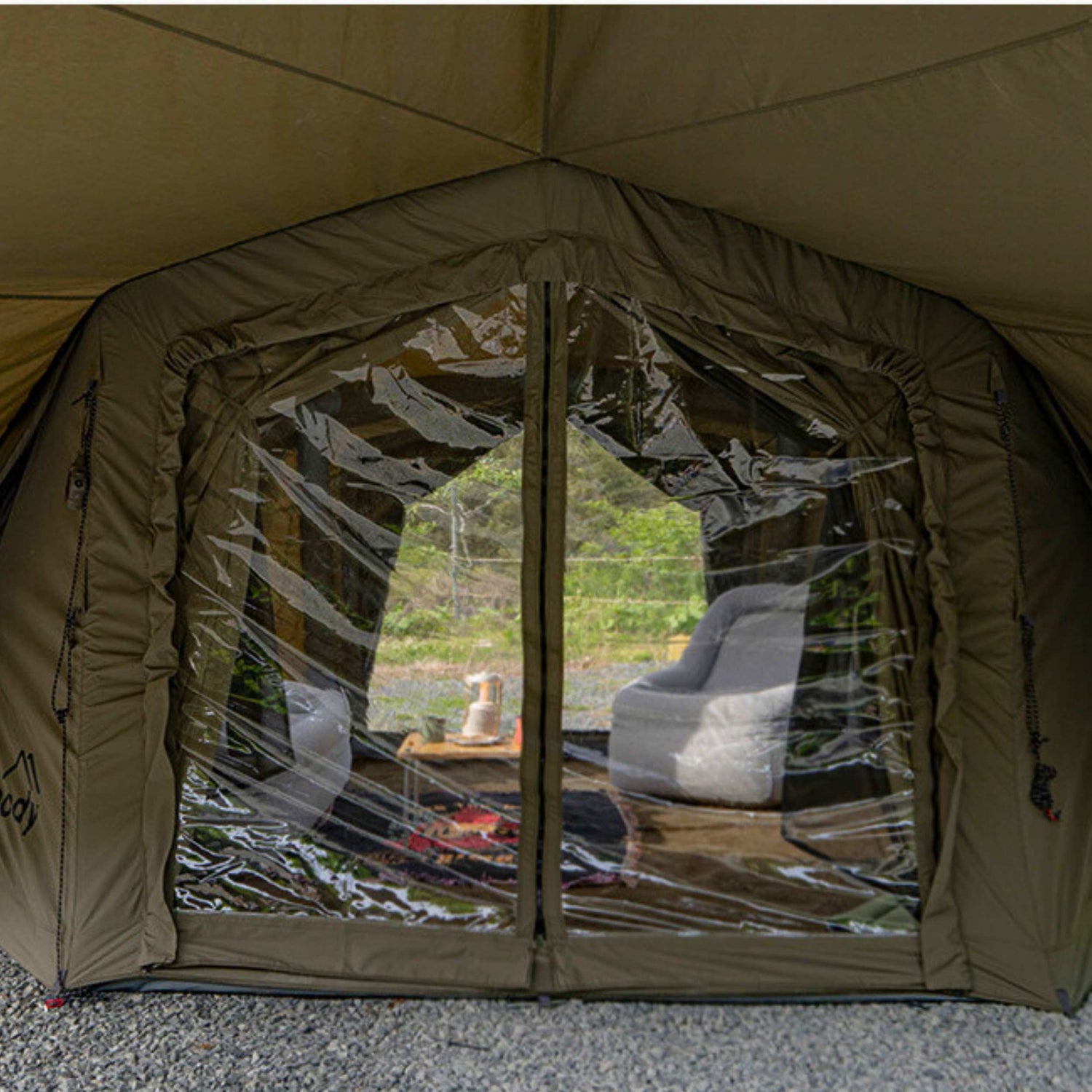
✔ Clear TPU side windows for light and warmth
✔ Dual mesh doors for airflow, bugs out
✔ Built-in stove jack and A/C port for all seasons
▪ Effortless Setup & Pack-Down
The inflatable air-beam design simplifies both setup and takedown. When it’s time to pack up, open the valve, let the air out, and roll the tent down smoothly. No rigid poles, no resistance — just a clean, controlled process that makes arrivals and departures feel effortless.
Expert Video Reviews
Independent experts test our tents in real conditions, highlight the benefits, and answer your key questions before you buy.