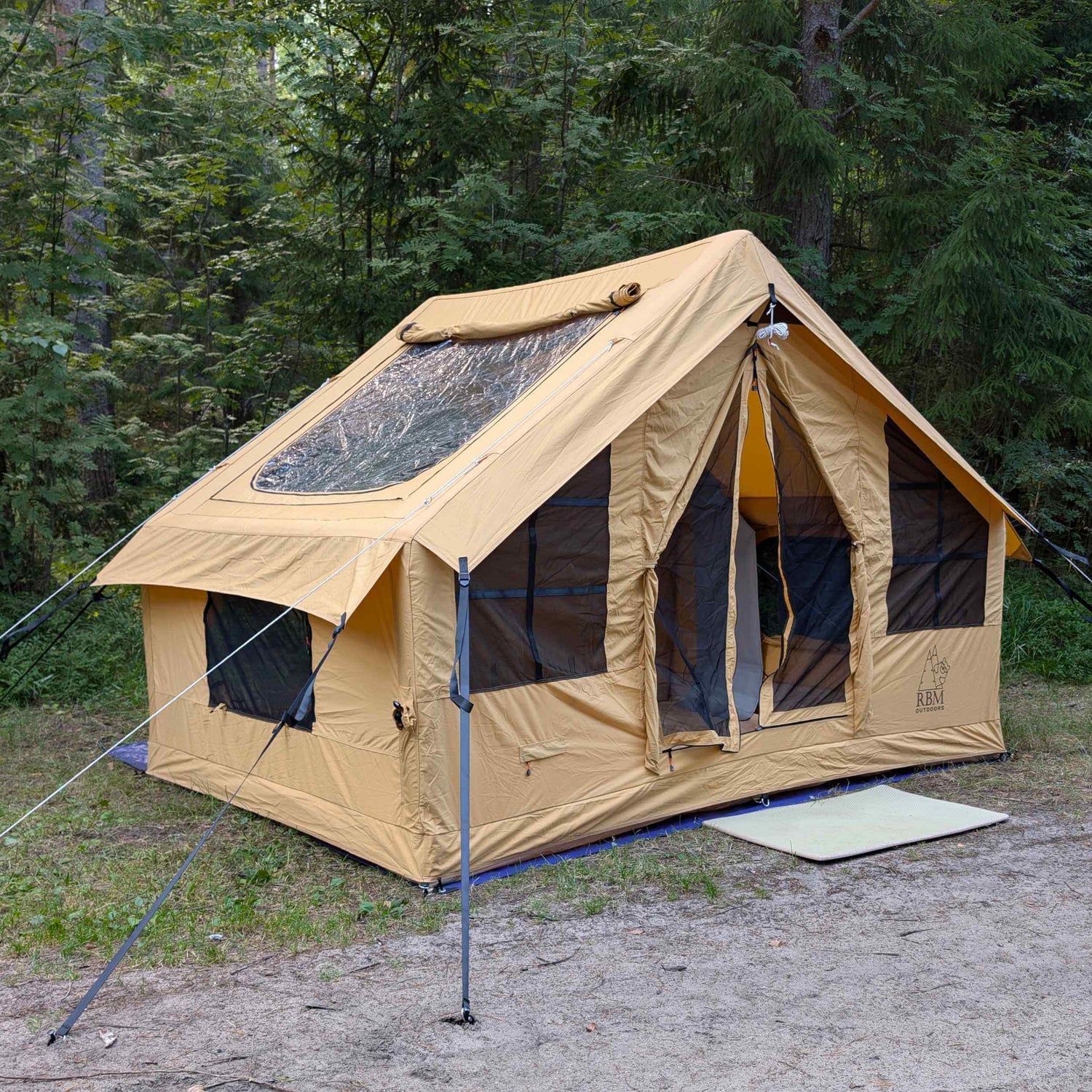
Width - 3 m (118.11")
Length - 2.2 m (86.61")
Height - 2.2 m (86.61")
Ceiling height - 2.08 m (81.89")
Wall-side ceiling height - 1.1 m (43.30")
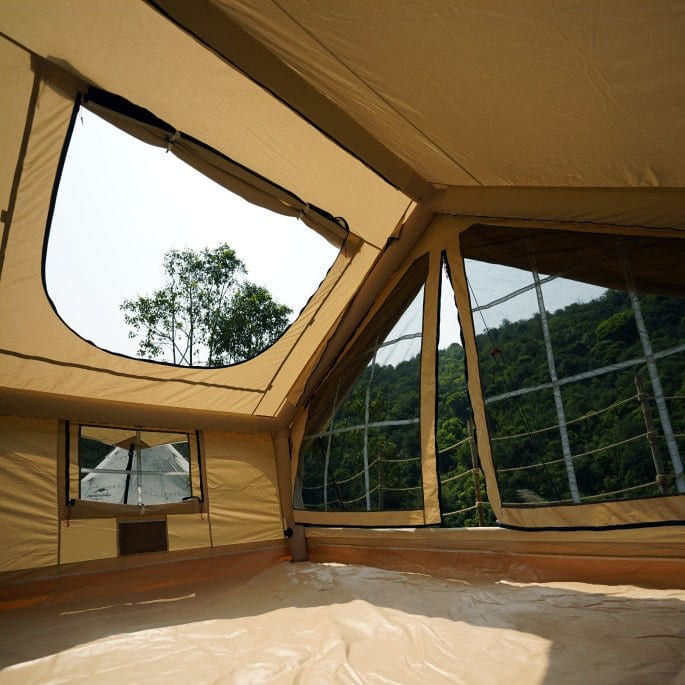
Roof window size - 1.45 x 1.15 m (57.09 x 45.28")
Side window size - 0.87 x 0.51 m (34.25 x 20.08")
Net weight - 35 kg (77.16 lb)
Gross weight - 36 kg (79.37 lb)
Packed size - 0.60 x 0.43 x 0.47 m (23.62 x 16.93 x 18.50")
Type - Inflatable hot tent
Construction - Inflatable air-beam tent
Operating temperature - from -10 °C to +40 °C (14 °F to 104 °F)
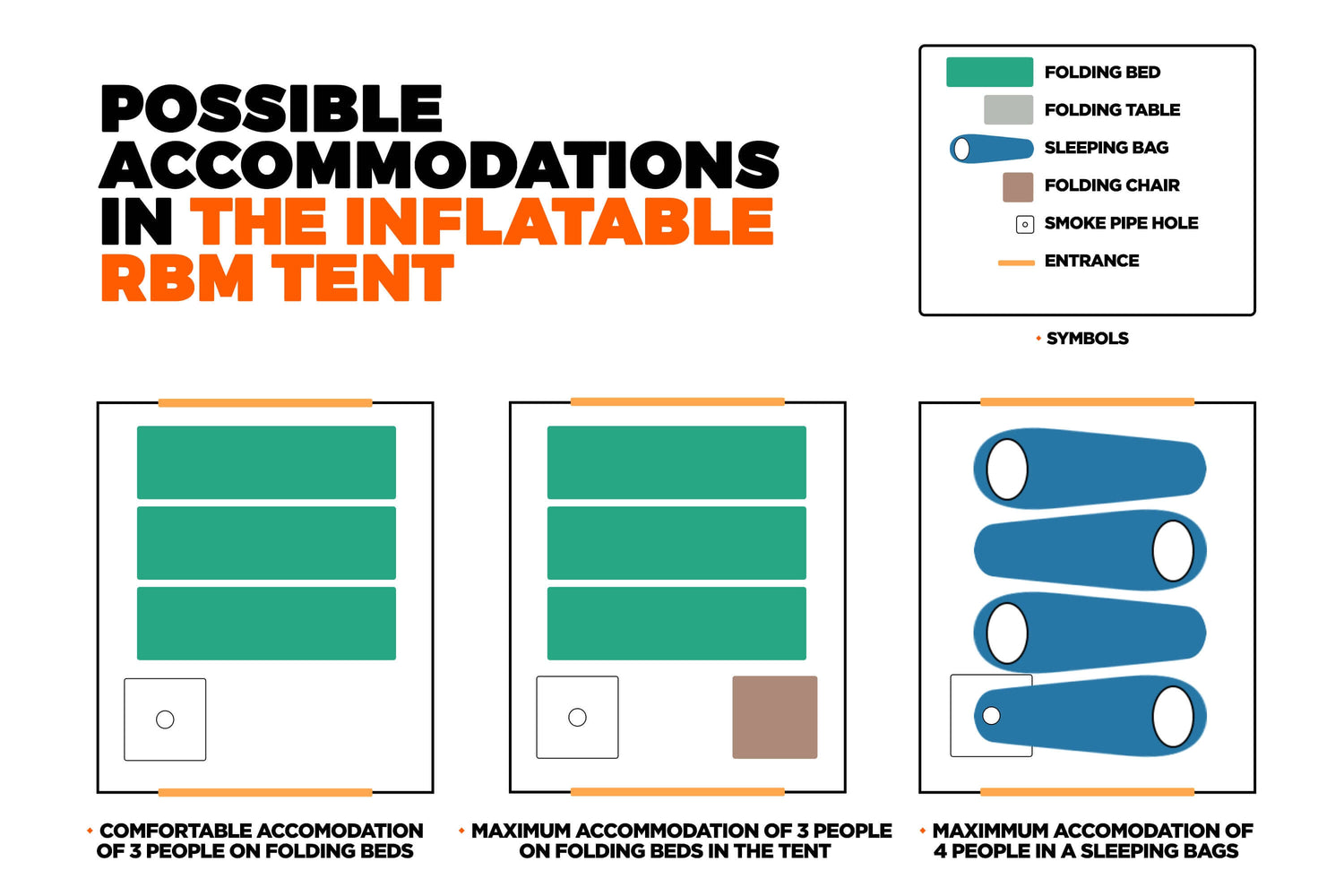
Capacity - Up to 4 people
Floor area - 6.6 m² (71.04 ft²)
Setup type - Inflatable air-beam setup
Setup time - 5 min
Tent fabric - Terylene Cotton canvas
Floor material - PVC
Air tube material - PVC
Recommended pressure - 6-8 psi
Air pump type - Hand pump with pressure gauge
Number of external air valves - 1
Pressure relief valve - Included
Rainfly material - Silver-coated Oxford fabric, PU2000
Rainfly stove jack - Included
Stove jack diameter - 8 cm (3.15")
Number of doors - 2
Number of windows - 5
Number of roof windows - 1
Roof window type - Panoramic TPU skylight for night-sky viewing
Skylight zipper protection - Covered to help prevent water ingress
Front wall material - TPU
Removable front wall - Included
Mosquito protection - Mesh on windows and doors
Windproof design - Yes
Tent color - Sunny Beige
Floor color - Sunny Beige
Included accessories - Hand pump, rainfly, ropes, pegs, 2 storage bags, and repair kit
Warranty - 1 year
Preparation and Setup
- Choose elevated, level ground away from low areas where water can collect.
- Check the site for stones, branches, roots, and other sharp objects before unfolding the tent.
- Stay clear of overhanging branches carrying snow and keep the tent away from external open flames.
- Set up the tent before dark whenever possible.
- A groundsheet under the tent helps keep the PVC floor clean and protects it from abrasion.
- Fully unfold and position the tent before inflation.
- Inflate the air frame with a pump fitted with a pressure gauge. The recommended pressure is 6–8 psi.
- Make sure every valve and valve cap is securely closed after inflation.
- Anchor the tent with the included pegs and guy lines. Add extra guy lines in strong winds.
- Install the included rainfly when rain, snow, or prolonged strong sunlight is expected.
- If using a wood stove, align the stove jacks in the tent and rainfly before assembling the chimney.
- Make sure the protective covers over the roof-window zippers lie flat and fully cover the zippers.
Temperature and Cold-Weather Use
- The approved operating range is from −10 °C to +40 °C (14 °F to 104 °F).
- In freezing weather, the PVC floor and inflatable air beams become stiffer. Folding may require more time. This is a normal material response, not a defect.
- Air pressure may decrease as the temperature falls. Check the air frame regularly and add air when needed, without exceeding 8 psi.
- Use sleeping bags and insulated sleeping mats rated for the expected temperature.
- After any use below 0 °C (32 °F), dry the tent completely in a warm, dry indoor space before storage.
Stove, Heating, and Ventilation
- Use only a compatible wood-burning tent stove installed through the designated stove jack.
- Always use a spark arrestor and a heat-resistant stove mat, and follow the stove manufacturer’s clearance requirements.
- Keep continuous ventilation while the stove is operating to reduce the risk of carbon monoxide buildup.
- Use working smoke and carbon monoxide alarms inside the tent.
- Never use an exposed open flame inside the tent.
- Never leave a burning stove unattended or operating while everyone is asleep.
- Keep the entrance and emergency exit route clear.
- Keep a suitable fire extinguisher or other appropriate fire-suppression equipment nearby.
- Keep TPU windows closed when heat retention is needed, but do not block the ventilation required for safe stove operation.
Condensation and Moisture
- Condensation is a normal result of warm, humid air contacting a colder tent surface.
- Keep vents slightly open and maintain steady airflow.
- Increase the interior temperature gradually rather than heating the tent suddenly.
- Use a groundsheet and choose dry ground whenever possible to reduce moisture rising from below.
- Wipe away accumulated moisture and allow the tent to dry before packing.
Rain, Snow, and Wind
- Use the included rainfly during sustained rain and whenever snow is expected.
- Check that the rainfly is correctly tensioned and that the roof-window zipper covers remain properly positioned.
- Remove accumulated snow from the roof regularly. Do not allow a heavy snow load to remain on the tent.
- If a zipper freezes, warm it gently with your hands and allow it to thaw. Do not force it.
- Secure the tent with additional guy lines during strong winds. Move to safer shelter or take the tent down if conditions become unsafe.
- After rain or snow, remove or lift the rainfly when conditions allow so the tent can ventilate and dry.
Packing, Storage, and Care
- Fully deflate the air frame before folding the tent.
- Do not force-fold stiff PVC in freezing conditions. Allow the material to warm and become flexible first.
- Remove dirt and moisture, then dry the tent completely in a well-ventilated area.
- Pack and store the tent only when every component is clean and completely dry.
- Store the tent in its storage bag in a clean, dry place protected from mold and prolonged UV exposure.
- Avoid wearing shoes inside the tent.
- Keep sharp objects, flammable substances, acids, and harsh cleaning chemicals away from the tent fabric and floor.
- Do not allow children to use fireworks or play with ignition sources near the tent.
Package contents - 1 inflatable tent, 1 hand pump, 1 rainfly, 1 TPU roof window, 1 TPU front wall, 1 rope set, 1 peg set, 2 storage bags, and 1 repair kit