
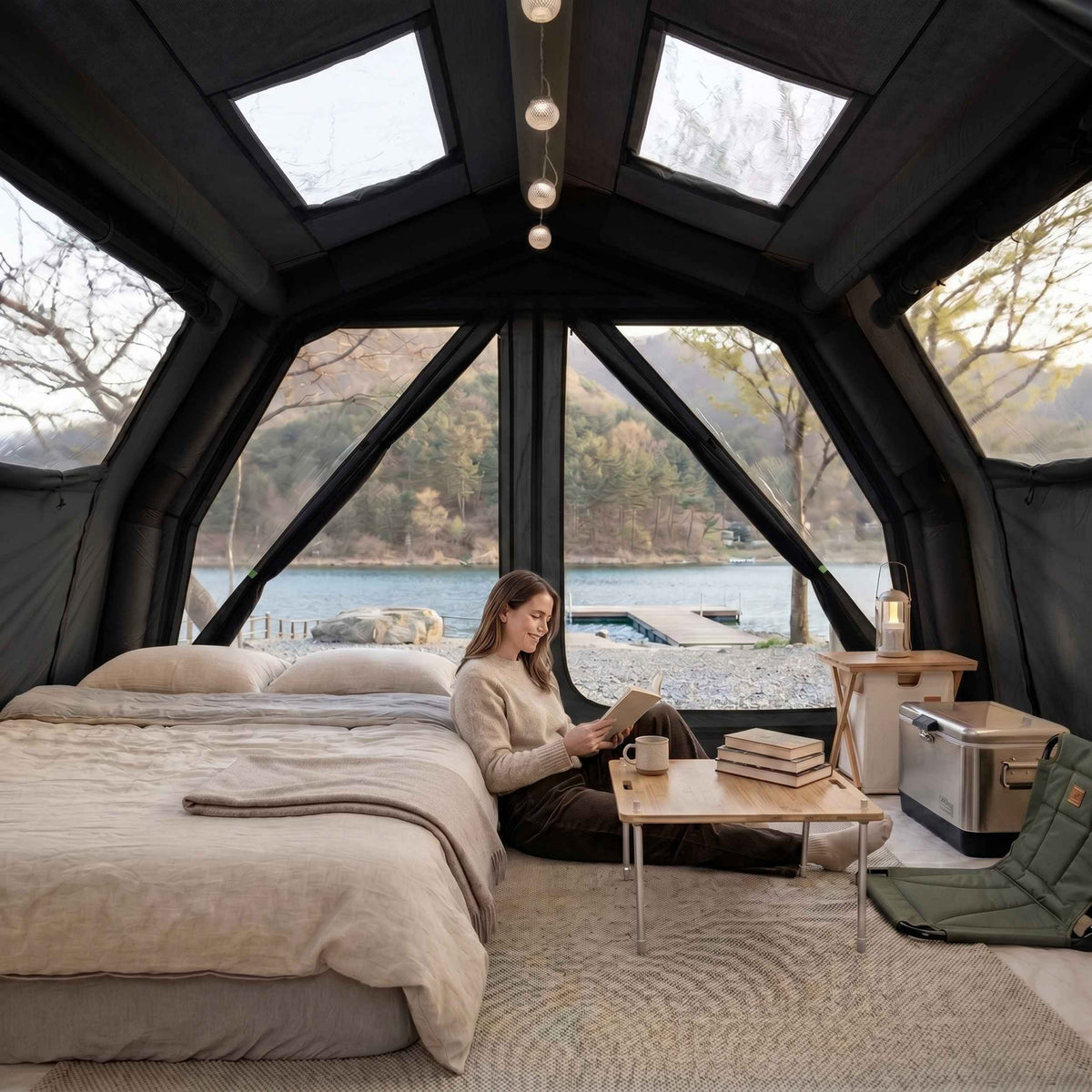
A useful camping checklist starts with the trip, not the shopping cart. A drive-in campground, a remote backcountry site, and a winter hot-tent camp require different shelter, cooking, water, communication, and emergency plans. Use this guide as a starting point, then adjust it for the forecast, terrain, trip length, group, and local regulations.
Plan before you pack
- Check the current weather forecast, overnight low, wind, precipitation, wildfire conditions, and road or trail access.
- Confirm permits, campsite rules, fire restrictions, food-storage requirements, and whether potable water is available.
- Share the route, campsite, vehicle information, and expected return time with a trusted contact.
- Test the tent, stove, lighting, water treatment, and communication equipment before leaving home.
- Carry a backup plan and turn back when weather, health, or site conditions make the original plan unsafe.
1. Tent and shelter
Choose a tent for the expected weather and the real amount of occupied space. A four-person capacity usually describes four sleeping positions, not four people plus cots, luggage, pets, and furniture. Compare floor area, ceiling height, ventilation, waterproof ratings, floor construction, setup time, and packed weight.
A hot tent requires a purpose-built stove jack and a compatible stove installation. Do not operate a wood stove in a standard tent or improvise a chimney opening. Pack the correct pegs and guy lines for the ground, plus a footprint when it is recommended for the model.

2. Sleeping system
- Sleeping bag with a temperature rating appropriate for the expected overnight low
- Insulated sleeping pad selected for the season and ground temperature
- Pillow or compact substitute that provides adequate neck support
- Dry sleep clothing stored separately from wet daytime layers
3. Water and food
Bring enough drinking water or a reliable method for treating the available source. Untreated backcountry water should be filtered, purified, or boiled as appropriate. Plan meals before the trip, keep refrigerated foods in a suitable cooler, and pack extra food and water for delays.
Store food, trash, and scented items according to the campground's wildlife rules. Requirements differ by location and may include lockers, approved bear-resistant containers, or another specified system. Never assume that a vehicle or hanging bag is accepted everywhere.
4. Cooking equipment
- Stove and fuel permitted by the campsite and intended for the planned cooking location
- Cookware, utensils, mug, cutting surface, lighter or matches, and a safe backup ignition method
- Biodegradable soap, sponge, quick-drying cloth, and containers for packing out waste
Operate cooking equipment only as directed by its manufacturer. Never use charcoal or an outdoor cooking appliance inside a regular tent, vehicle, or other enclosed sleeping area.
Complete Your Camp Setup: Check off your essential gear list with our premium equipment. From rugged all-weather shelters to campsite comforts like insulated carpets and heavy-duty folding chairs, we have everything you need for a safe and comfortable trip.
4-Season Tents
View CollectionCamping Accessories
Shop Accessories5. Clothing and weather protection
- Moisture-managing base layers and insulating mid-layers
- Waterproof and wind-resistant outer layer appropriate for the forecast
- Dry spare socks and clothing protected in a waterproof bag
- Footwear suited to the terrain, plus a sun hat and warm hat when conditions require them
6. Lighting, navigation, and communication
- Headlamp or flashlight for each camper, with spare batteries or charging power
- Map and compass, even when a phone or GPS device is the primary navigation tool
- Charged phone and an appropriate backup communication device for areas without service
- Whistle, multi-tool, repair materials, and model-specific equipment spares
7. Health, hygiene, and first aid
Carry a first-aid kit suited to the group, activity, distance from help, and known medical needs. Include personal medications, wound-care supplies, blister treatment, and any items recommended by a qualified medical professional for the trip.
- EPA-registered insect repellent used according to its label
- Broad-spectrum sunscreen, sunglasses, protective clothing, and shade planning
- Toiletries, hand-cleaning supplies, toilet paper, and the waste system required at the campsite
8. Campsite comfort and organization
For drive-in camping, folding chairs, a table, storage bins, a ground sheet, and an interior carpet can make camp more comfortable. Group equipment by use—shelter, sleeping, kitchen, clothing, safety, and personal items—so essentials remain accessible after dark or in bad weather.
Frequently Asked Questions
What are the most important items for a first trip?
Start with appropriate shelter, a sleeping bag and insulated pad, sufficient water, weather-ready clothing, lighting, navigation, food and cooking equipment, first aid, and a communication plan. The exact list depends on the campsite and season.
Should I bring spare clothing?
Yes. Keep at least one dry layer and dry socks protected from rain and condensation. Wet clothing should not be relied on for sleeping warmth.
How should beginners prepare their equipment?
Set up the tent and test essential equipment at home. Confirm that every pole, valve, hose, peg, cable, battery, fuel connector, and repair item is present and compatible before departure.
Final check before departure
Review the list against the latest forecast and campsite rules, not a generic packing template alone. Remove unnecessary weight, but do not remove safety-critical water, insulation, navigation, lighting, communication, or first-aid equipment.
Planning reference: National Park Service camping checklist
0 comments