
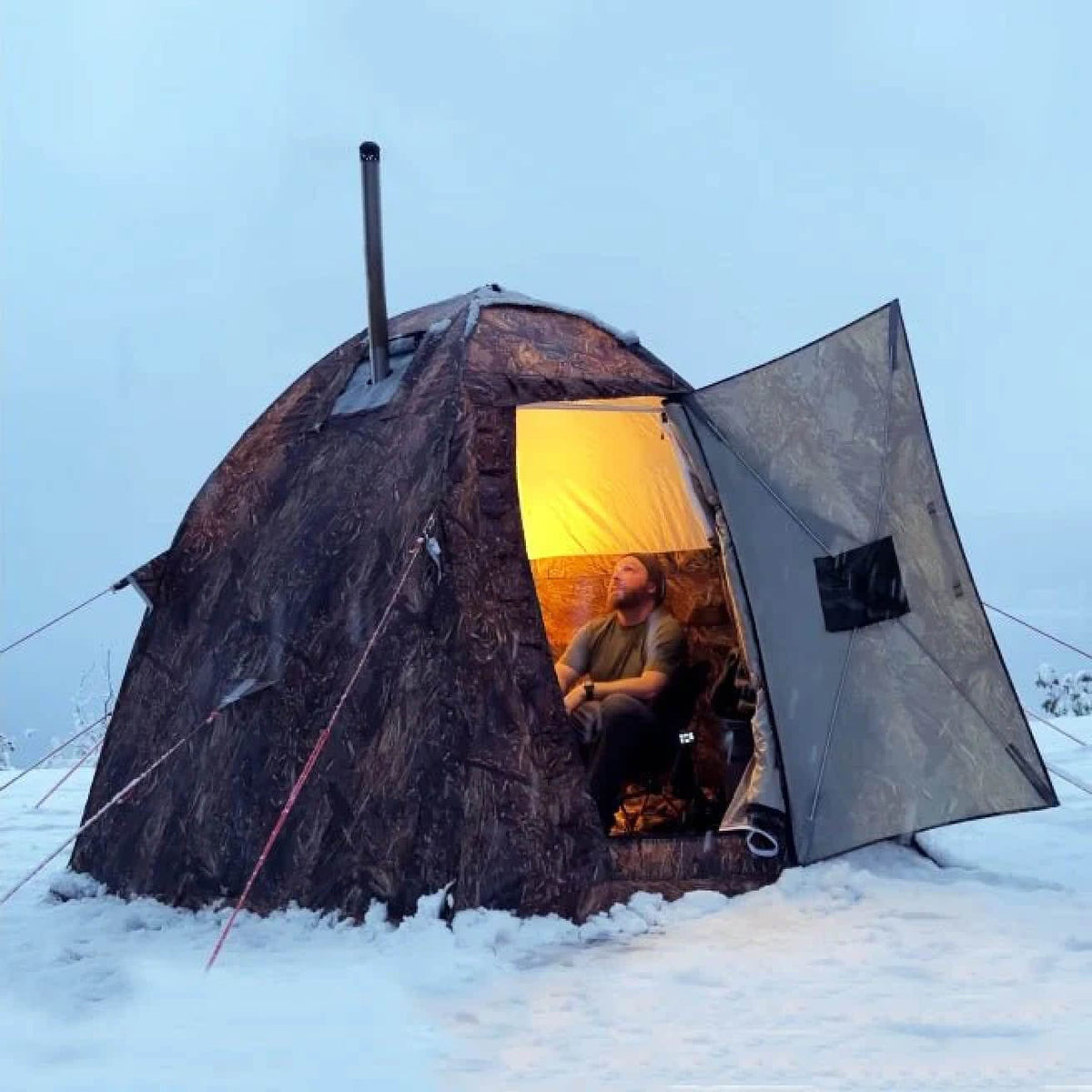
Winter hot-tent camping adds a heating system, chimney, fire protection, and cold-weather maintenance to the normal camping checklist. Every item must match the expected temperature, wind, snow, access, group size, and current fire regulations. Test the complete system before traveling.
1. Choose the shelter
Compare capacity with and without a stove because the stove and required clearance reduce usable space. RBM UP-5 accommodates up to six people without a stove or up to five with one, offers 13.1 m² (141.01 ft²), and sets up in approximately 3 minutes. Its frame uses B95T1 aviation-grade aluminum alloy with 10 mm (0.39") rods.
Coody 17.2 provides 17.2 m² (185.14 ft²), accommodates 2-10 people, and sets up in approximately 10 minutes. Panda Large provides 12 m² (129.17 ft²), accommodates up to six people, and sets up in approximately 7 minutes. Coody and Panda inflatable tents have an approved range from -10 °C to +40 °C (14 °F to 104 °F) and must be dried completely indoors after use below freezing.
2. Pack the complete stove system
- Compatible stove and chimney for the exact stove-jack configuration
- Every chimney segment, spark arrestor, and required deflector
- Fire-resistant stove mat and protective heat shields
- Heat-resistant gloves, scoop, and the stove's supplied tools
- Working smoke alarm and carbon monoxide alarm with tested batteries
Caminus S has a 230 x 320 x 200 mm (9.05 x 12.59 x 7.87") firebox, a 65 mm (2.56") chimney, and a net weight of 10.7 kg (23.58 lb). Caminus M has a 250 x 500 x 250 mm (9.84 x 19.68 x 9.84") firebox, an 80 mm (3.15") chimney, and a net weight of 16.5 kg (36.37 lb). Verify compatibility; stove size alone does not determine the correct tent installation.
3. Build a cold-weather sleeping system
- Sleeping bag rated for the expected low and the individual sleeper
- Insulated sleeping pad appropriate for frozen ground
- Dry sleep layers, warm hat, gloves, and spare socks
- Backup insulation that remains effective if the stove is not operating
A tent stove supplements the sleep system. It must not be treated as the only protection against overnight cold, because the stove cannot be left unattended while occupants sleep.

4. Protect the floor and manage moisture
The optional UP-5 three-layer floor uses Oxford 300D PU4000 outer layers with Foil Isolon insulation. It adds ground insulation but does not replace the fire-resistant stove mat. Ground sheets and carpets must fit the exact tent model and remain dry before storage.
5. Anchor for winter conditions
- Bring the model's full peg and guy-line set, plus the correct anchors for snow, ice, or soil.
- Choose level ground away from dead trees, avalanche terrain, flood channels, and wind-exposed hazards.
- Keep exits, ventilation openings, and the chimney area clear of snow.
- Remove accumulating snow from the roof; no published snow-load rating should be inferred.
6. Clothing, water, food, and lighting
Pack moisture-managing base layers, insulating mid-layers, weatherproof outer layers, winter footwear, and dry spares. Carry enough water or a reliable treatment method, food for delays, cookware, and only cooking equipment permitted for the selected location. Keep food and scented items stored according to local wildlife rules.
- Headlamp for each person, spare batteries, and a backup lantern
- Navigation tools, charged communication devices, and a trip plan shared with a trusted contact
- First-aid kit, personal medications, emergency shelter, repair kit, and model-specific spare parts
Build Your Ultimate Winter Camp: Whether you prefer the rapid setup of an aviation-grade aluminum frame or the spacious luxury of a premium inflatable cabin, find the perfect four-season shelter for your next cold-weather adventure.
RBM UP-5 Tent
View ProductCoody 17.2 Air Tent
View Product7. Stove operating limits
- First firing outdoors for at least 1 hour
- Minimum 50 cm (19.6") clearance from surrounding objects
- Chimney outlet at least 50 cm (19.6") above the ridge
- Fuel no more than two-thirds of the firebox volume
- Maximum continuous operation of 7 hours
- Chimney cleaning after every 10 hours of use
- Continuous ventilation and active supervision
Before leaving camp
Allow the stove to cool completely, clean ash and chimney components, inspect the stove jack and mat, and pack every part dry. Inflatable Coody and Panda tents used below 0 °C (32 °F) must be dried completely in a warm, dry indoor space before storage.
0 comments