
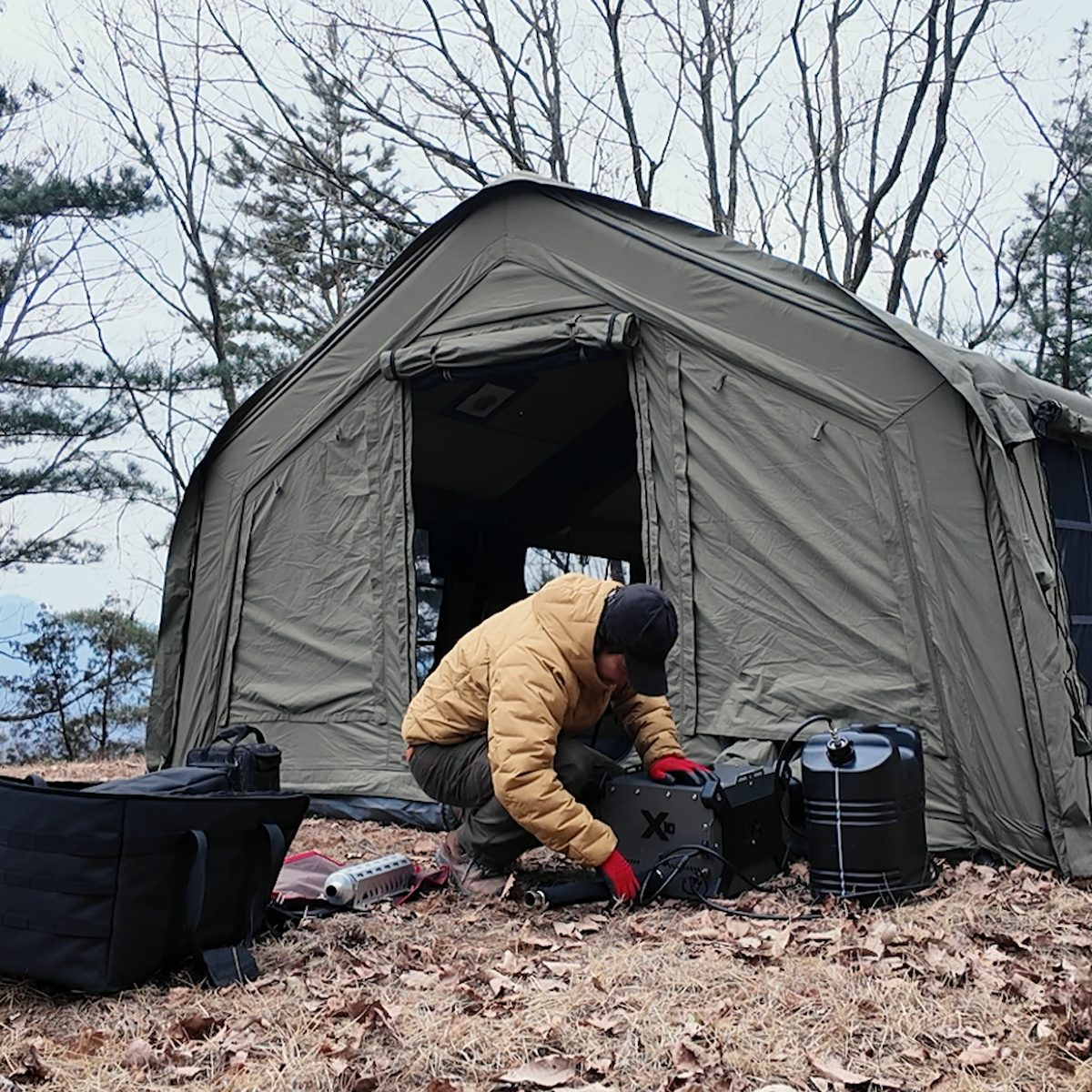
At 50°F (10°C), a sleeping bag might be all you need for bed. It does very little for the two hours you want to spend at the camp table before turning in. That’s where a portable diesel heater earns its place on a fall trip. The heater and fuel stay outside, warm air comes in through a duct, and you can turn the heat down from your chair.
For a compact rooftop tent or a small ground tent on cool nights, start with the 5 kW OX Diesel Heater X5. For a larger or draftier shelter, especially in freezing or windy conditions, consider a 10 kW diesel heater such as the OX X10. Its two 5 kW heating cores can run together when you need the extra heat. Wind, insulation and how often the door opens all affect the temperature you can maintain.
Which heater fits the way you camp?
X5 for a smaller shelter. Picture a rooftop tent where you sit up to read, or a ground tent with room for two chairs. On a 50–54°F (10–12°C) evening, the X5 gives you adjustable heat from one compact unit. It weighs 22.5 lb (10.2 kg) before fuel and accessories. For a rooftop setup, measure from a suitable outdoor heater position to the tent entry before you buy. The supplied X5 warm-air duct is about 47 in. long.

X10 for more air to warm. Think of a Coody Familia 13.6 or 17.2, a Familia 17.2 Pro, an Aurora Dome or a Hub used as a gathering space. An open living area, high roof or frequently used door gives the heater more work. With the X10, you can select both cores to bring a cold living area up to temperature faster than one core under comparable conditions. Choose one core or both before starting. To change the selection after heating, shut the unit down normally and keep power connected until the cooling cycle is complete. Then select one core or both in standby before restarting. Two outlets also let you direct airflow toward different parts of a suitable shelter. Both areas share the heater’s temperature controls. Check the duct entries on your exact tent before ordering.

What does the premium price buy?
The price can look steep if you’re comparing heaters by kilowatts alone. South Korean engineers developed the OX system around a practical question: once you’ve set up camp, how much of the evening do you want to spend managing the heat? Three details make a difference every time you use it.
Change the temperature without putting your boots back on
Both models come with a wireless remote. Keep it inside, away from the stream of hot air. If dinner is over and the tent feels too warm, you can lower the setting from the table. In AUTO, choose a target between 46 and 97°F (8–36°C) and the heater adjusts its output as conditions change. MANUAL gives you a choice of ten heat levels. With limited battery power, the manuals recommend MANUAL. Stop & Go is a separate setting that can stop and restart heating, and every restart needs enough electrical power for ignition.
Connect the supplied fuel tank
The supplied tank feeds the heater directly through a quick-connect line. The X5 tank holds 2.6 US gal (10 L) and the X10 tank holds 5.3 US gal (20 L). Before changing or refilling the tank, disable automatic restart and the timer, shut the heater down normally and let it cool completely. Disconnect the fuel line from both the heater and the tank before refueling outdoors. Tighten the cap, reconnect the line and check the connections for leaks before each startup.
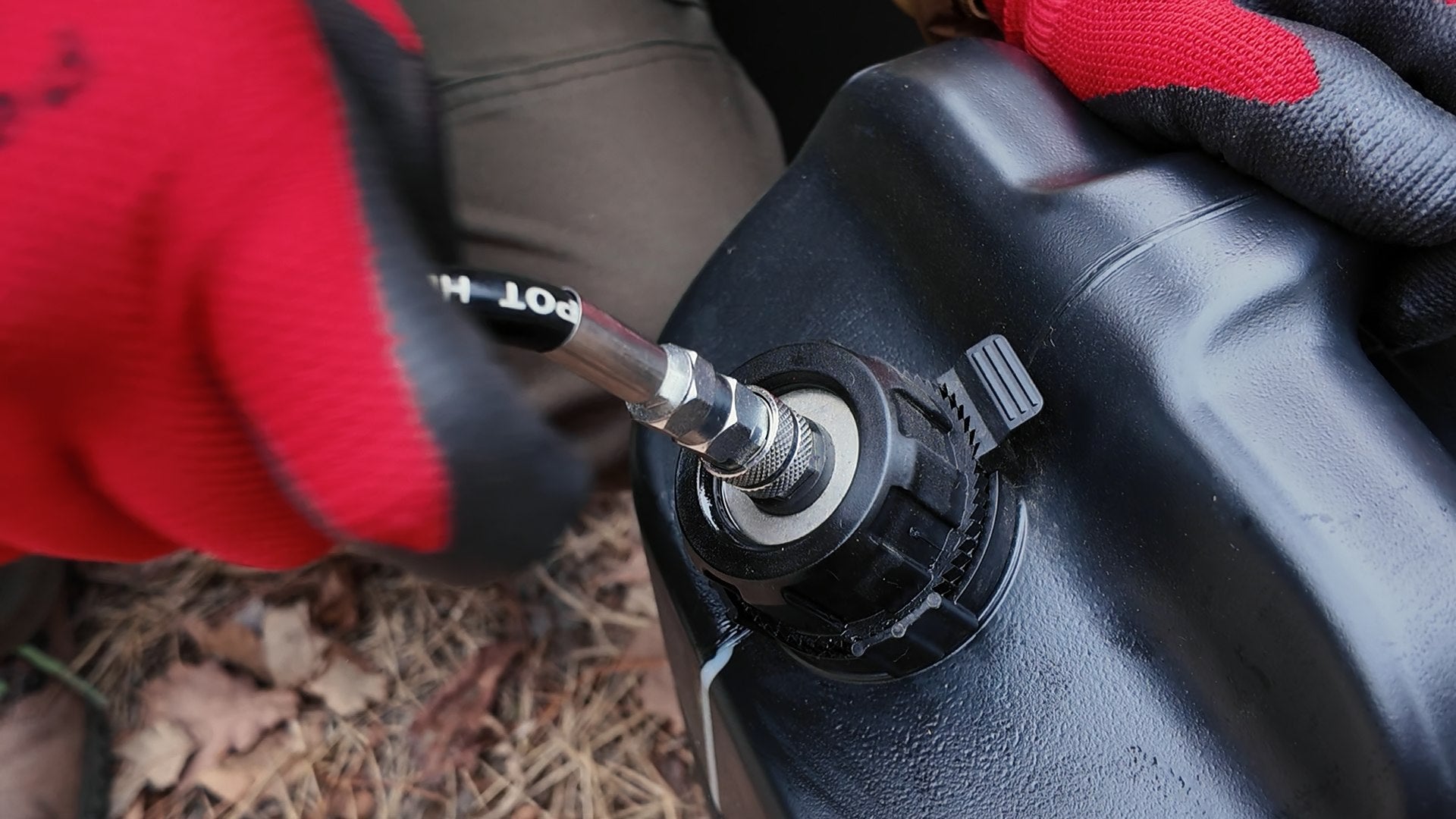
Keep the equipment outside and the living space usable
Inside the flexible air duct, a narrow passage carries warm air into the tent and a wider outer passage returns tent air to the heater. The combustion exhaust follows its own route outdoors. The X10’s swivel outlets let you aim warm air toward the seats while keeping bedding and bags clear. Its aluminum housing has protective corner bumpers and is designed to shed rain. Keep the unit out of standing water and protect electrical connections as the manual directs.
What will you hear from your camp chair?
In the X10 sound demonstration, the meter read about 44 dB inside the tent. The heater setting and measurement conditions were not reported, so the reading describes that setup.
Fuel, power and what to pack
| What you are packing | OX X5 | OX X10 |
|---|---|---|
| Heat output | 1.5–5 kW | 1.5–10 kW |
| Heating cores / warm-air outlets | 1 / 1 | 2 / 2 |
| Heater body weight | 22.5 lb (10.2 kg) | 36.4 lb (16.5 kg) |
| External diesel tank supplied | 2.6 US gal (10 L) | 5.3 US gal (20 L) |
| Fuel per hour | 0.04–0.15 US gal (0.15–0.55 L) | 0.04–0.29 US gal (0.15–1.10 L) |
| 12 V electrical draw while running | 10–40 W | 10–80 W |
Which diesel should I buy for the forecast?
For OX heaters, the supplier recommends No. 2 diesel at temperatures of 32°F (0°C) and above, and No. 1 diesel below 32°F (0°C). No. 1 diesel is better suited to cold conditions and helps reduce the risk of wax formation restricting fuel flow. Use clean fuel suitable for the lowest temperature expected during your trip.
Red-dyed diesel is permitted for OX heaters if it meets the same fuel requirements; the dye does not determine its cold-weather grade. Do not use K-1 kerosene or biodiesel. The supplier warns that biodiesel may clog the fuel filter or supply line, affect operation and lead to restrictions on warranty coverage or service. Do not add aftermarket fuel additives.
For six hours at the highest published fuel rate, allow about 0.87 US gal (3.3 L) for the X5 or 1.74 US gal (6.6 L) for the X10, plus a reserve. Both models have the same listed minimum consumption. Choosing X10 gives you extra capacity when you need it, without committing you to twice the fuel use at every setting.
Diesel provides the heat. A 12 V supply runs ignition, the pump and the fans. Check the output port before buying a battery: a 12 V, 10 A port supplies 120 W, while startup can require about 130 W. Capacity is a separate question. An X5 drawing 40 W for six hours uses 240 Wh before startup, losses and reserve. At a campsite with an outlet, the included power supply has a U.S. plug. Off-grid, bring a compatible power station or battery. Keep power connected through shutdown until the cooling fan stops.
When a wood stove makes more sense
If cooking on the stove is part of the trip and you enjoy tending a fire, consider a wood-burning tent stove. RBM pairs the UP-2 Mini with the Caminus S and the UP-5 with the Caminus M. Allow room for the stove, protective mat and required clearances. Our winter tent guide covers layout. A stove jack is a chimney pass-through. Check separately that any opening you intend to use for OX ducts suits your tent and heater.

Questions campers ask before ordering
Can I use the X10 to heat just one living area?
Yes. In standby, select core A, core B or both. When one heats, the other still moves air. Heating one space does not require two temperature zones. Keep supply and return paths open and follow the manual’s duct layout. If you have only one suitable tent opening, confirm the routing for that tent before ordering.
Where do the heater and CO alarm go?
Set the heater and tank outdoors on a stable, noncombustible surface. Leave at least 8 in (20 cm) between the heater body and the tent, and at least 20 in (50 cm) between the hot exhaust pipe and other objects. Keep exhaust outside, directed away from doors, windows, vents and the return intake. A closed vestibule is an enclosed space. Both models monitor carbon monoxide at the heater and at the wireless remote. Maintain ventilation and keep a separate working CO alarm in the occupied space. If a CO alarm sounds, get everyone into fresh air immediately.
Will the X10 keep my tent at 70°F?
The roughly 70°F (21°C) reading in the winter footage came from a setup that also had an optional heated floor. It illustrates what that camp achieved. Your result will depend on the tent, wind, insulation and outdoor temperature. Bring sleeping gear rated for the conditions even when you plan to use a heater.
What comes with the heater, and what else do I need?
Both kits include the wireless remote, air ducts, external tank, fuel line and power supply. Bring diesel suitable for the weather and a separate CO alarm. For off-grid camping, budget for a compatible battery. A heated floor and tent-specific fittings are separate. Check the packing list and English manual for your model in the OX diesel heater collection.
This guide is for general reference. For help matching a heater to your camp, email info@hot-tent.com with your tent model, expected overnight low and planned power source.
0 comentarios