
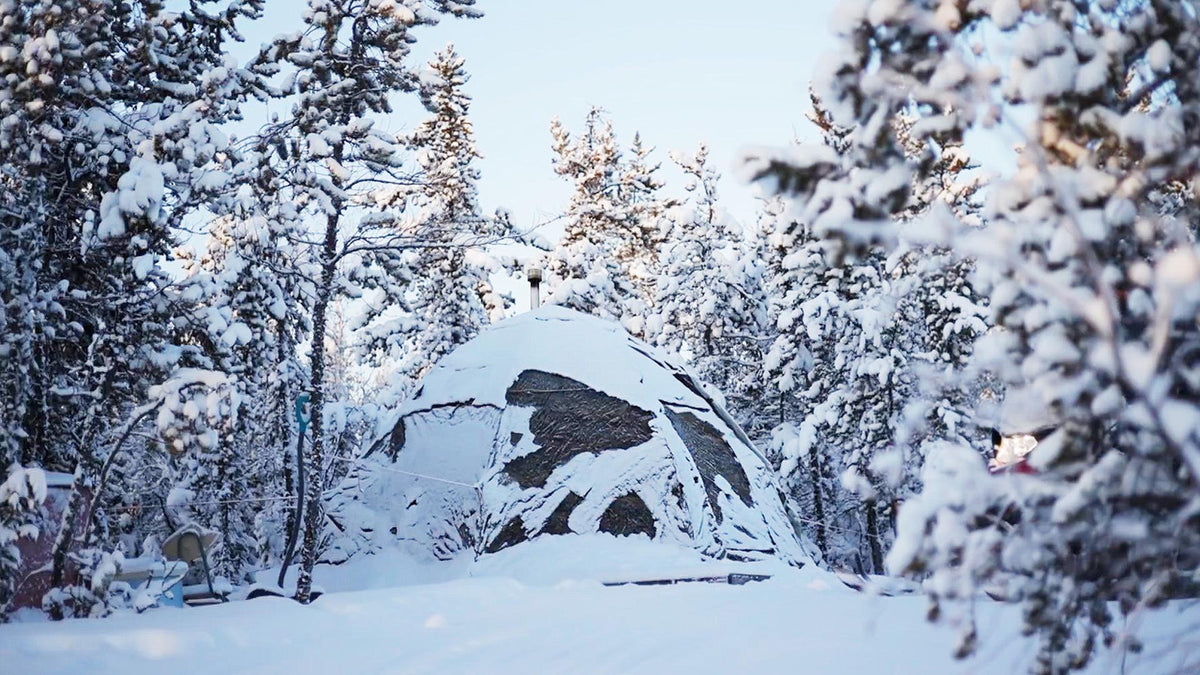
Choose a winter camping tent around the space you will use after the stove, beds, and gear are inside. An RBM Outdoors frame tent combines a separate inner tent, weather-facing outer shell, rigid aluminum frame, and built-in stove jack. That gives you a basecamp for changing clothes, organizing equipment, and spending time together, not just crawling into a sleeping bag. Start with three decisions: your trip conditions, the number of sleepers with a stove, and what belongs in your complete setup. These are vehicle-supported shelters, with tent weights starting at 37.5 lb (17 kg). Explore the RBM frame-tent collection as you compare.

What makes a tent a winter camping tent
A cold weather tent needs room for more than sleeping. You need to handle wet boots, bulky clothing, repeated trips outside, and a heating arrangement without crowding the exit. Look at the construction and daily use together.
A tent within a tent
RBM frame tents have two separate walls. The Oxford 300D outer shell, rated PU 4000 mm, faces the weather; an inner tent creates an air gap around the living space. UP models use an Oxford 210D inner tent, while Hexagon and Cuboid use Oxford 240D. The gap helps retain warmth from a recommended stove and separates your living area from the weather-facing layer. Adjustable ventilation helps move moisture out. In summer, the same separation buffers the interior from the sun-heated outer shell. These construction details are listed in the frame collection FAQ.
This is part of the value of an RBM shelter: the separate inner tent is built in, rather than an extra liner you need to source. Current frames also carry a 10-year frame warranty; check your selected model's coverage. For an insulated winter tent setup, also plan what goes beneath the sleepers. Wall and floor insulation do different jobs.
Structure, access, and the conditions ahead
UP models use one-pull umbrella-style frames; Hexagon and Cuboid use hub-based pop-up frames. All need the required guy lines and anchors. Use the included ice screws where appropriate for an ice campsite, and clear accumulating snow from the roof. A quick-opening frame saves assembly time, but anchoring remains part of setting up camp. Check the forecast before deciding whether the trip and site suit your selected model.
RBM frame models list an operating range of −58°F to 113°F (−50°C to 45°C) when pitched and anchored as instructed, heated with the recommended stove and used with a sleeping system suited to the forecast. This describes the shelter, not a promised indoor temperature. A seasonal label alone should not decide a severe-cold trip.
Three questions before you buy
1. What will you do at camp, and how will you get there?
A fishing shelter needs clear access to the ice. A hunting camp needs somewhere to organize clothing and equipment. A family stay may benefit more from a divider than from the largest total floor area. Picture the evening routine: who is entering with firewood, where wet gear will go, and whether beds stay made during the day.
Check transport dimensions as carefully as floor area. UP-2 Mini is the lightest frame model here, but it is still a 37.5 lb (17 kg) tent before the stove and other equipment. Plan for a vehicle, sled, or other suitable transport rather than treating these shelters as lightweight backpacking tents.
2. How many people will sleep inside with the stove?
Use the with-stove column below first when choosing a winter tent with a stove. A stove needs its own working space and clearances; cots, winter sleeping bags, and equipment take additional room. The figures describe maximum sleeping-bag capacity, not a promise that the same number of large cots will fit.
| Trip priority | Model | With stove | Without stove | Floor area | Tent weight | Frame setup | Recommended stove |
|---|---|---|---|---|---|---|---|
| Compact solo or pair camp | UP-2 Mini | Up to 2 | Up to 3 | 47.4 sq ft (4.4 m²) | 37.5 lb (17 kg) | About 3 min | Caminus S |
| Small hunting or winter camp | UP-2 | Up to 3 | Up to 4 | 82.9 sq ft (7.7 m²) | 54.0 lb (24.5 kg) | About 3 min | Caminus S or M |
| Group camping or fishing | UP-5 | Up to 5 | Up to 6 | 141.0 sq ft (13.1 m²) | 65.0 lb (29.5 kg) | About 3 min | Caminus M |
| Larger group basecamp | Hexagon | Up to 6 | Up to 9 | 135.6 sq ft (12.6 m²) | 95.2 lb (43.2 kg) | About 5 min | Caminus M |
| Separate living and sleeping zones | Cuboid 4.40 | Up to 5 | Up to 6 | 101.8 sq ft (9.46 m²) | 83.8 lb (38 kg) | About 5 min | Caminus M |
Weights are for the tent, not a tent-and-stove package. Setup times describe the model's pitching process; allow additional time for ground preparation, anchoring, fitting accessories, and installing the stove.
Before loading the vehicle, check that you can lift and pack the tent, floor, stove, and bedding as separate loads.
During a practice setup, put the actual beds and packed gear inside. Check that someone can open the door and get past the sleeping places without shifting a hot stove or stacking equipment in its clearance zone. This makes the capacity figures easier to apply to your own camp.
Sleeping-bag capacities are maximums; compare the layout with the beds and equipment you will actually use.

3. Do you want the tent alone or a complete cold-weather setup?
If you already own the recommended equipment, a tent-only order may make sense. Starting from scratch? Compare a tent-and-stove bundle, then add the model-specific three-layer insulated floor if you will camp on snow. Check the exact bundle name and contents rather than assuming every pictured accessory is included.
The optional floor reduces heat reaching the snow beneath the camp, helping limit melting and refreezing around the base. It also adds comfort underfoot during longer stays. Sleeping pads and bags should still be selected for the overnight conditions. Our winter tent insulation guide covers preparing the sleeping area in more detail.
Winter camping tent with a wood stove
All five frame models have a built-in 3.54 in (90 mm) stove-jack opening. When choosing a winter camping tent with a stove, use RBM's recommended pairing: Caminus S for UP-2 Mini, Caminus S or M for UP-2, and Caminus M for UP-5, Hexagon, and Cuboid 4.40. Then follow the stove instructions for the chimney route, height, floor protection, and clearances.
Caminus S and Caminus M include a built-in spark arrestor and heat-resistant ceramic-glass viewing panels. You can see the fire without repeatedly opening the door. The recommended stove brings heating and a cooking surface into the camp; its placement must leave entrances and walking routes clear.

Capacity changes with the stove inside: UP-2 moves from up to four sleepers to up to three, for example. For a family of four planning to use a stove, begin with a model that accommodates that group in its with-stove layout, then check beds and equipment, not just the model's largest advertised number.
Before you browse bundles or Caminus stoves, read the wood-stove safety guide. Maintain ventilation, use working smoke and carbon monoxide alarms, and never leave a burning stove unattended.
Frame winter tent vs inflatable for cold trips
For demanding winter basecamps, hunting, ice fishing, and longer cold-weather stays, start with RBM's double-wall frame models. For a comfort-focused vehicle-supported campsite, Coody and RBM Panda inflatable tents offer another route to a spacious camp. Choose by the exact model's operating range, stove arrangement, pressure checks, and drying requirements. Our inflatable stove-jack guide explains that separate buying decision.
What comes in the tent vs what to add
A tent-only order includes the outer and inner tents, aluminum frame, removable standard floor, built-in stove jack, window components, guy lines, regular pegs, ice screws, storage features, carrying bag, and repair kit. Check the selected model's package list for quantities.
The entrances are part of that value. UP models include a framed swing door: bring in firewood or gear without unzipping the entrance on every trip. Hexagon and Cuboid have a lift-up entrance supported by included poles. Cuboid also includes a removable divider for two zones.
UP models include a heat-resistant wall. Hexagon and Cuboid position the recommended stove away from the wall, so a separate heat-resistant panel is not included. UP and Hexagon need no separate rainfly: the Oxford outer shell is the primary rain barrier. Cuboid 4.40 includes an additional rainfly recommended for heavy rain. A wood stove and three-layer insulated floor are separate purchases unless named in the bundle.
Quick picks by trip type
Solo camper or a pair
Choose UP-2 Mini when the smallest footprint and lowest frame-tent weight matter most. Its compact layout suits a small camp; check cot space if you prefer raised beds.
Small hunting camp
Choose UP-2 for a step up in space while keeping the UP opening mechanism and swing door. Plan dedicated places for boots and clothing so the entrance stays usable.
Ice fishing with friends
Choose UP-5 when group space matters. Its optional three-layer floor has two fishing-access openings; the standard floor is removable if you want direct ice access.
Family camp with separate zones
Choose Cuboid 4.40 when a removable divider suits your routine. Separate sleeping and living areas can be more useful than one undivided room.
Larger shared basecamp
Choose Hexagon when you want the collection's highest sleeping-bag capacity. Compare its transport requirements and layout with UP-5 rather than choosing from floor area alone.
Frequently asked questions
How many people fit once the stove is inside?
With a recommended stove and sleeping bags, the maximums are two in UP-2 Mini, three in UP-2, five in UP-5 or Cuboid 4.40, and six in Hexagon. Allow additional space for cots, equipment, and clearances.
Is a winter camping tent the same as a 4-season backpacking tent?
Not necessarily. RBM frame tents are basecamp shelters with separate inner tents and built-in stove jacks. Their weight and equipment needs suit vehicle-supported trips rather than lightweight backpacking.
Do I need a rainfly?
No extra rainfly is required for UP models or Hexagon; the outer shell provides rain protection. Cuboid 4.40 includes an additional rainfly for heavy rain. Check the selected model in the frame-tent collection.
Which stove should I choose?
Choose Caminus S for UP-2 Mini; S or M for UP-2; and M for UP-5, Hexagon, or Cuboid 4.40. Compare the Caminus stoves and follow the selected model’s installation instructions as well as the tent specifications.
Can I use an RBM frame tent for ice fishing?
Yes. The standard floor is removable and ice screws are included. Optional three-layer floors for UP-2 Mini, UP-2, and UP-5 each have two fishing-access openings. Select the floor made for your exact tent.
Should I choose frame or inflatable for winter?
Start with frame models for demanding winter basecamps and fishing or hunting trips. Consider an inflatable for comfort-focused camping within its model-specific operating range and care requirements.
Does the price include the stove and insulated floor?
Only when the selected bundle names those items. A tent-only order includes the removable standard floor, not a wood stove or the optional three-layer insulated floor.
What should I check about the stove jack before ordering?
Confirm the tent model, recommended stove, chimney route, and any rainfly arrangement together.
Choose the space your winter routine needs. Compare RBM winter camping tents, then open the model that fits your people, equipment, and trip.
0 comments