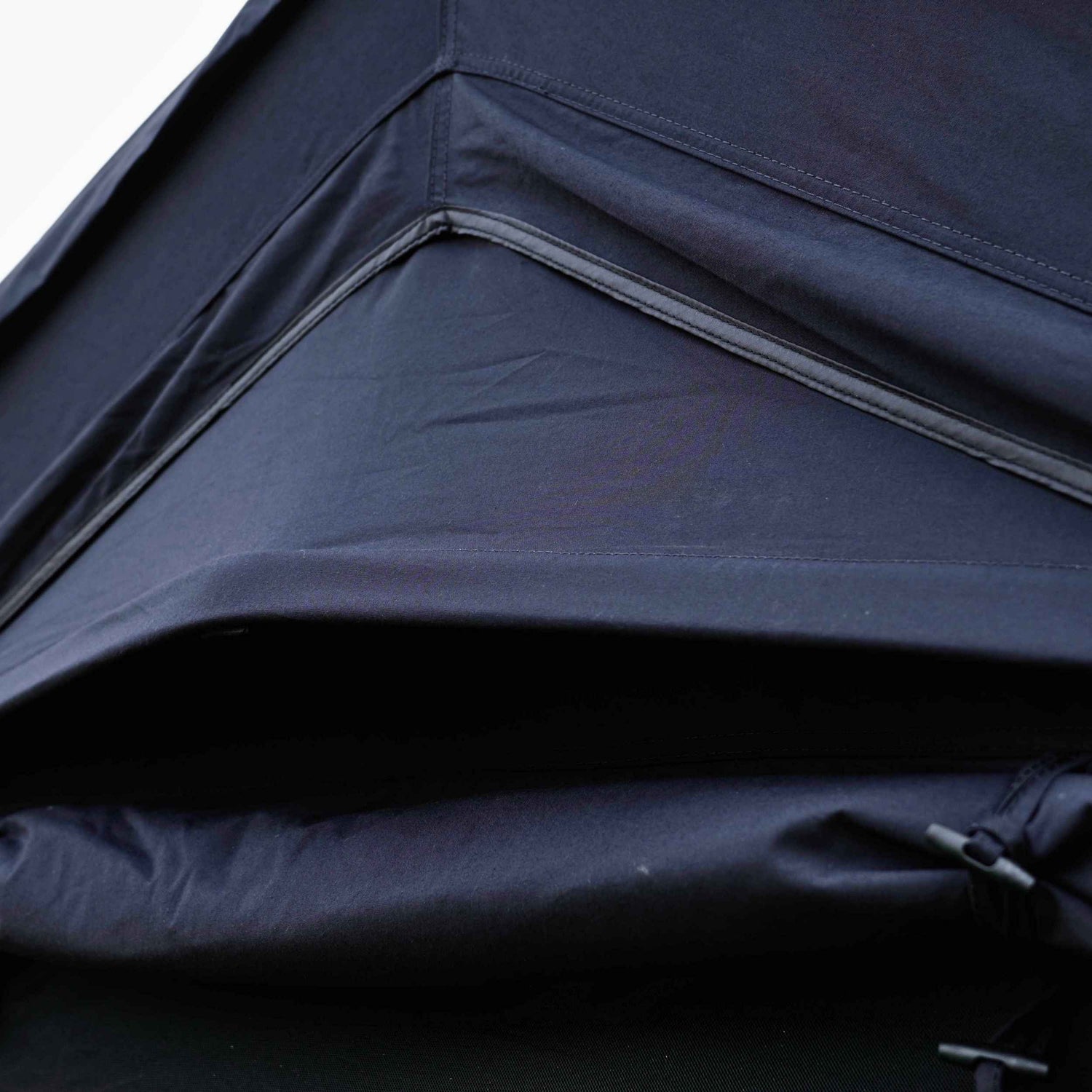
See the sequence through to the finish: release the air, fold, roll, place the tent in the carrying bag and close it.
Edited demonstrations, not real-time setup claims. Bag and production details may vary. Dry all fabric before storage; the electric pump shown is optional.
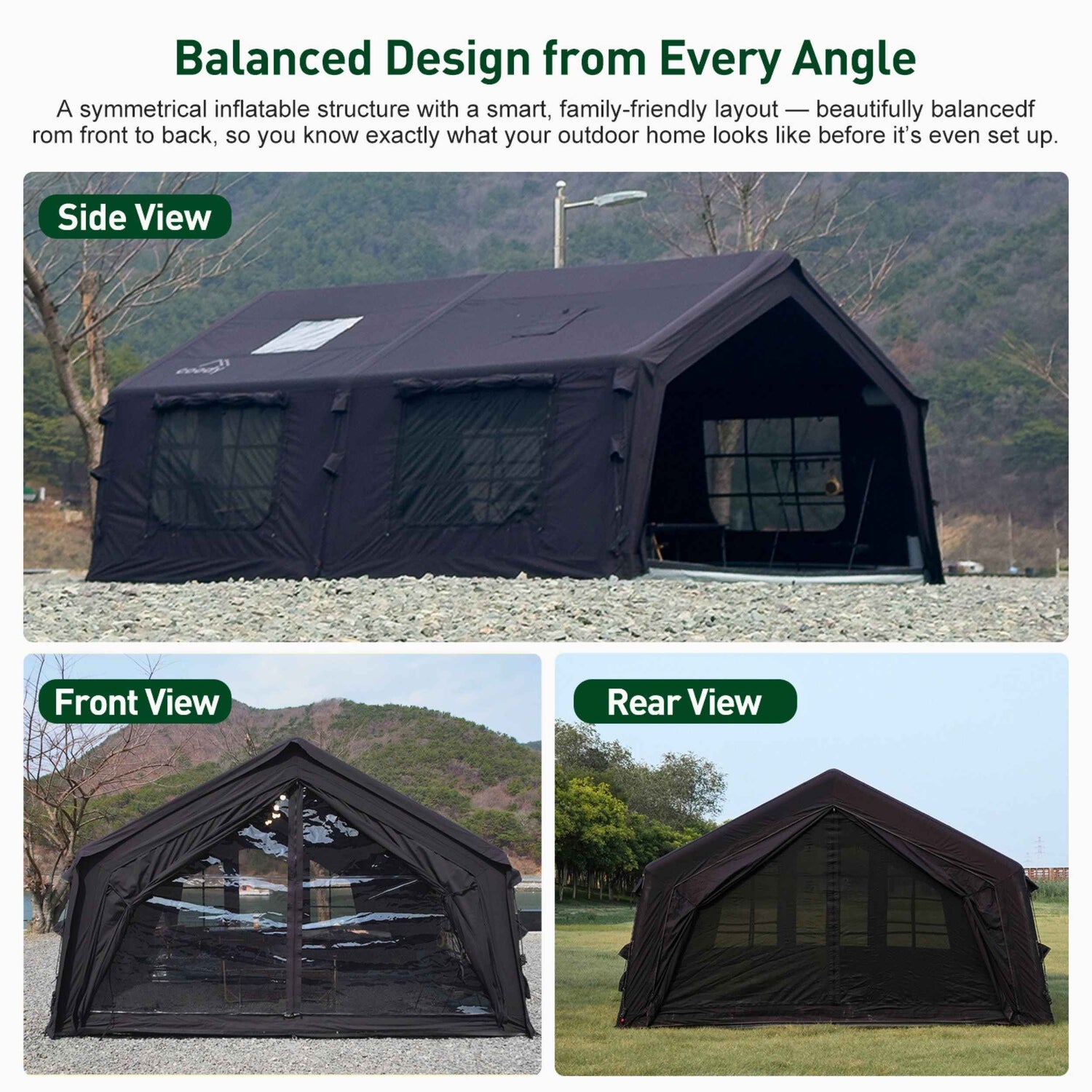
A campsite with room to settle in.
Two rooms. Two separate entrances. Close the divider to create a bedroom and living area, or separate sleeping spaces for kids and parents. Each room has its own door to the outdoors, so you can come and go without walking through the other room.
Two rooms · Two doorsSeparate access to each roomTC canvasCotton-blend fabricFour colorsOne versatile layout
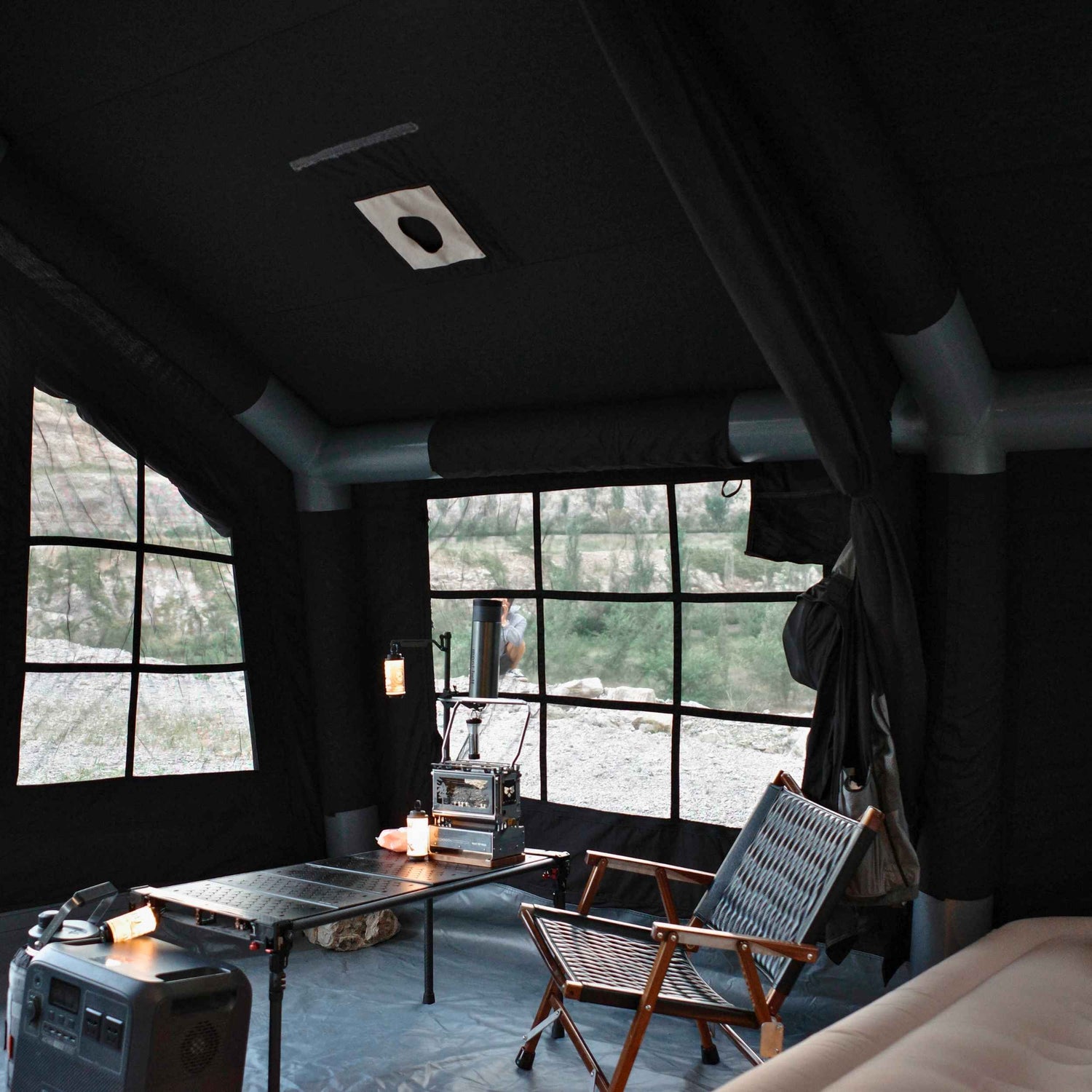
Furniture shown is optional.
Room for the moments between adventures.
Breakfast with a view. A quiet corner to sleep. Space to settle in when the weather changes. Make your camp feel like your own place.
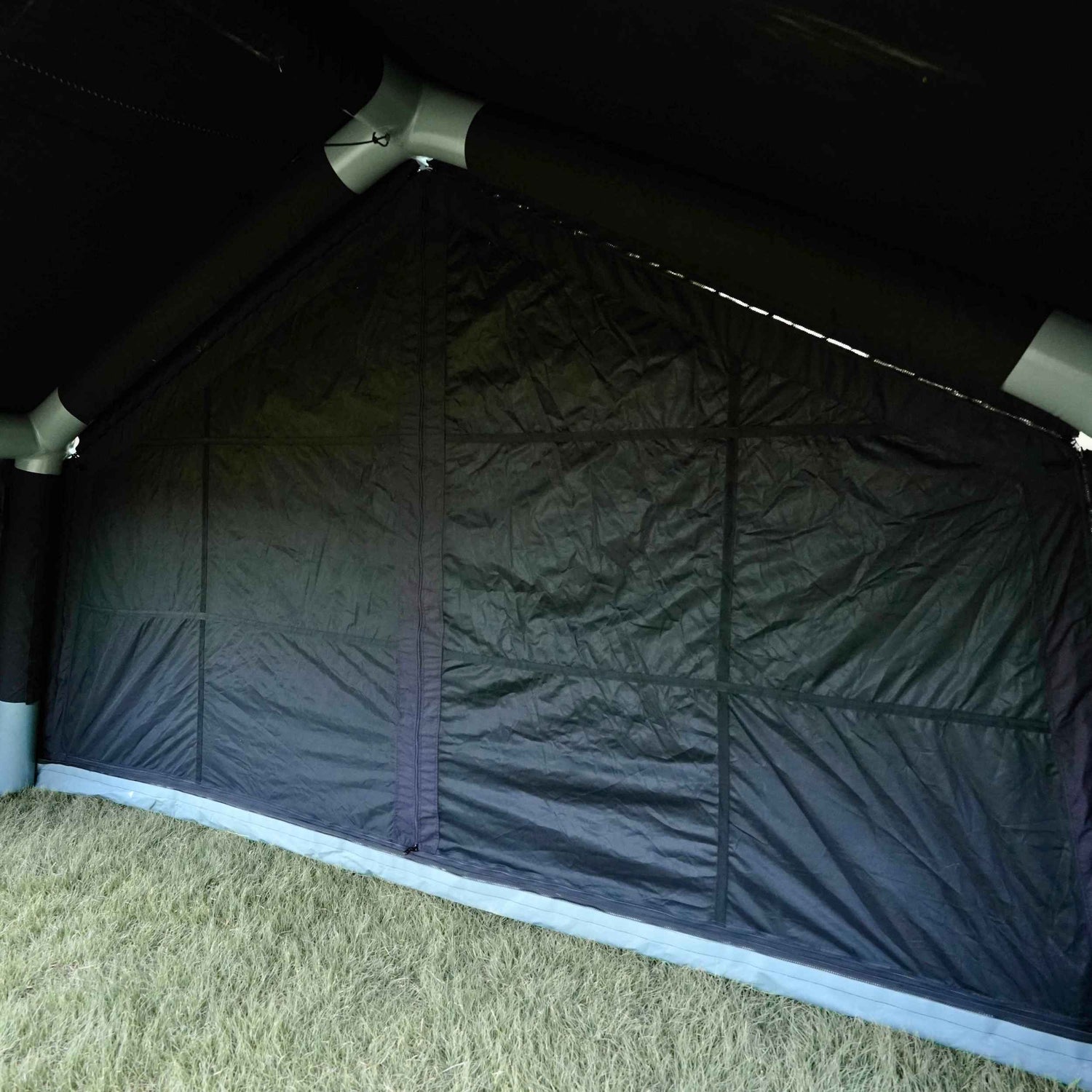
Two rooms: separate living and sleeping with a removable divider.
A flexible interior: open the divider for one shared space.
Two doors: plan easy access around your furniture.
One tent. Three ways to live.
Close off the bedroom, screen just one side, or roll the divider away for a shared cabin. There is no raised threshold between the two rooms.
Close the curtain-style divider to give the sleeping area privacy.
Lower one side to screen the bed while keeping the rest of the cabin connected.
Open the divider for a shared interior and a clear transition between rooms.
Manufacturer photographs show optional furniture and carpets.
A continuous floor. A more enclosed camp.
The current 13.6 has a fixed PVC floor across both rooms, with a raised 5.9 in (15 cm) edge.
No floor to zip into place: the floor stays attached in the living and sleeping areas.
A raised barrier at ground level: helps keep surface water outside.
Fewer entry paths from below: helps keep insects and snakes outside when doors and other openings are closed.
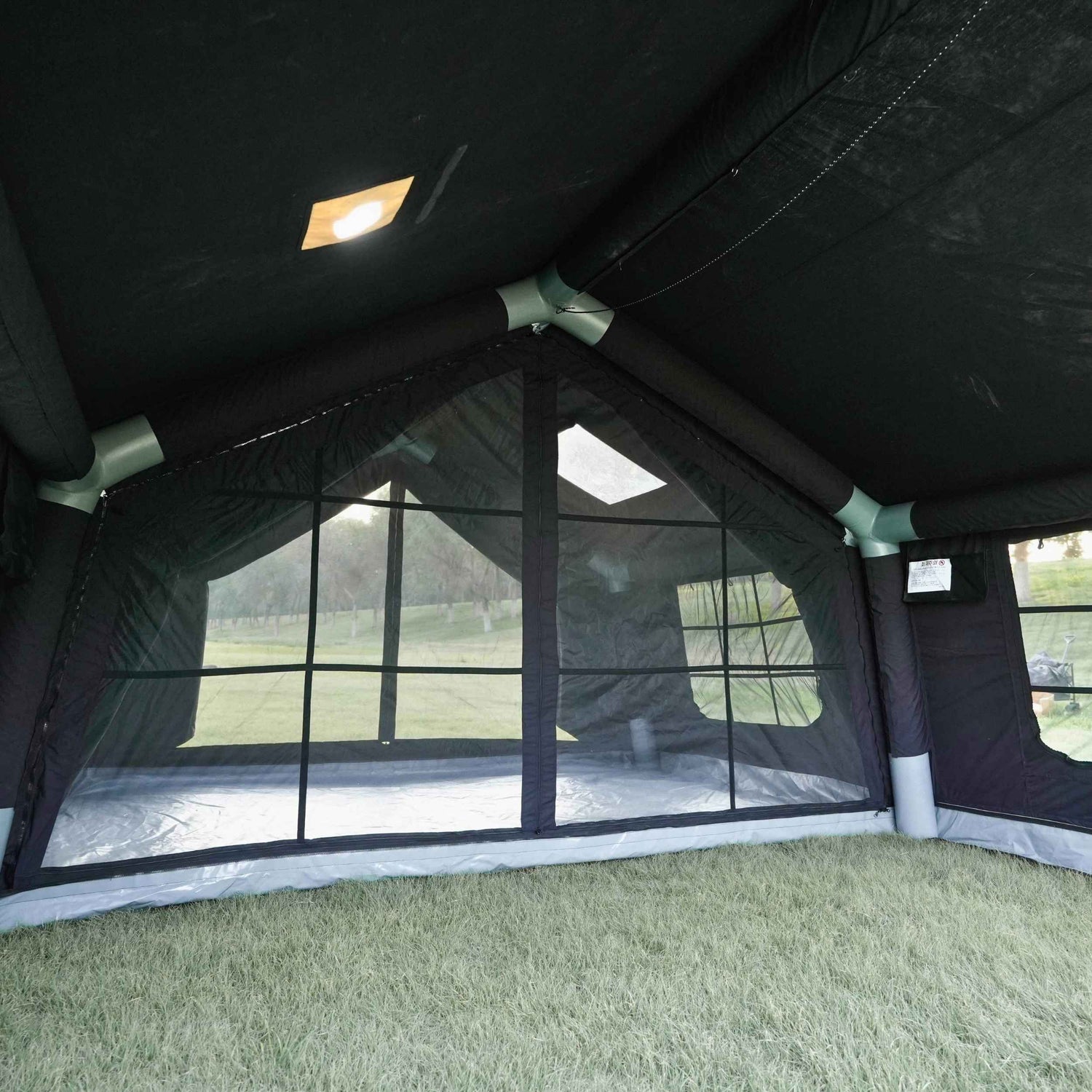
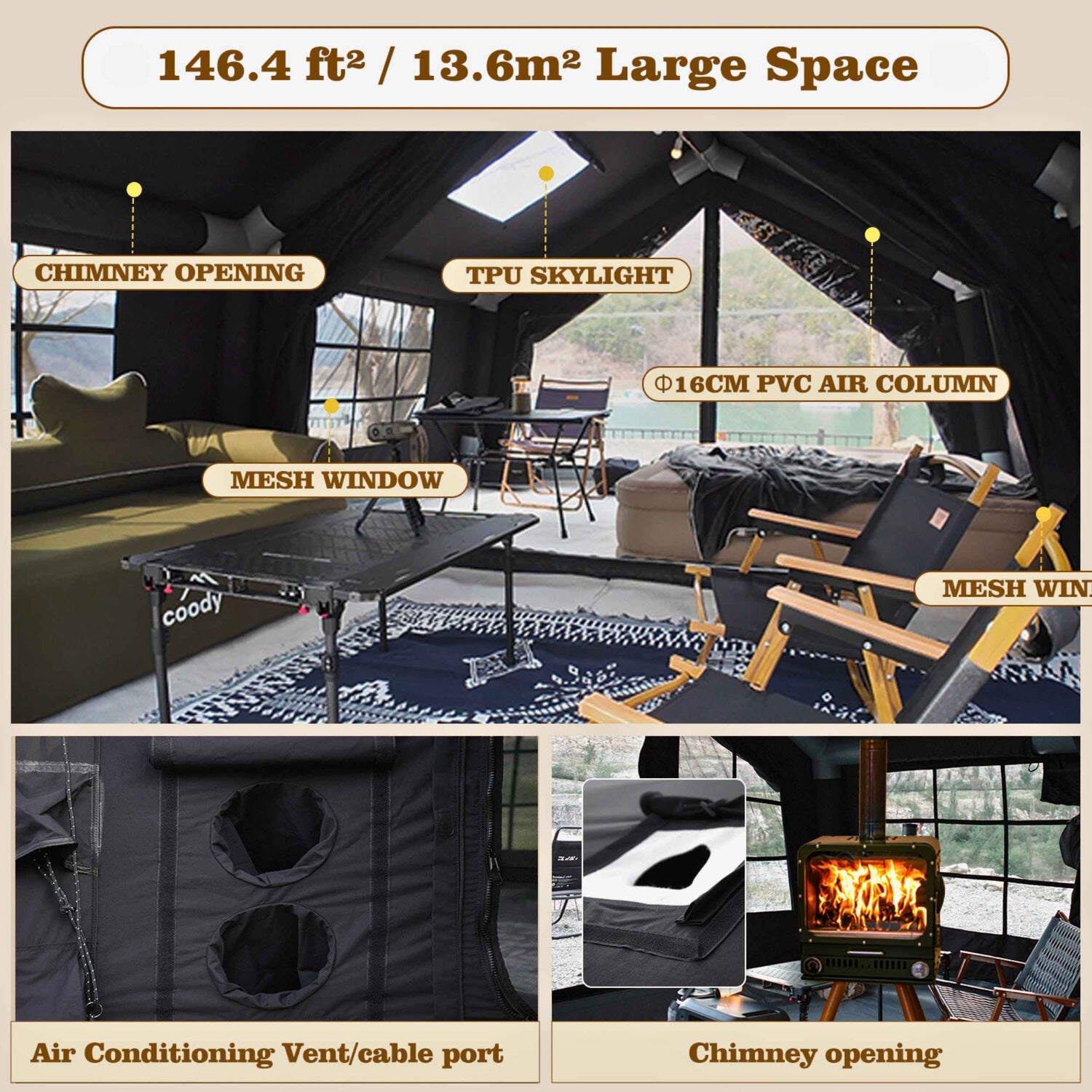
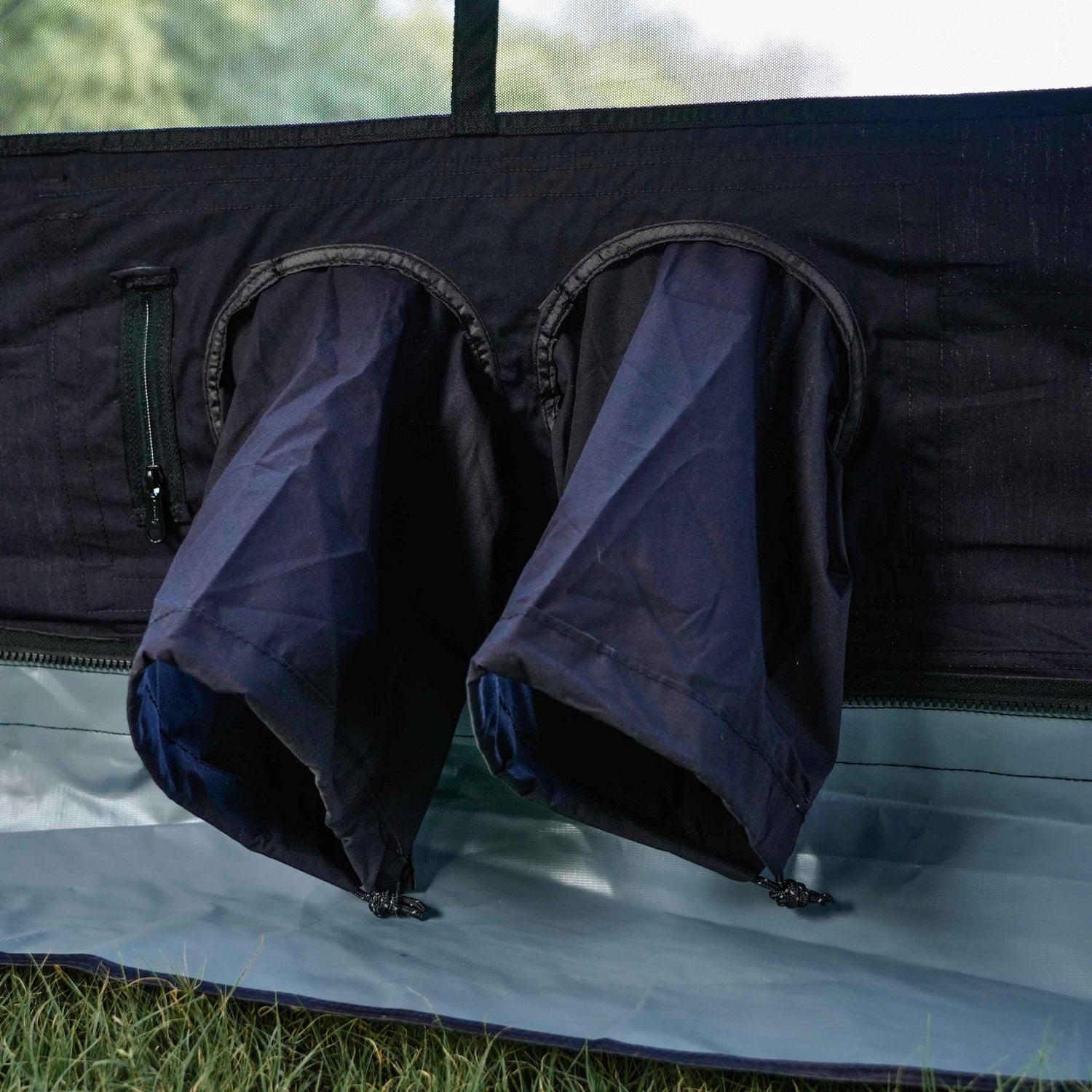
Choose light, airflow or privacy with layered window and door panels. Six windows, including two roof windows, keep the cabin connected to the outdoors.
A bright living space: the large clear rear panel lets daylight reach farther inside.
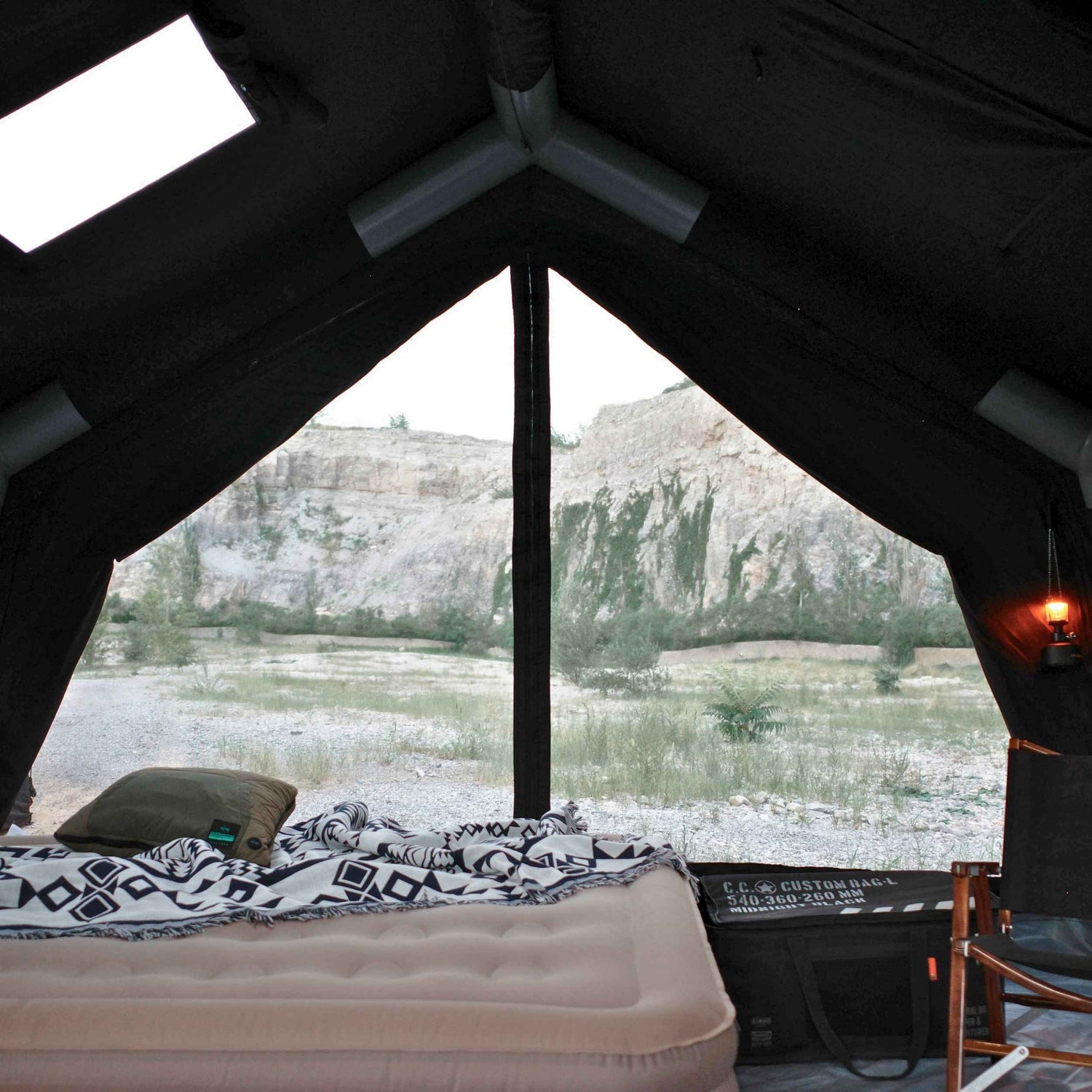
A sheltered outlook: enjoy the scenery from your bed or chair with a barrier against direct wind and windblown dust.
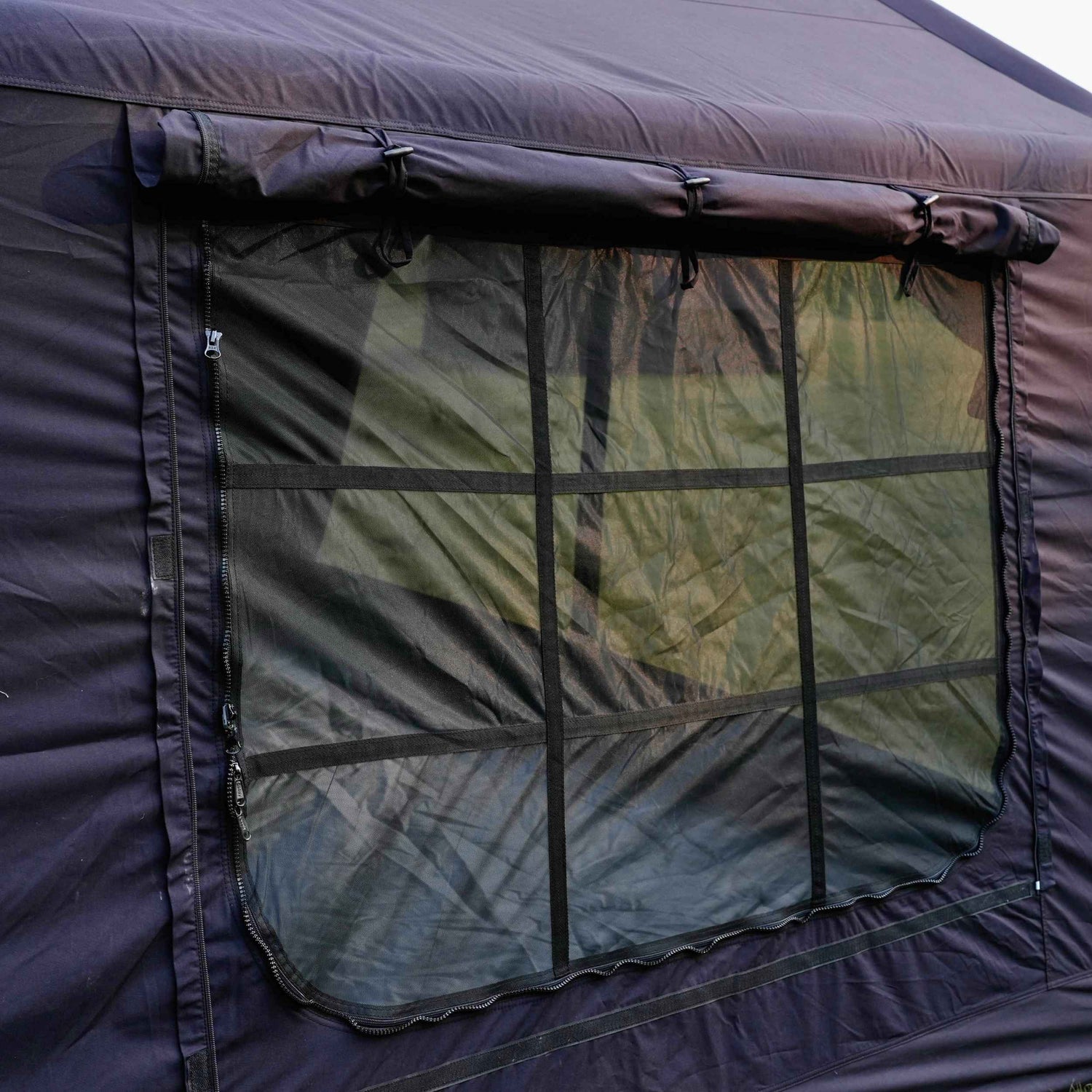
Adapt as the day changes: use mesh for airflow or fabric covers for privacy.
Short demonstrations may show a different 13.6 color. Maintain ventilation with clear panels fitted; open or shade the tent in warm sunshine.
A closer look at the woven texture of Coody canvas.
Breathable canvas. A more inviting interior.
A canvas cabin you can settle into. The substantial 210 gsm TC fabric blends 65% polyester with 35% cotton for a breathable, textured interior that feels inviting on longer stays.
Comfort beyond a place to sleep: make a living space for meals, reading and slow mornings.
Weather-ready layers: a PU2000+ body and included 420D Oxford PU3000+ rainfly.
A camp worth coming back to: ventilate during use and dry the fabric thoroughly before packing.
Why fabric breathability matters
Research by Hes and Loghin identifies water-vapor and air transfer as important contributors to textile comfort, including in cotton/polyester woven fabrics. The study also shows that moisture affects these properties — so use your tent’s ventilation openings for fresh air and dry the canvas before storing it.
Manufacturer close-up of the reinforced air-beam construction.
An air frame you can see and feel.
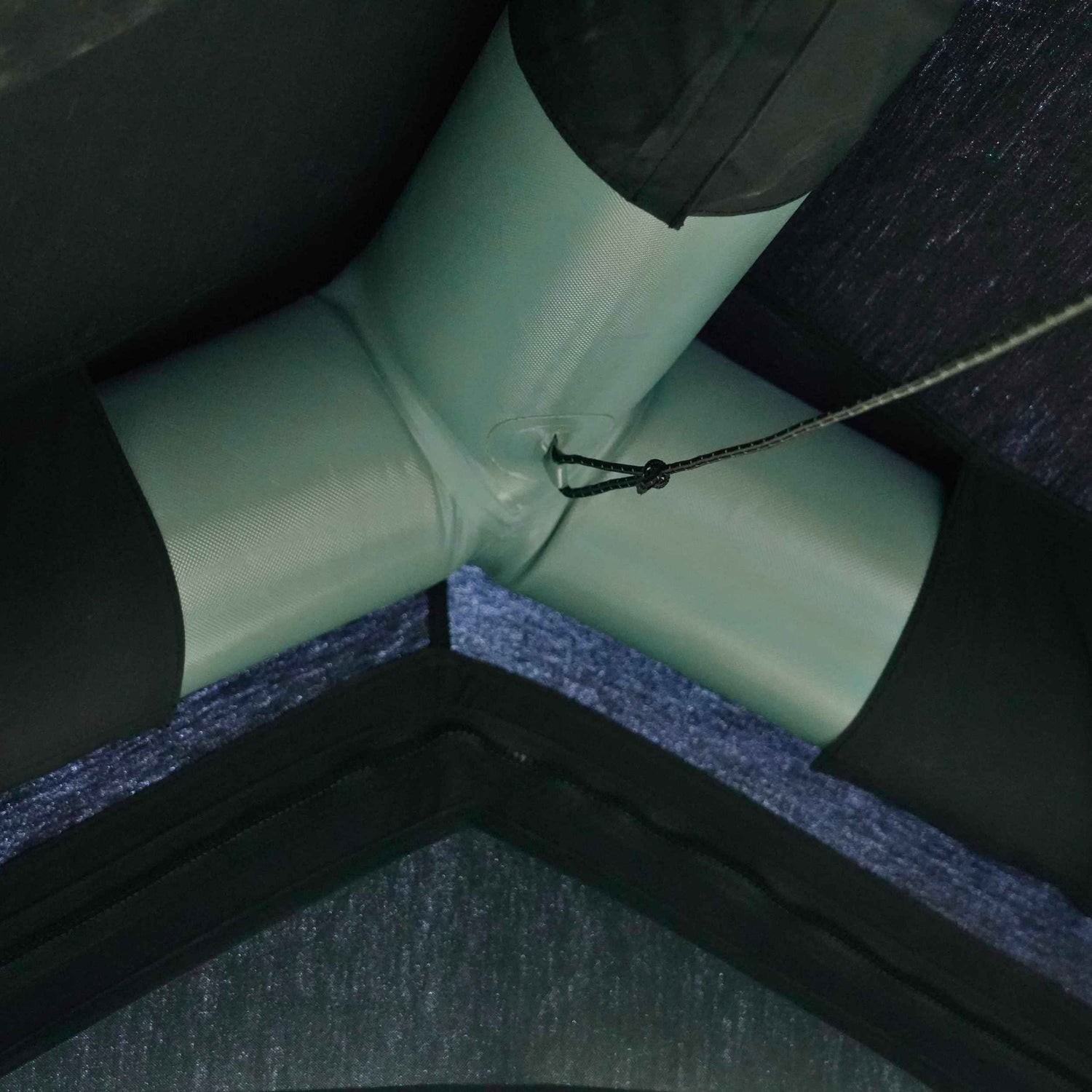
Inflate the structure instead of assembling a conventional pole frame. The close-up shows the scale of the air beam beside a hand.
6.3 in (16 cm) air beams in the current specification.
6–8 psi: use the included hand pump and pressure gauge.
Pressure-relief valve: check pressure as temperatures change.
THE DETAILS BEHIND THE BUILD
Quality you can look closely at.
Double-bonded air-beam seams reinforce the joins that hold air in the frame. Coody puts this construction detail at the center of its durability story — and here you can see the seam itself.
Reinforced PVC air beams: a substantial inflatable structure, without a conventional pole assembly.
Pressure-relief valve: built into the air-frame system.
Flexible clear panels: keep the view while closing the window opening.
The material difference, up close.
Air-beam material
Coody’s manufacturer comparison shows a thicker sample at the inflatable frame: 0.55 mm versus 0.35 mm.
Lower-cost sample · 0.35 mm
Coody · 0.55 mmThicker air-beam material
Clear window material
The clear-panel sample measures 0.40 mm versus 0.20 mm — twice the thickness of the comparison sample.
Lower-cost sample · 0.20 mm
Coody · 0.40 mm2× the sample thickness
Manufacturer sample measurements. These compare air-beam and clear-panel materials, not the canvas fabric or every competing tent.
Wind-tested at 44.7 mph (72 km/h).
See Coody’s fan-test demonstration. The manufacturer reports completing a 72 km/h wind test.
A supported air frame: the structure works together with correctly tensioned guy lines.
A complete pitch matters: secure all required pegs and anchors for the ground and weather.
Airflow around the tent — manufacturer illustration
A manufacturer-reported test result, not a guaranteed safe wind limit in every campsite condition. The airflow animation illustrates the tent’s shape; it is not a measured test.
Build your cold-weather camp.
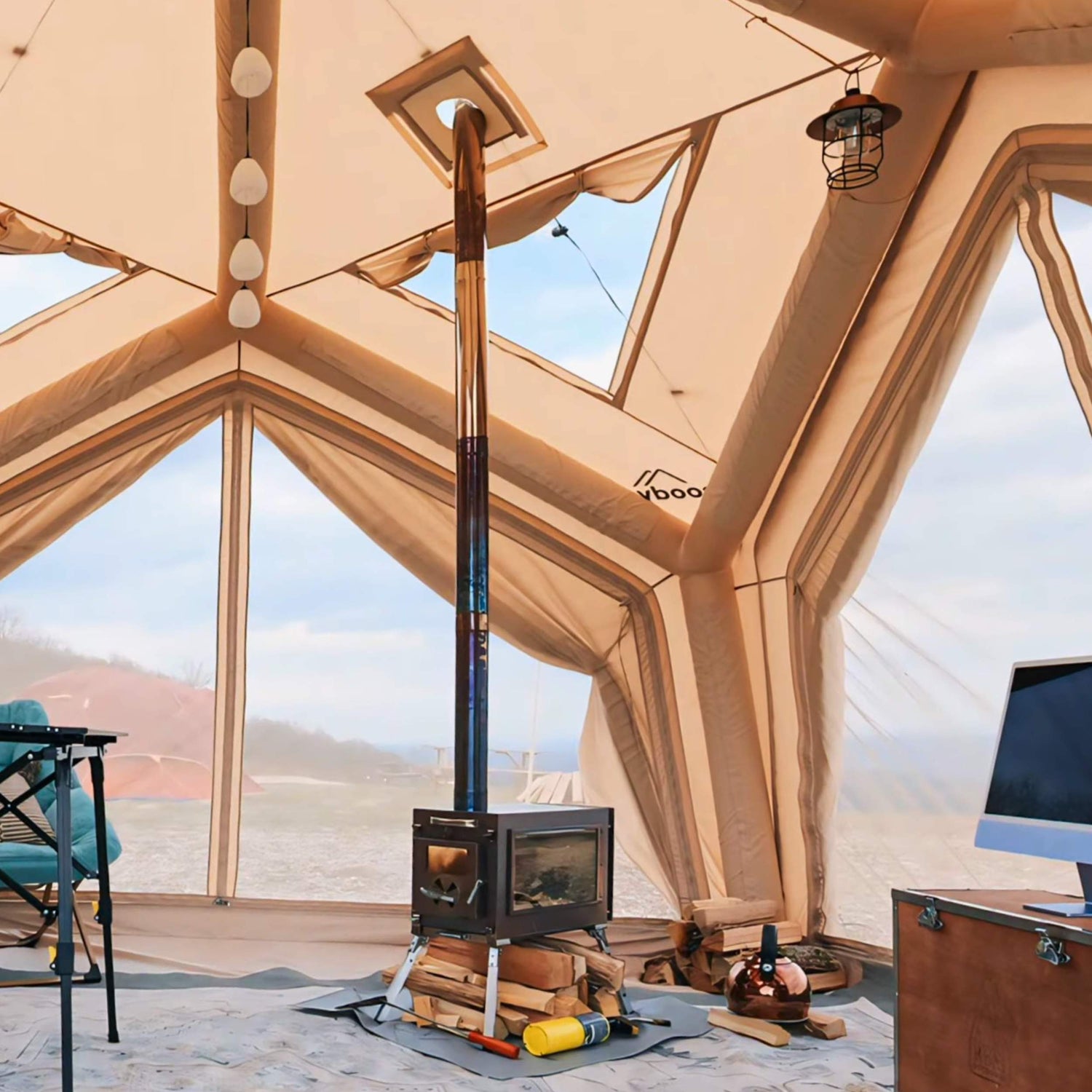
Make cool evenings more inviting.
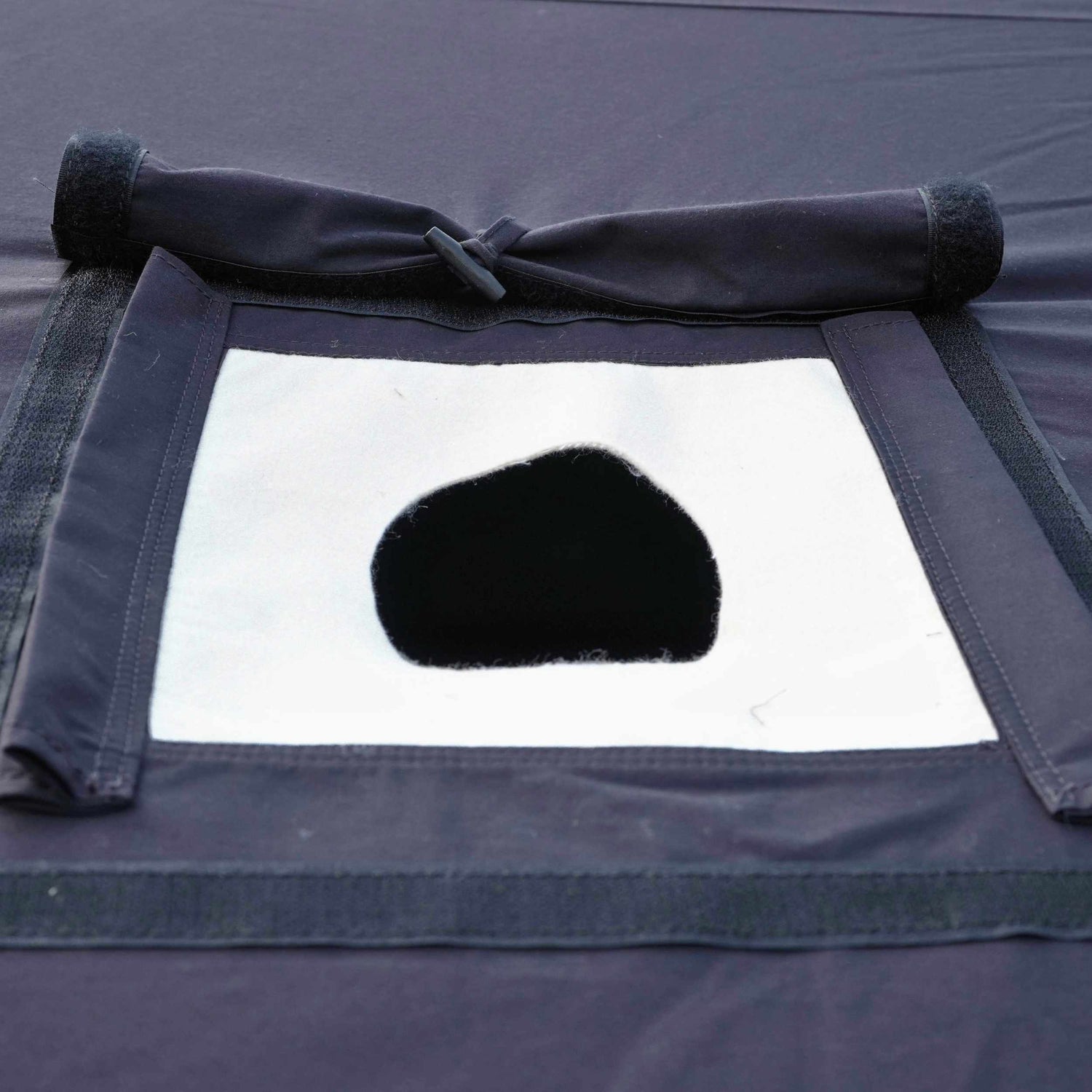
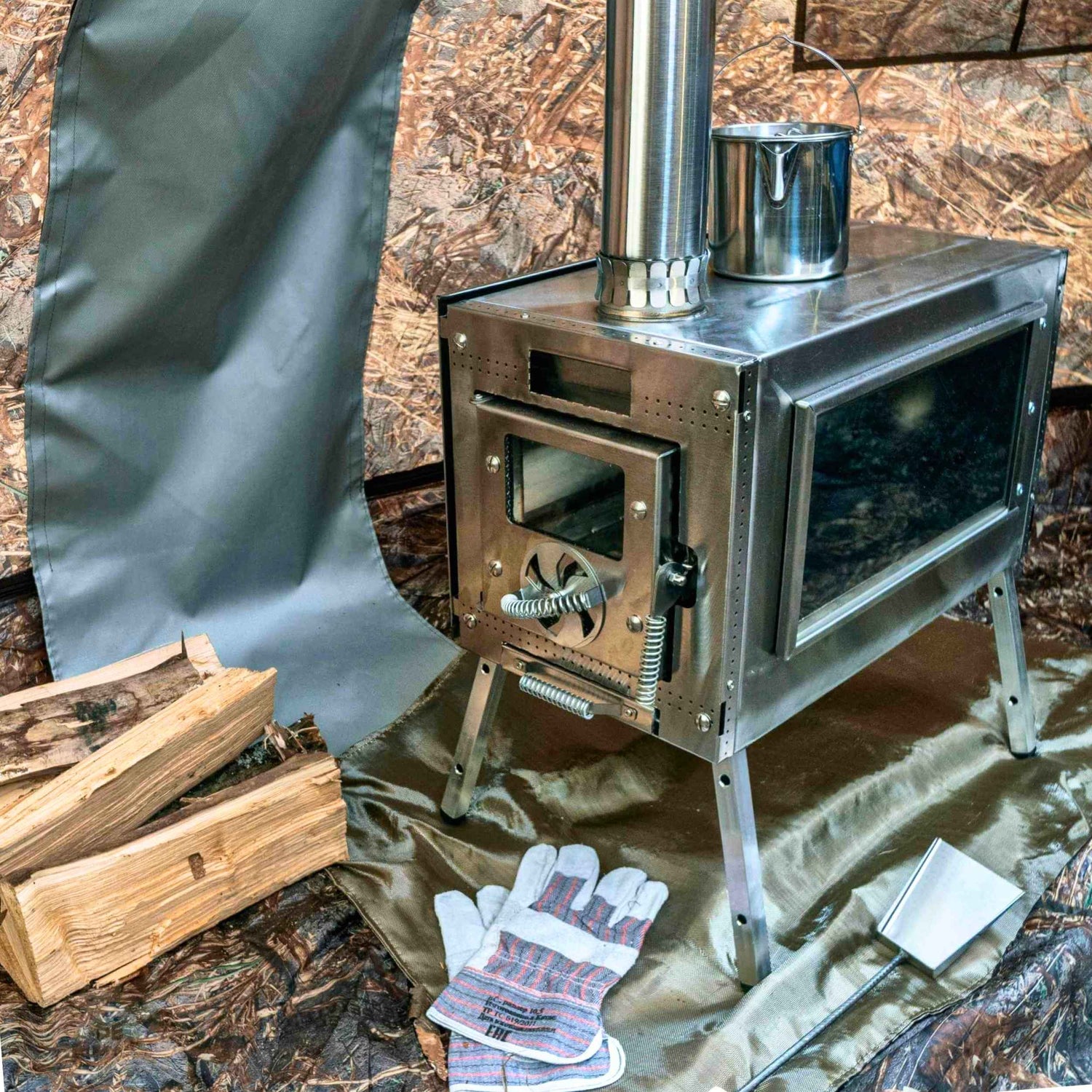
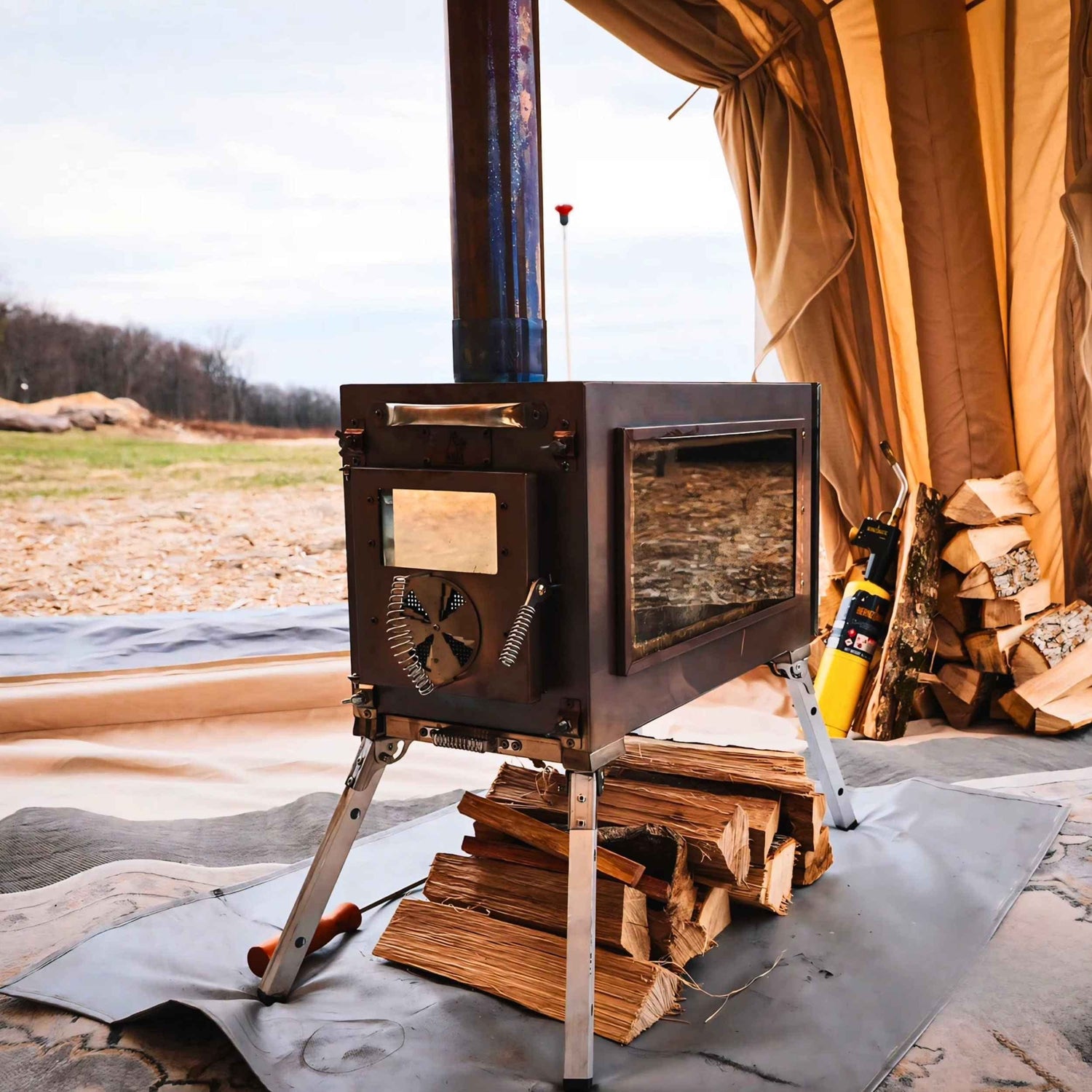
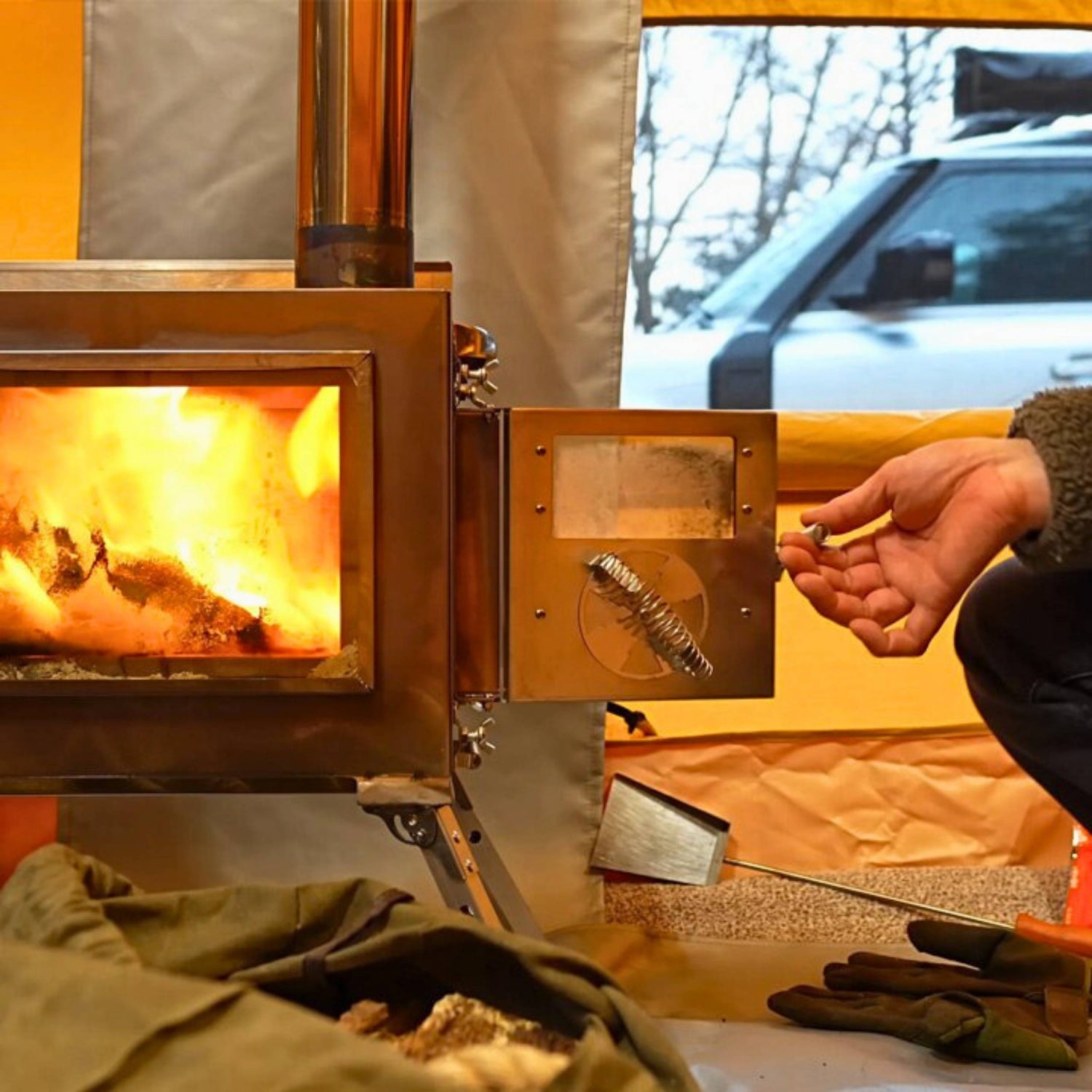
A compatible tent stove can bring warmth and a cozy focal point to camp. The tent body has a designated 3.9 in (10 cm) stove-jack opening for planning the chimney route.
Stove and chimney sold separately. The standard rainfly has no factory stove jack; ask about the appropriate retrofit before using it with a stove. Follow stove clearances and ventilation requirements.
Comfort in. Doorway clear.
Dedicated cable and air-hose openings let you route compatible heating or cooling equipment and power into camp without running them through the main doorway.
Heater and ducts sold separately. Keep a diesel heater and its exhaust outside; bring only warm air into the tent.
Your tent can be the start of a larger camp.
Connect your Familia 13.6 to a compatible Coody tent or Hub with the optional Coody Tent Connector 3.6 + 3.6 — Black ↗. Add a shared gathering space or a separate sleeping tent as your plans grow.
Compatible standard models: Coody 10.0, Familia 13.6, Familia 17.2 and Coody Hub.
One connection side on the 13.6: choose the orientation before anchoring your camp.
Separate accessory: the connector is not included. Pro-series models use different connectors.
Choose structured Coreo mattresses or Coody Air Mattresses with a built-in pump. Compare their exact footprints against the tent’s 137.8 in (350 cm) interior width. Both lines are 13.8 in (35 cm) high.
Open-plan concepts with the divider open. Remaining width is arithmetic, not a measured walkway or verified bedroom fit; check room depth, air beams and door access. Mattresses are sold separately; Coreo pumps are sold separately. Product links open in a new tab.
Specifications, dimensions & package.
Specifications
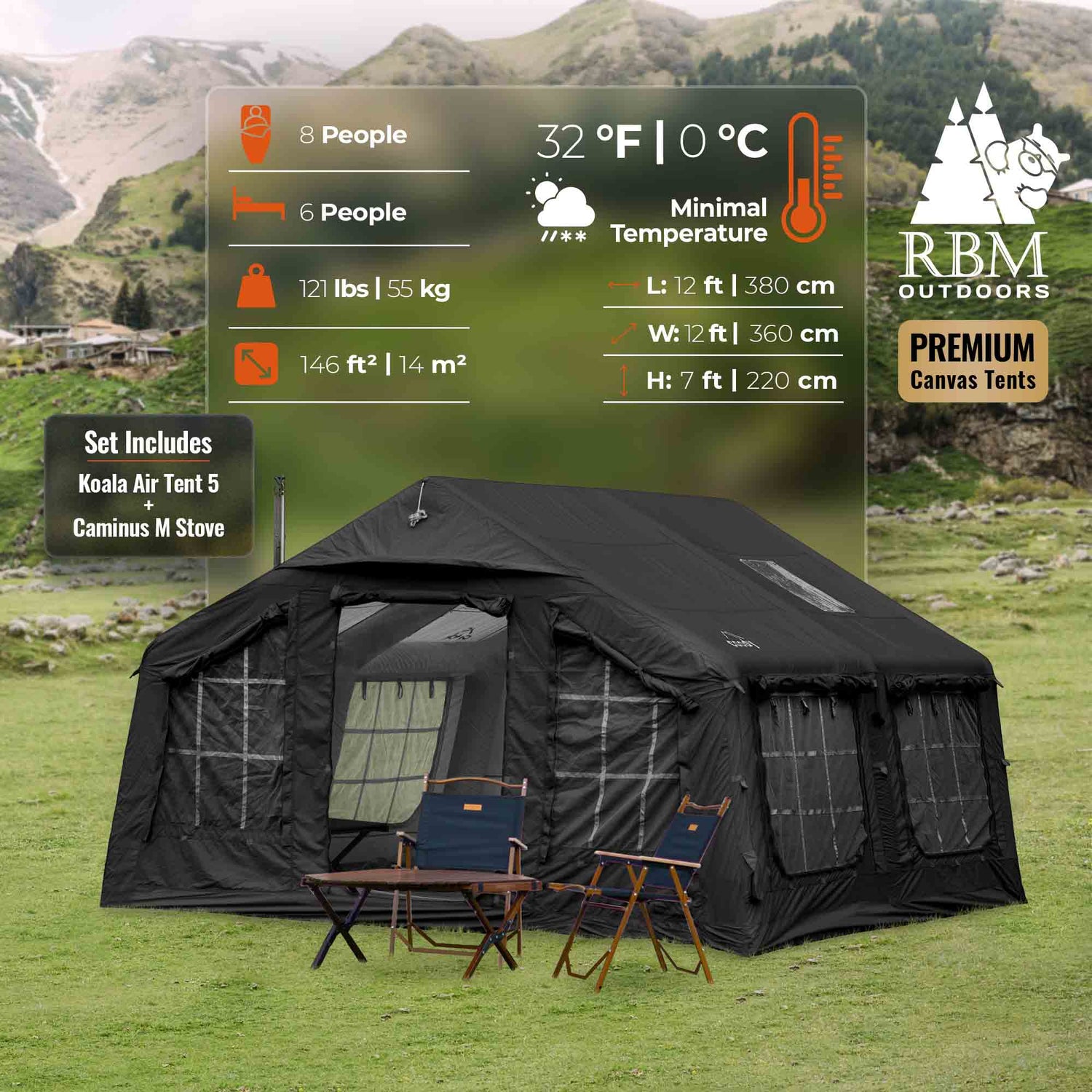
Type - Inflatable hot tent and wood stove bundle
Included tent - Coody Familia AirTent 13.6 Black Inflatable Hot Tent
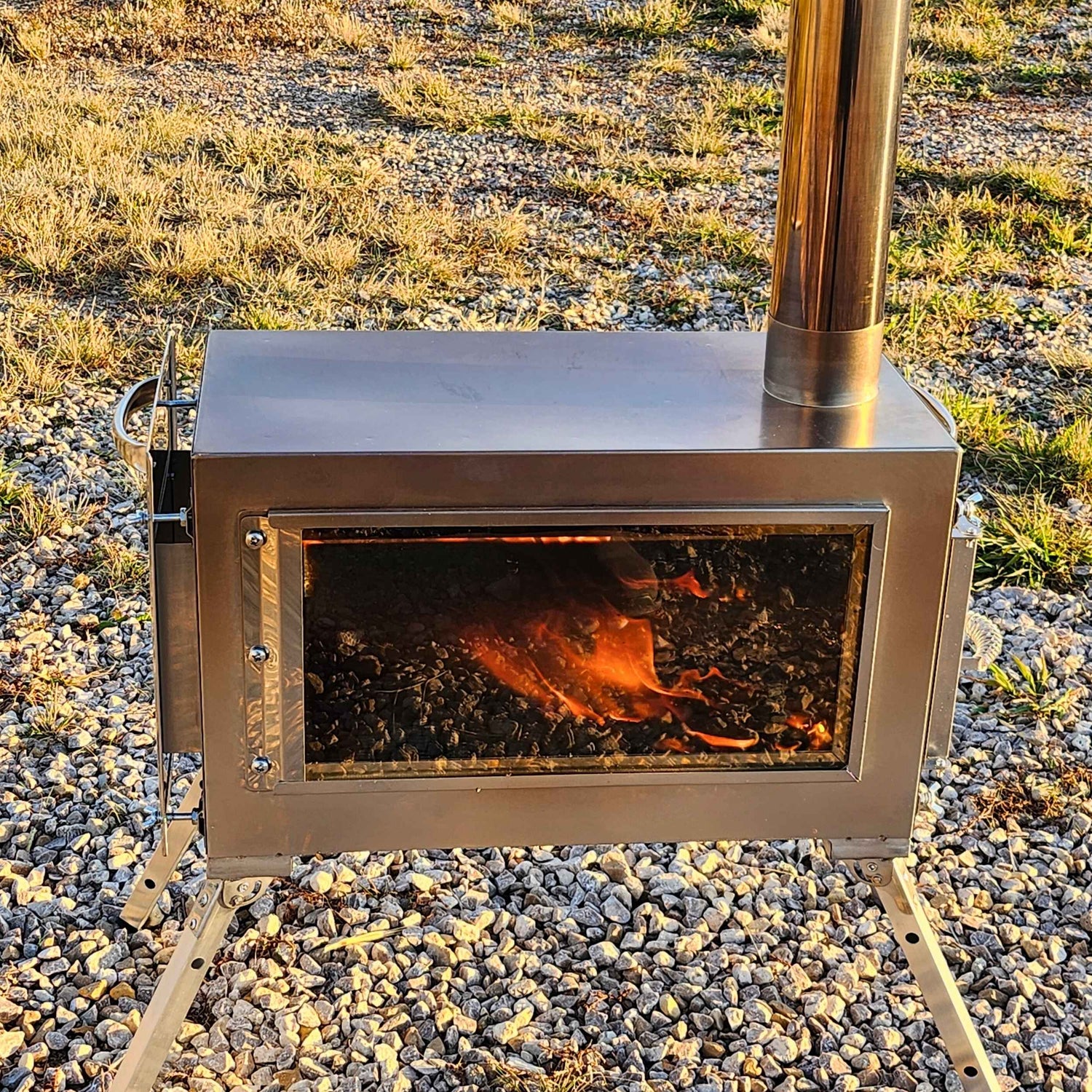
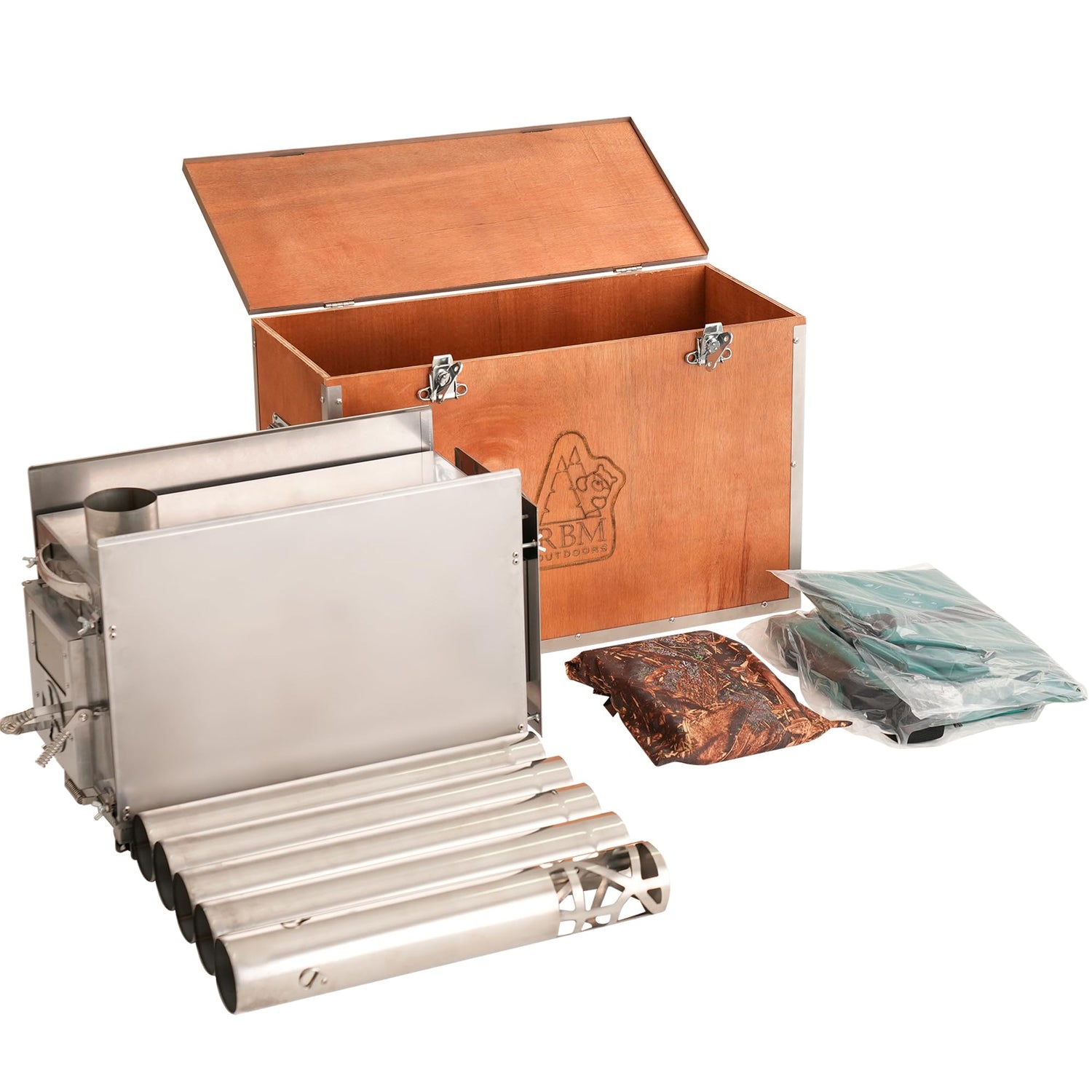
Included stove - RBM Outdoors Caminus M Wood Stove
Coody 13.6 tent construction - Two-room inflatable wall tent
Coody 13.6 tent capacity - 2-8 people
Coody 13.6 tent sleeping capacity - Up to 8 people in sleeping bags
Coody 13.6 tent number of rooms - 2 rooms
Coody 13.6 tent floor area - 13.6 m² (146.39 ft²)
Coody 13.6 tent setup type - Inflatable
Coody 13.6 tent setup time - 8 min
Coody 13.6 tent operating temperature - from -10 °C to +40 °C (14 °F to 104 °F)
Coody 13.6 tent fabric - 210 gsm TC fabric (Terylene Cotton)
Coody 13.6 tent fabric composition - 65% polyester and 35% cotton
Coody 13.6 tent waterproof rating - 2000+ mm (PU2000+)
Coody 13.6 tent air tube material - PVC
Coody 13.6 tent recommended pressure - 6-8 psi
Coody 13.6 tent air-frame leak testing - Inflated and pressure-tested for 72 hours to check for air leaks
Coody 13.6 tent air pump type - Hand pump
Coody 13.6 tent rainfly material - 420D Oxford fabric
Coody 13.6 tent rainfly waterproof rating - 3000+ mm (PU3000+)
Coody 13.6 tent floor material - PVC
Coody 13.6 tent removable floor - No
Coody 13.6 tent floor color - Black
Coody 13.6 tent stove jack diameter - 10 cm (3.93")
Coody 13.6 tent number of doors - 2 pcs
Coody 13.6 tent number of windows - 6 pcs (including 2 roof windows)
Coody 13.6 tent TPU window panels - 4 pcs
Coody 13.6 tent window material - TPU
Coody 13.6 tent mosquito protection - On windows and doors
Coody 13.6 tent room divider - Removable
Coody 13.6 tent external air valves - 1 pc
Coody 13.6 tent internal air valves - 1 pc
Coody 13.6 tent pressure relief valve - 1 pc
Coody 13.6 tent wind anchoring - 14 preinstalled guy lines
Coody 13.6 tent number of pegs - 16 pcs
Coody 13.6 tent wind resistance - Tested up to 72 km/h (45 mph)
Coody 13.6 tent UV protection - UPF 50+
Coody 13.6 tent color - Black
Coody 13.6 tent seasons - Four-season
Coody 13.6 tent Canadian compliance - Passed SOR/2024-217 and CAN/CGSB-182.1-2020 flammability and labelling requirements
Coody 13.6 tent test report number - CCI250200580EN
Coody 13.6 tent warranty - 1 year
Caminus M use - Hot-tent heating and cooking
Caminus M material - Heat-resistant stainless steel AISI 430
Caminus M glass material - Fire-resistant ceramic glass
Caminus M glass placement - Side panels
Caminus M glass thickness - 4 mm (0.16")
Caminus M glass temperature resistance - Up to 750 °C (1382 °F)
Caminus M fuel types - Firewood, fuel briquettes, and coal
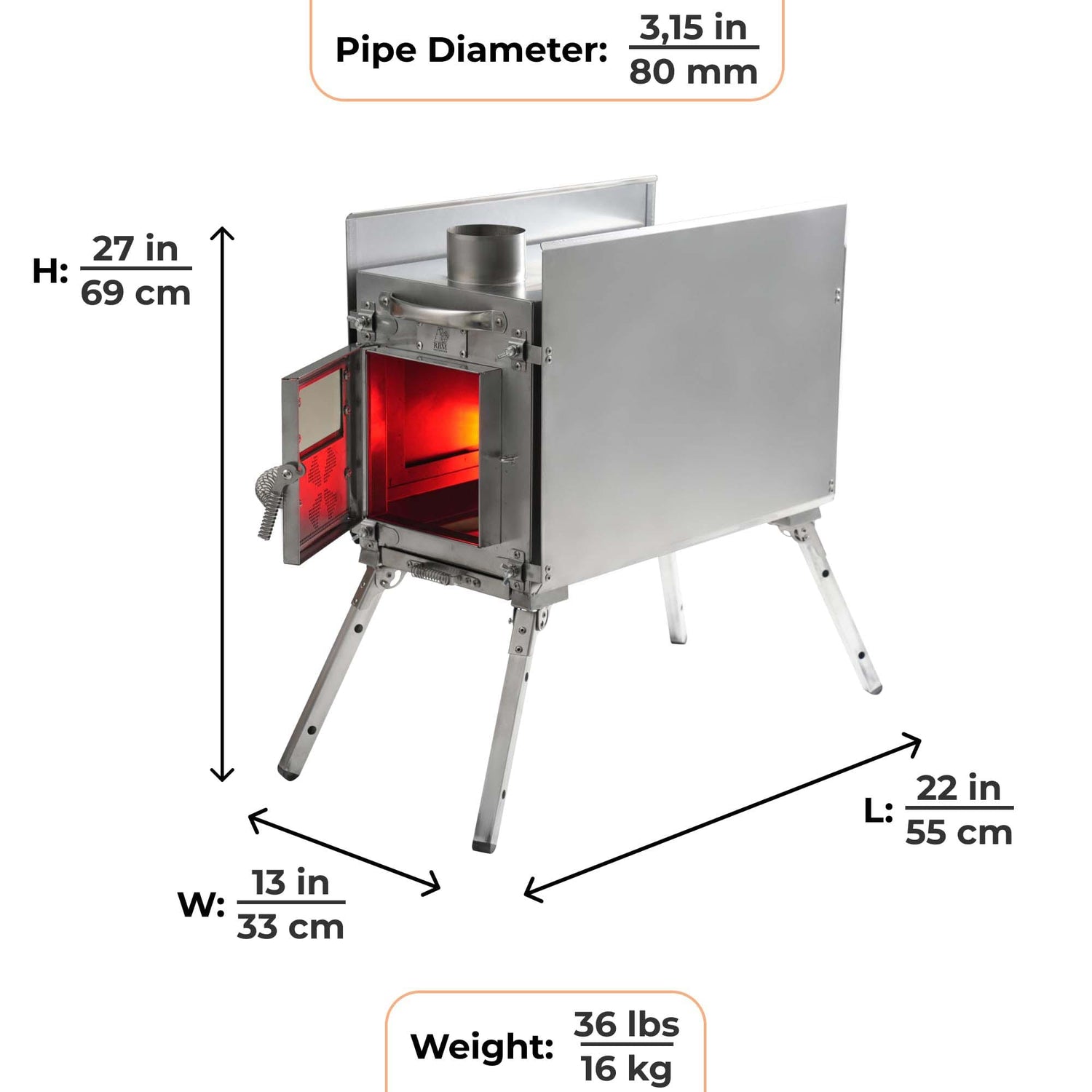
Caminus M chimney diameter - 80 mm (3.15")
Caminus M chimney pipe length - 485 mm (19.09")
Caminus M spark arrestor - Included
Caminus M protective heat shields - Included
Caminus M maximum continuous burn time - 7 h
Caminus M warranty - 1 year
Dimensions
Coody 13.6 tent width - 3.6 m (141.73")
Coody 13.6 tent length - 3.8 m (149.61")
Coody 13.6 tent height - 2.2 m (86.61")
Coody 13.6 tent interior width - 3.4 m (133.86")
Coody 13.6 tent interior length - 3.7 m (145.67")
Coody 13.6 tent ceiling height - 2.04 m (80.31")
Coody 13.6 tent side wall height - 1.35 m (53.15")
Coody 13.6 tent roof window size - 54 x 64 cm (21.26 x 25.20")
Coody 13.6 tent side window size - 115 x 80 cm (45.28 x 31.50")
Coody 13.6 tent net weight - 60 kg (132.28 lb)
Coody 13.6 tent gross weight - 65 kg (143.30 lb)
Coody 13.6 tent box 1 packed size - 0.85 x 0.50 x 0.50 m (33.46 x 19.69 x 19.69")
Coody 13.6 tent box 1 gross weight - 48 kg (105.82 lb)
Coody 13.6 tent box 2 packed size - 0.60 x 0.25 x 0.25 m (23.62 x 9.84 x 9.84")
Coody 13.6 tent box 2 gross weight - 17 kg (37.48 lb)
Caminus M assembled size - 330 x 690 x 600 mm (12.99 x 27.16 x 23.62")
Caminus M total height with chimney - 2800 mm (110.23")
Caminus M height from floor to stove - 230 mm (9.05")
Caminus M firebox size - 250 x 500 x 250 mm (9.84 x 19.68 x 9.84")
Caminus M firebox entrance size - 160 x 180 mm (6.29 x 7.08")
Caminus M net weight - 16.5 kg (36.37 lb)
Caminus M gross weight - 29.74 kg (65.56 lb)
Caminus M packed size - 335 x 715 x 460 mm (13.18 x 28.14 x 18.11")
Package
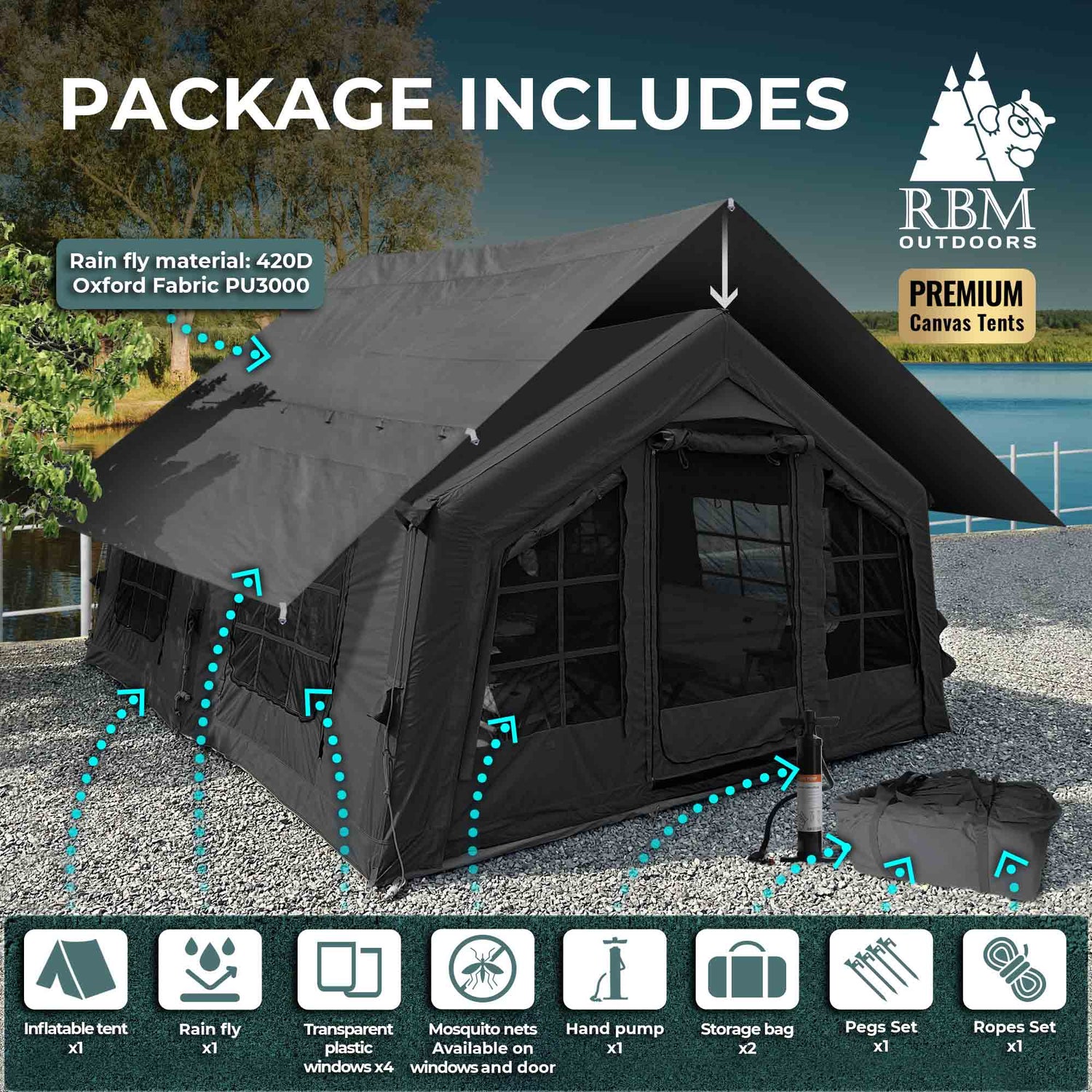
Coody 13.6 tent package contents - 1 inflatable tent, 1 hand pump, 1 rainfly, 4 TPU window panels, 1 TPU/canvas front-wall panel, 1 mosquito/canvas front-wall panel, 1 additional mosquito front-wall panel, 1 preinstalled guy-line set, 1 peg set, and 2 storage bags
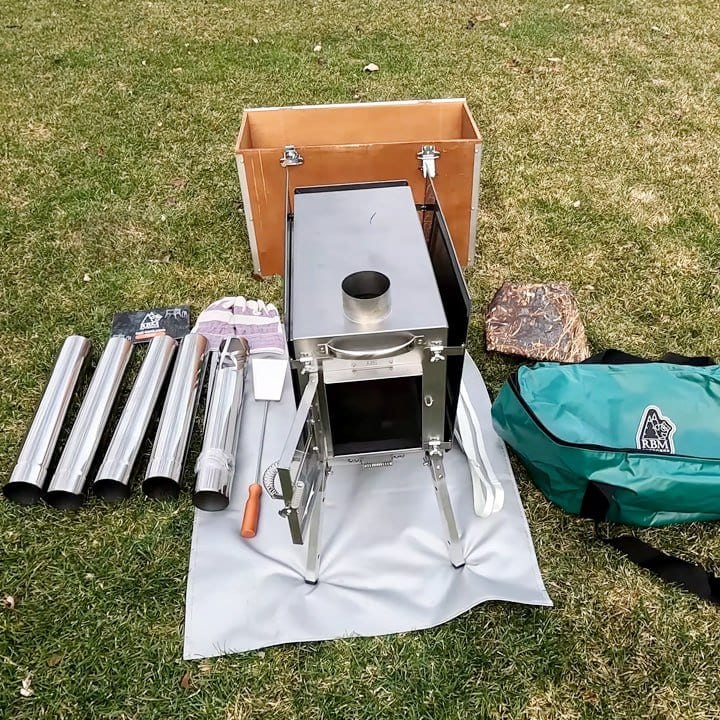
Caminus M package contents - 1 stove, 5 chimney pipes, 2 replacement metal plates, 1 pair of gloves, 1 scoop, 1 heat-resistant stove mat, 1 carrying bag, and 1 user manual
Number of packages - 3 boxes
Shipping configuration - Tent and stove ship in separate boxes
Know before you go.
Does the floor detach?
No. The current 13.6 uses a continuous fixed PVC floor in both rooms, with a 5.9 in (15 cm) raised edge. It stays attached when you pack the tent.
How many people fit comfortably?
The 2–8 person rating includes up to eight people in sleeping bags. A furnished camp with beds, chairs and a table needs more room per person. Plan your sleeping arrangement and keep both exits clear.
What is included, and what is extra?
The standard tent includes the hand pump, rainfly, window and front-wall panels, pegs, preinstalled guy lines and two bags. Furniture, stove, external groundsheet, carpet, electric pump and connecting accessories are separate unless your chosen bundle explicitly includes them.
Can I use a stove with the rainfly fitted?
The tent body has a designated stove jack. The standard 13.6 rainfly does not have a factory stove jack. Ask us about the appropriate retrofit and chimney routing before combining a stove with the rainfly. Follow the stove instructions, maintain ventilation and clearances, and use working smoke and carbon monoxide alarms.
What changes between the four colors?
Beige, Forest Green, Black and Gray share the same 13.6 layout and listed equipment. The tent and floor colors change. Lighting can affect the appearance of fabric in photos; color is not a promise of a particular insulation or cooling performance.
How much pressure should I use?
Inflate to 6–8 psi using a pressure gauge. The frame includes a pressure-relief valve. Temperature changes affect pressure, so check it during your stay and never exceed the recommended range.
Is the tent suitable for cold weather?
The approved operating range is 14–104°F (-10–40°C). That is an equipment operating range, not a sleeping-comfort rating. Use appropriately rated sleeping bags and insulated mats, maintain ventilation, use the rainfly as instructed, clear snow promptly, and dry the tent in a warm indoor space after freezing conditions.
Will condensation form?
TC canvas is breathable, but any tent can develop condensation when humid interior air meets a cold surface. Ventilate steadily, reduce indoor moisture and dry all parts thoroughly before storage.
Can I connect it to another tent or shelter?
Yes. Use the optional 3.6 + 3.6 connector to join the 13.6 to a standard Coody 10.0, 13.6, 17.2 or Hub. The 13.6 has one connection side. Pro-series connectors are different.
Will the tent go back into its carrying bag?
The packing demonstration at the beginning shows the tent being folded, rolled, placed in its bag and closed. Release the air fully, fold to the bag width and compress gradually. Do not force the zipper; dry the tent fully before storage.
Do the clear panels keep the tent cool?
Clear TPU panels preserve daylight and the view while covering the opening against direct wind. They are not cooling panels: sunlight can warm the interior. Use mesh, shade and ventilation to suit conditions.
Is 44.7 mph a guaranteed campsite wind limit?
No. Coody reports a 44.7 mph (72 km/h) fan test. Real gusts, ground, anchoring and setup differ, so this is a manufacturer test result rather than a guaranteed safe operating limit.
Is this a backpacking tent?
No. The complete kit weighs about 132.3 lb (60 kg) and is intended for vehicle-supported camping. Check the two packed box dimensions when planning transport and storage.