
Hunting Tents
Waterproof hunting tent cabin
When heading out for a hunting trip, your tent is more than just a place to sleep—it’s a critical piece of gear that can make or break your experience. A dependable shelter provides the comfort, protection, and concealment you need to stay focused on the hunt, significantly impacting its success. Whether you're chasing big game, tracking hard-to-track prey, setting up a basecamp for an extended period, or just for a single day, you need a specific type of shelter, and if you select the right one, it significantly increases your chances of success. In this guide, we’ll explore different types of hunting tents and the key features to look for, some additional features that can boost your chances of success even more, and give some tips on how to squeeze maximum from your shelter.


Types of Outdoor Shelters for Hunting
There are many different designs, and each one offers a different set of benefits and is intended for different situations.
Pop-up shelters are meant to be set up in a short amount of time, making them an ideal choice for hunters who are required to move their location frequently in their pursuit of a game. These models' quick setup allows you to focus on the hunt instead of worrying about assembly, which could potentially scare off your prey. They are relatively lightweight and simple to carry.
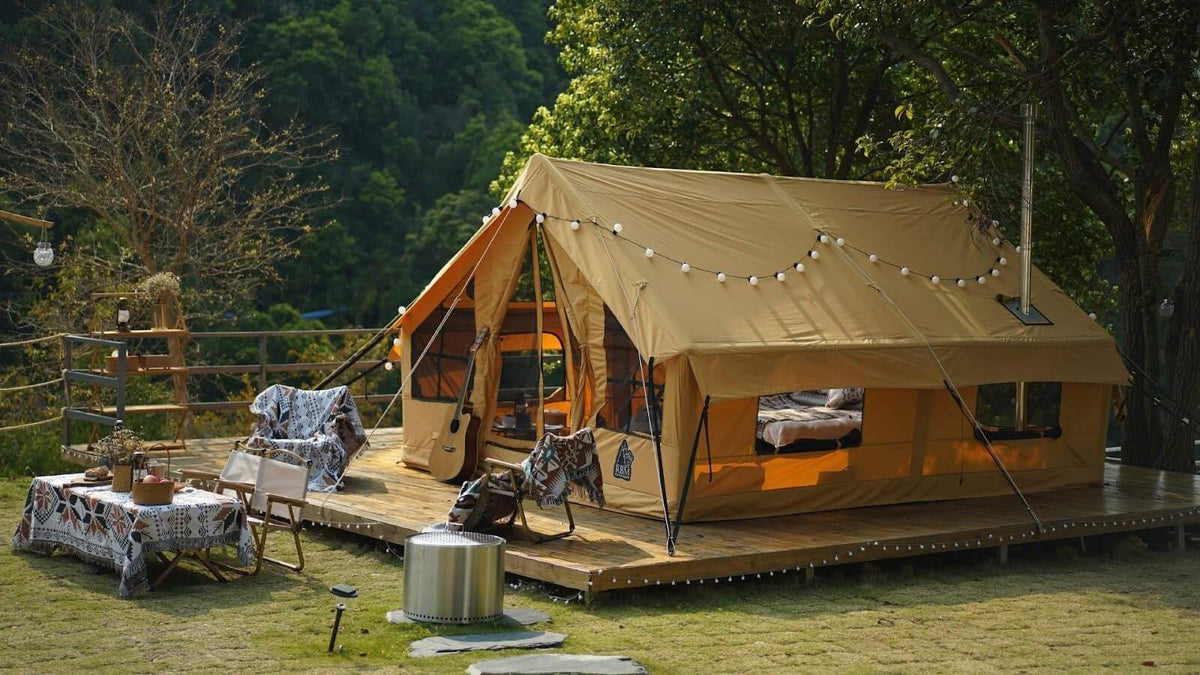
Wall tents, often known as hunting cabins, are larger, more robust shelters used for extended stays. These models offer considerable space for hunters and their gear, and they can accommodate large groups of hunters with comfort. These shelters are frequently constructed of strong canvas, making them extremely robust and weather-resistant. They are, however, larger and require longer to set up, making them more suitable for situations where you can afford a stable camp rather than for frequent movement between locations.
Blinds are a specialized type of gear intended for concealment rather than overnight camping. These shelters are disguised to blend into the surrounding landscape, giving hunters a covert area to wait for animals. They also have large windows, allowing you to hunt from this camouflaged cover. It can only be used as an addition to your primary shelter because blinds are unsuitable for overnights. Though not used for sleeping, blinds are essential for certain types of game, such as deer or turkey, where staying unseen is crucial to success.
Video reviews by bloggers
The Most Important Features
When selecting a cover that will help you in your pursuit of a game, there are a few crucial aspects that may make a significant difference in terms of both your comfort and your success.
Durability. A shelter must withstand harsh weather. Choose models constructed of ripstop nylon or canvas for durability and tear resistance. Aluminum poles are best for supporting tent construction in severe winds and diverse weather situations.
Weather Resistance. Protection from the elements is a key part of any shelter. A waterproof, wind-resistant shelter with sealed seams and a sturdy rainfly will keep you dry in heavy rain. If you know that you will be in severe colds, look for options with insulation.
Size. The size will be determined by the number of people and the amount of gear you need to store. Pursuing a game frequently necessitates additional equipment, so select a shelter that allows you plenty of room for you and your stuff. Wall tents, for example, provide sufficient space.
Camouflage. Hunters must blend in with their surroundings. Many shelters come with camouflage designs that complement the environment, allowing you to stay hidden from the game. If your shelter has camouflage and huge windows, you will not require a special blind.
Weight. This factor will be significantly influenced by the type of hunting trip you choose. If you need to pursue your game in large areas, it is preferable to pick small models. On the other hand, if you want to hunt in a certain region and want to set up a permanent camp, a cabin shelter is an option.
Storage Pockets. Organizational features like storage pockets or gear lofts are useful in shelters since they allow you to keep vital goods like flashlights, maps, and tools conveniently accessible. Built-in storage solutions help you eliminate clutter within the tent and organize your gear.
Additional features
Extra features might make you’re your activity more comfortable and convenient when you're out in the field.
For hunters camping in cold weather, a stove jack is a game changer. This feature will provide you with warmth and comfort. Cabin models, often feature stove jacks, which are essential for late-season hunting and extended stays in chilly locations.
Some models have vestibules, which are small covered sections outside the living area that are ideal for storing wet boots or other gear that should not be inside the living area. These extra storage areas are especially handy in smaller tents where interior storage space is limited.
A waterproof floor is a useful feature if you want to be comfortable and safeguard your belongings in wet conditions. When camping in outdoors, the ground might get damp due to rain, snow, or morning dew, and without a waterproof floor, moisture can easily leak inside, making your sleeping space cold, wet, and uncomfortable.
For hunters seeking a versatile, all-weather tent that can withstand harsh environments, RBM Outdoors' Cuboid 4.40 is an excellent choice. Its double-layer walls provide warmth during cold-weather hunting trips, while the stove jack offers essential heating in freezing temperatures. You can equip this cabin with a durable waterproof floor, which keeps the interior dry even in wet or snowy conditions, making it perfect for winter hunts. The spacious interior and steep walls of this cabin allow for ample room to store gear and accommodate multiple hunters comfortably. This tent's 104.41 square feet is about the size of a small apartment. Anywhere within is suitable for a person of average height to stand straight. The interior of this tent may be configured to your preference thanks to a detachable wall that divides the two rooms. This cabin can also be used as a blind, as it has camouflage patterns and large windows.
Advice on how to maximize your shelter's potential
The first thing you should do after arriving at the hunting grounds is to try to blend your shelter with the environment. Before you begin your chase, you should think of a few different places to hide. Put some grime or dirt on the walls and splatter it about. Put on a very thin coating, and then remove the majority of it with a brush. When fresh blind materials are exposed to sunlight, this straightforward action helps to conceal the little sheen that is present.
It is recommended that you brush the cover after you have mudded and placed it. It is possible to conceal the shape of the blind by surrounding it with some amount of different natural plants. Place branches that are not too heavy on the edges of your shelter, and even on top of it if they are not too heavy. Tuck tufts of grass and branches into crevices and windows on the exterior of the construction. Attempting to blend in with the environment as much as possible is going to increase your chances of hunting game.
FAQ
🏕 How important is camouflage for a hunting tent?
- Using camouflage can help you blend into the environment, thereby reducing the likelihood of game spotting. While it’s not always necessary, it’s highly useful for special blinds that are positioned near the game.
📦 Is weather resistance important for hunting tents?
- Hunters frequently encounter unpredictable and unpleasant weather conditions, such as heavy rain, snow, wind, or extreme cold. Waterproof fabrics, sealed seams, solid poles, and rainfly help keep the interior dry and comfortable, while insulation will give warmth and protection from cold weather.
💡 What kinds of hunting tents exist?
- There are three main varieties. Pop-up or instant shelters are meant for rapid assembly and takedown. Wall or cabin shelters have vast interiors and are constructed for longer stays. Blinds that give cover for hunters waiting for animals.
5 products
Filter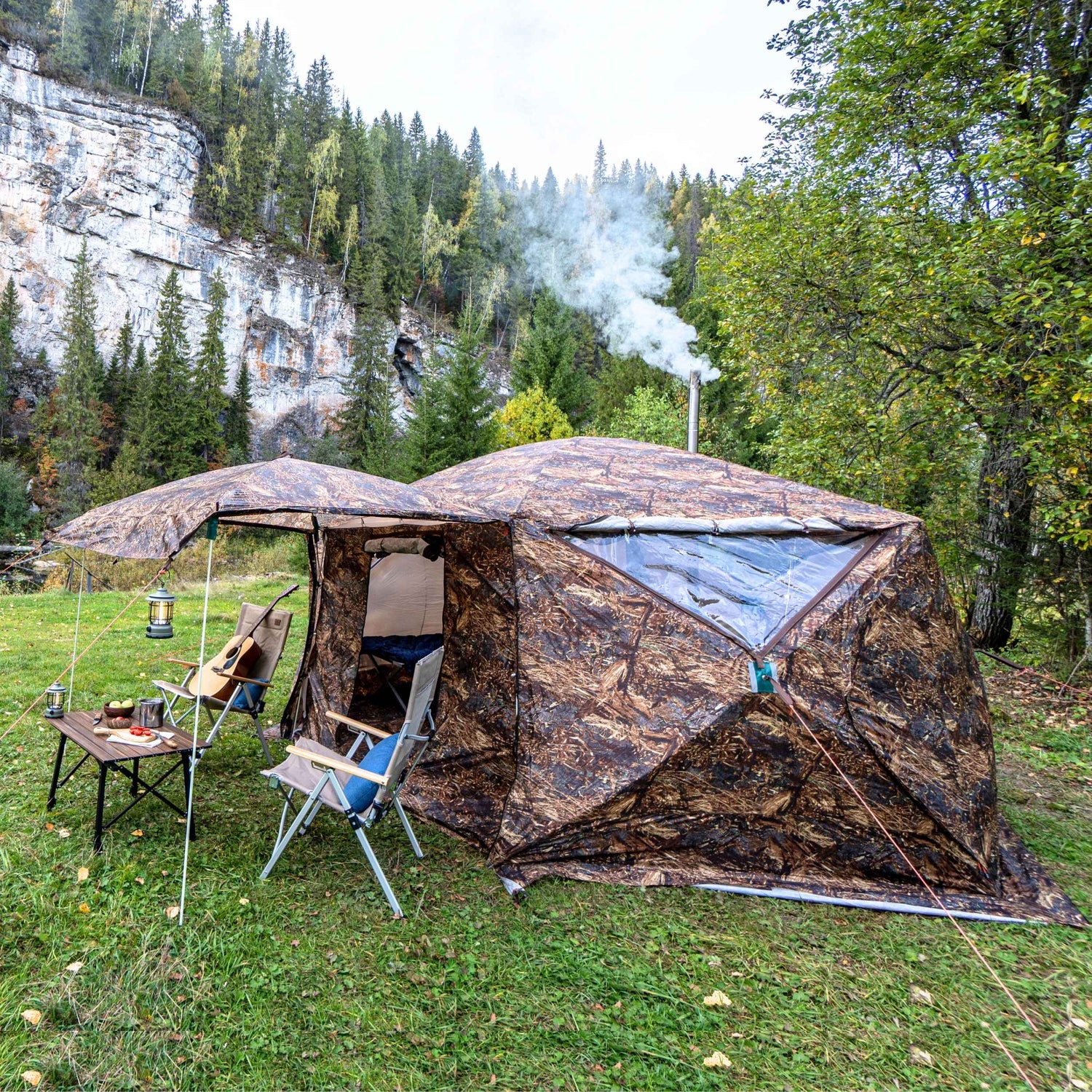

RBM Outdoors Hexagon - Double-Layer Hot Tent with Stove Jack for 2-9 People


RBM Outdoors UP-2 - All-Season Double-Layer Hot Tent with Stove Jack for 2-4 People
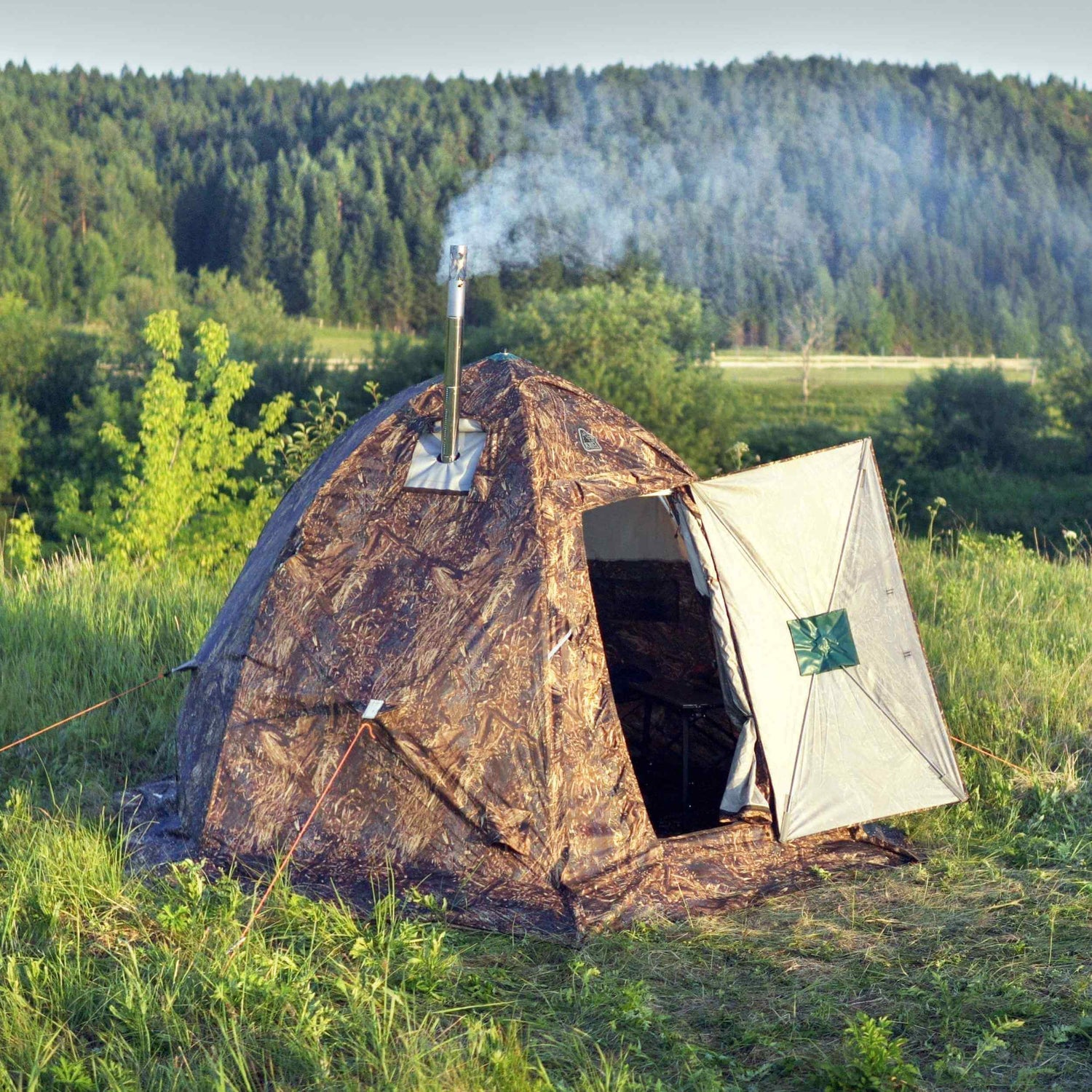
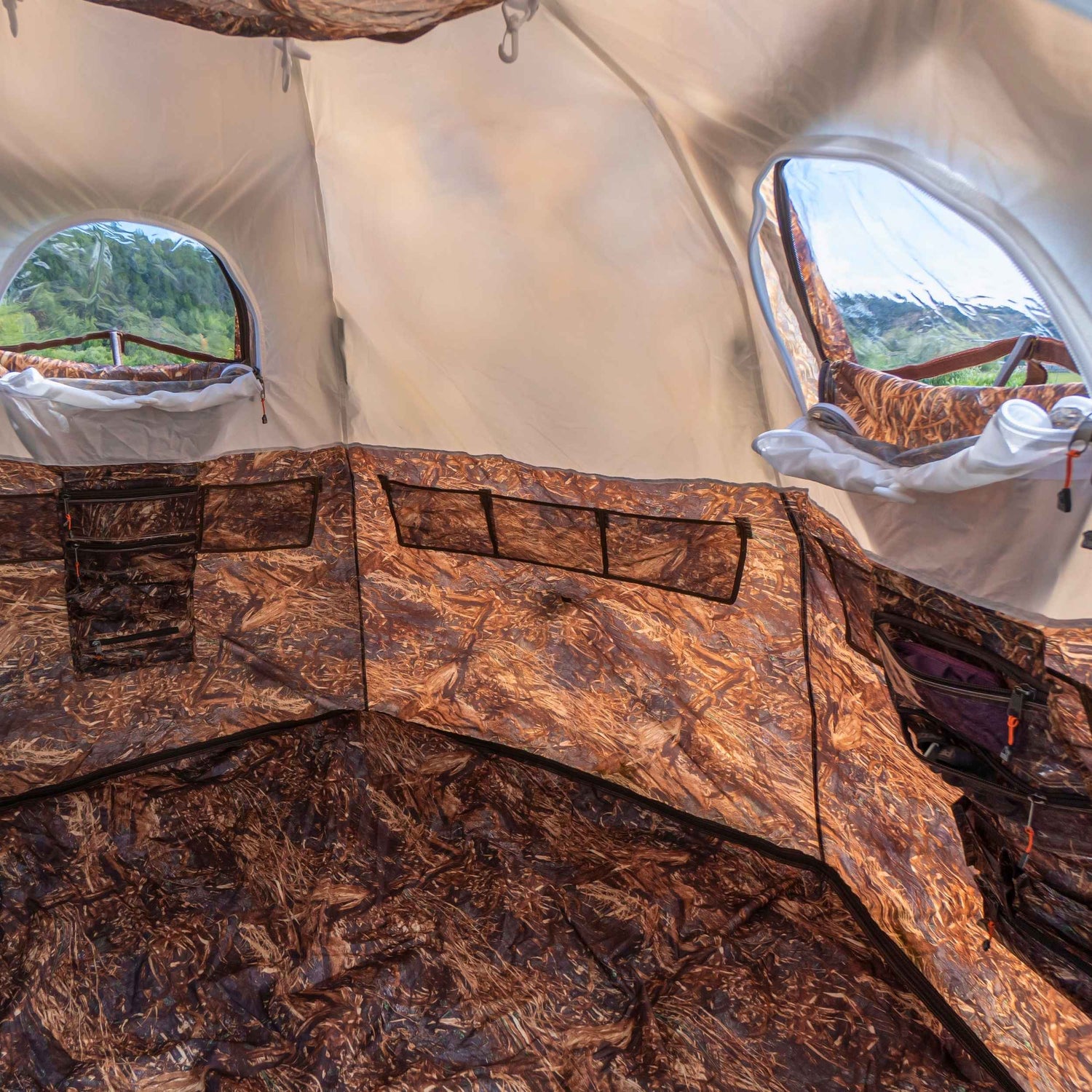
RBM Outdoors UP-2 Mini - All-Seasons Double-Layer Hot Tent with Stove Jack for 1-3 People


RBM Outdoors UP-5 - All-Season Double-Layer Hot Tent with Stove Jack for 2-6 People
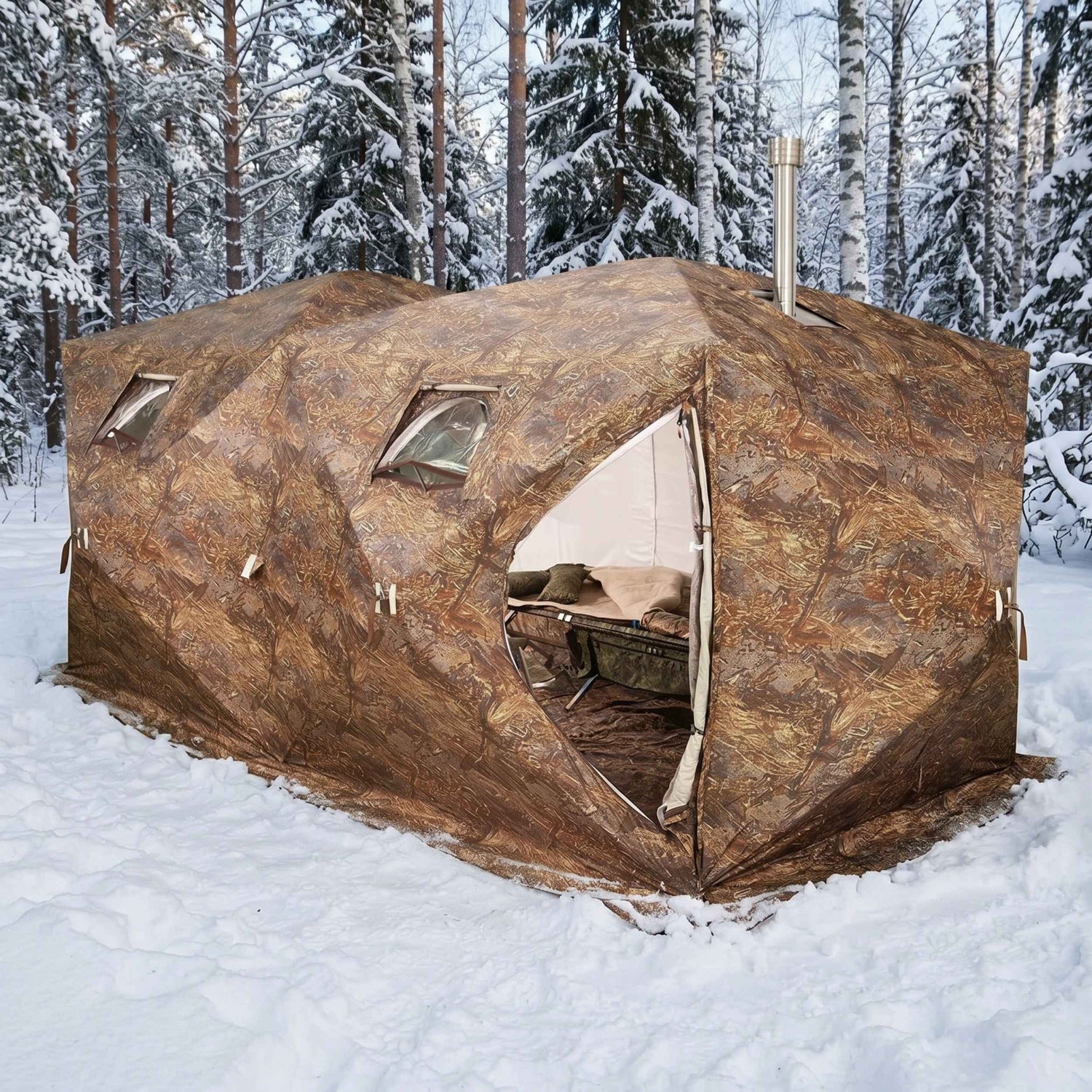
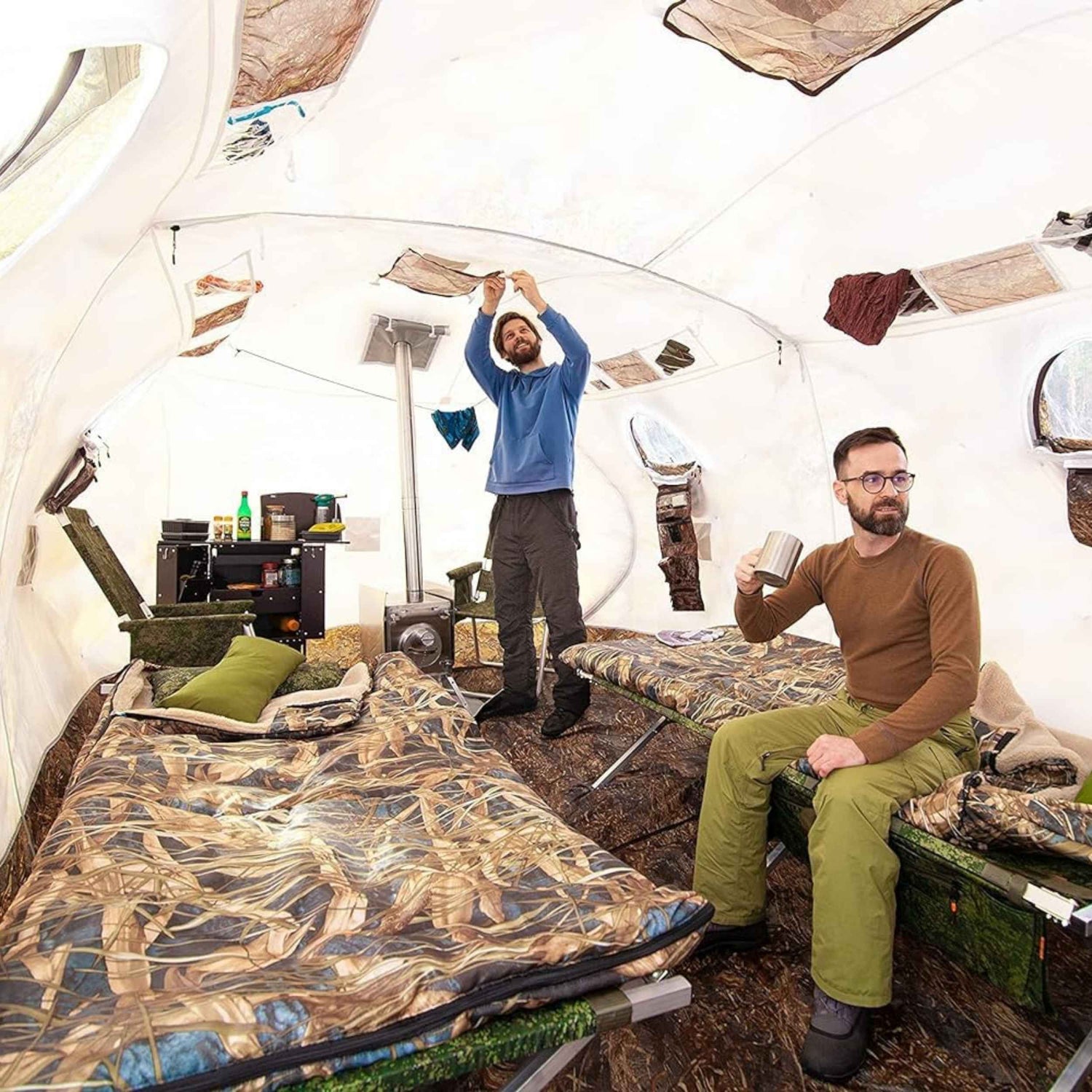
RBM Outdoors Cuboid 4.40 Convertible 2-Room Double-Layer Hot Tent with Stove Jack for 2-6 People
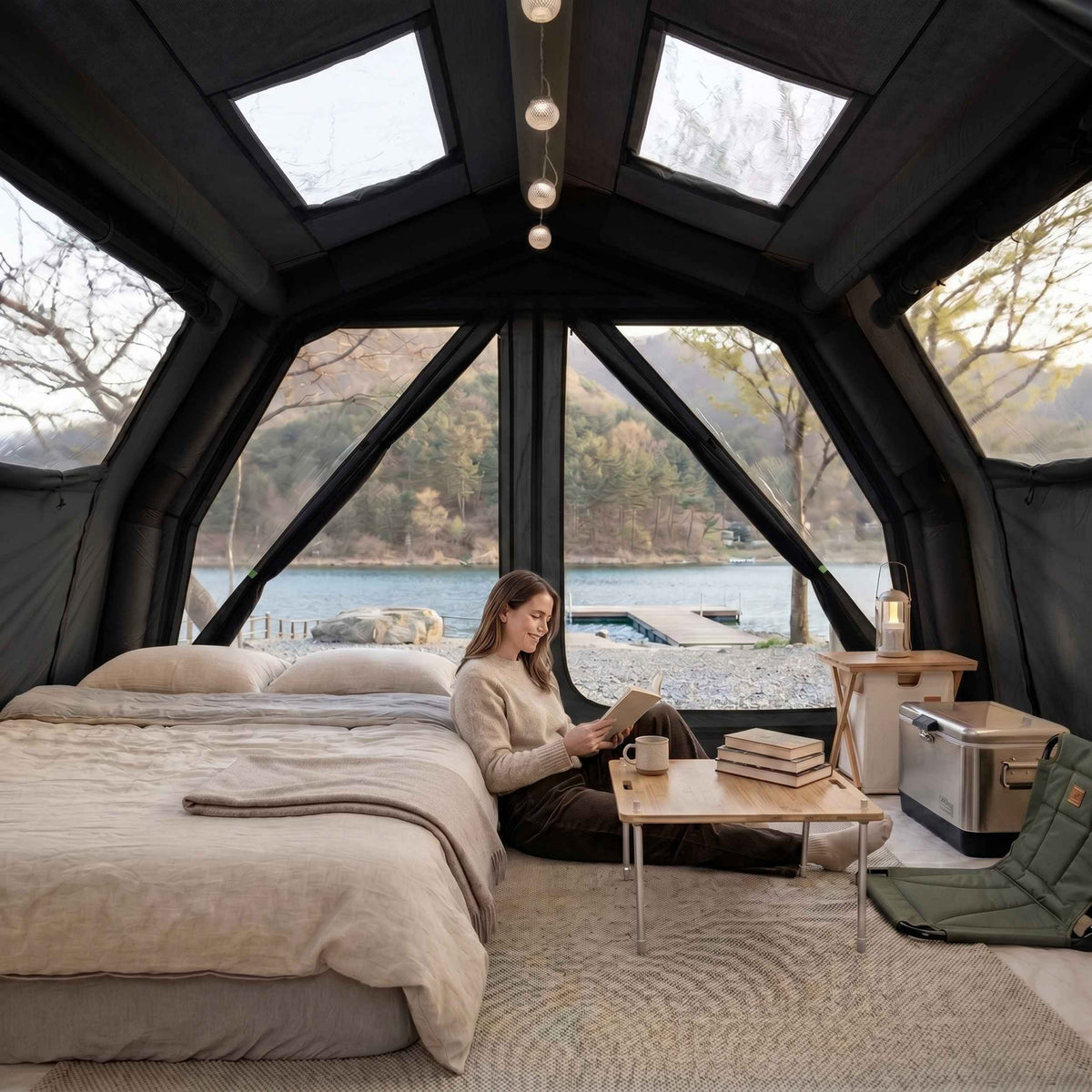
First-Time Camping Checklist: Essential Gear for a Safe Trip
A useful camping checklist starts with the trip, not the shopping cart. A drive-in campground, a remote backcountry site, and a winter hot-tent camp require different shelter, cooking, water, communication,...
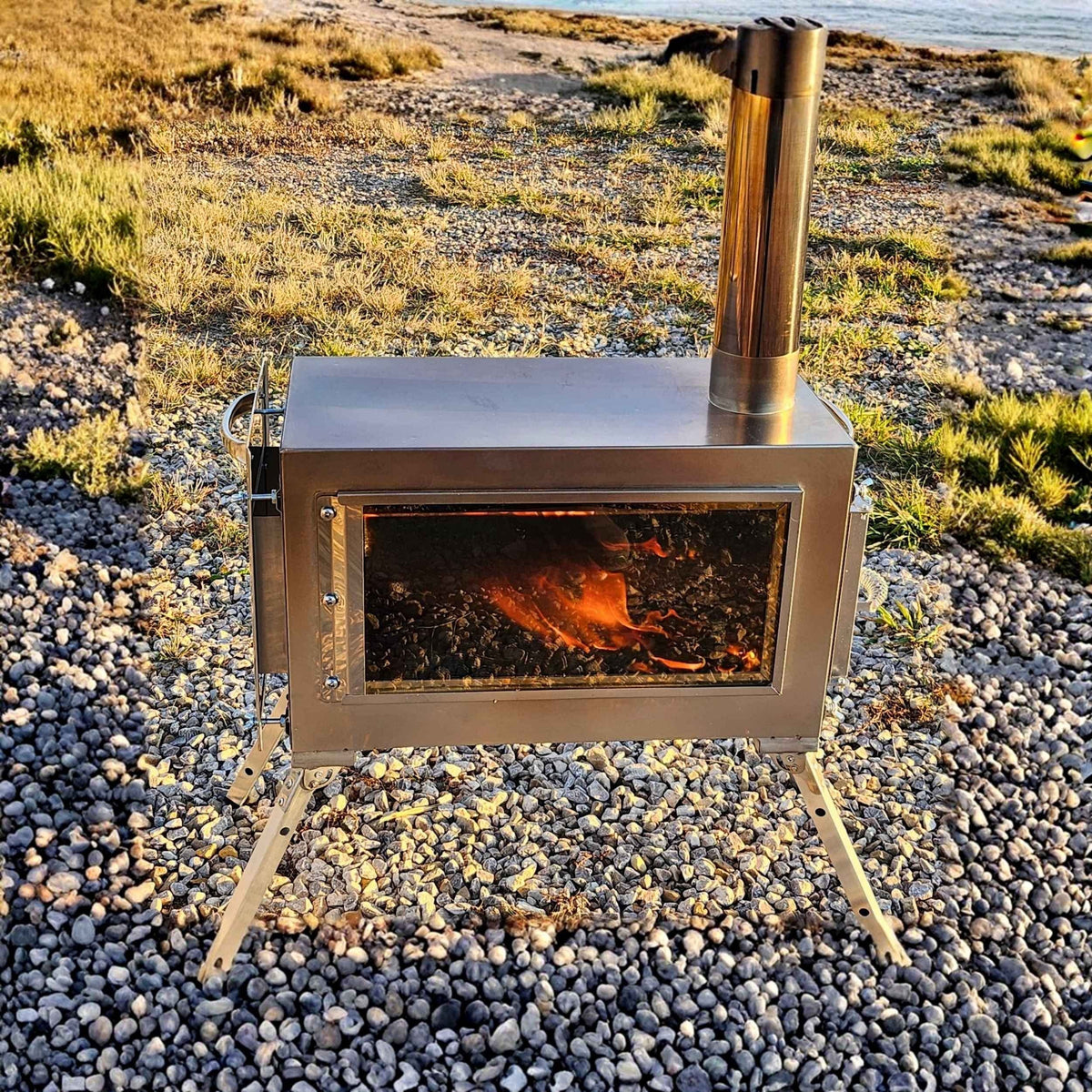
How to Install a Tent Wood Stove and Chimney Safely
A tent wood stove must be treated as a complete system: compatible tent, heat-resistant stove jack, stable stove, fire-resistant floor mat, tightly connected chimney, spark arrestor, ventilation, and working smoke...
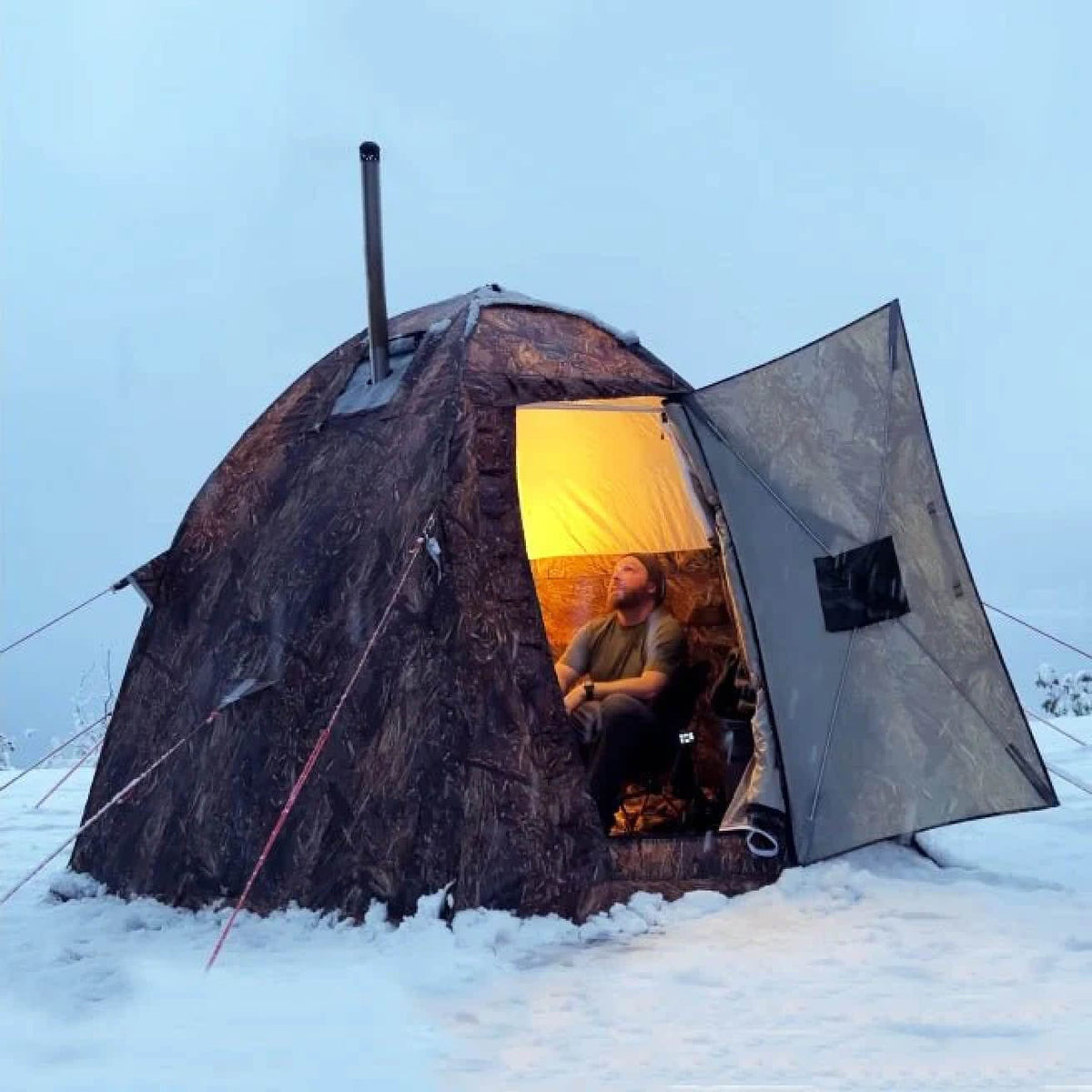
Winter Hot Tent Camping Checklist for Beginners
Winter hot-tent camping adds a heating system, chimney, fire protection, and cold-weather maintenance to the normal camping checklist. Every item must match the expected temperature, wind, snow, access, group size,...
Best Inflatable Glamping Tents: Coody and Panda Guide
Inflatable glamping tents provide standing height and room for sleep and living zones without a rigid pole assembly. The best model depends on the number of campers, floor construction, interior...